Cell-derived particles improved heart function in some aged mice
Benefits were limited in mice lacking part of an energy-sensing enzyme; researchers compared treated aged mice with untreated young and aged mice.
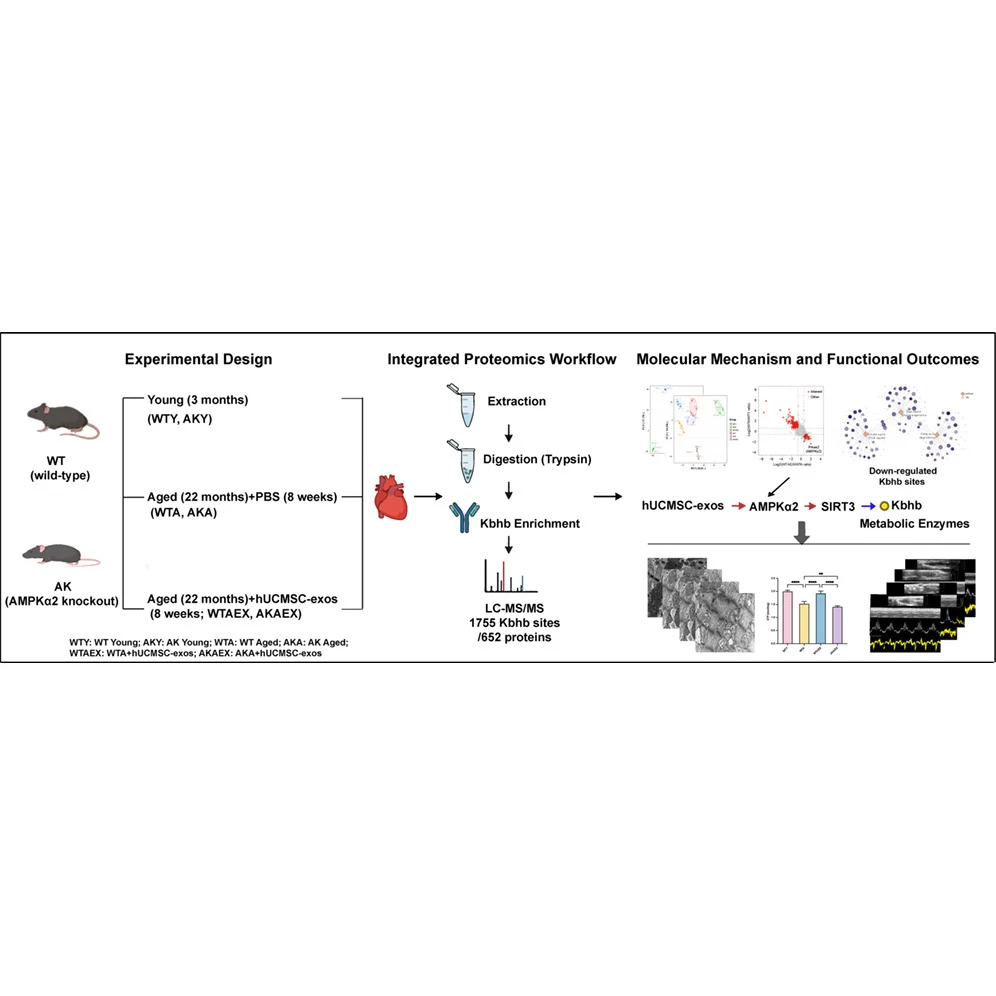
Researchers tested exosomes—tiny particles released by cells—in aged mice with or without the gene for AMPKα2, part of an energy-sensing enzyme. The exosomes came from human umbilical cord mesenchymal stromal cells, a type of support cell. The animal experiment used untreated young and aged mice as controls.
In aged mice with AMPKα2, exosomes improved heart pumping and relaxation, strengthened grip, reduced heart scarring and restored levels of ATP, a molecule that supplies cellular energy. They also selectively normalised chemical tagging at protein sites where it had increased with aging. In aged mice lacking AMPKα2, exosomes partly improved the structure of mitochondria, the cells’ energy-producing structures, and measures of heart relaxation, but did not restore heart pumping.
Why it matters
Age-related heart decline involves changes in energy use. These experiments addressed whether chemical modifications to heart proteins might offer a way to address that decline.
Caveats
These mouse experiments do not establish benefits in people. The abstract did not report group sizes, exosome doses or treatment duration.
The paper
Qilu Hospital of Shandong University
Molecular & Cellular Proteomics, 15 Oct 2026