Pain changes linked to osteoarthritis risk in older adults
An observational analysis of 67,374 adults aged 50 or older across five cohorts linked developing or recovering from pain to later osteoarthritis risk.
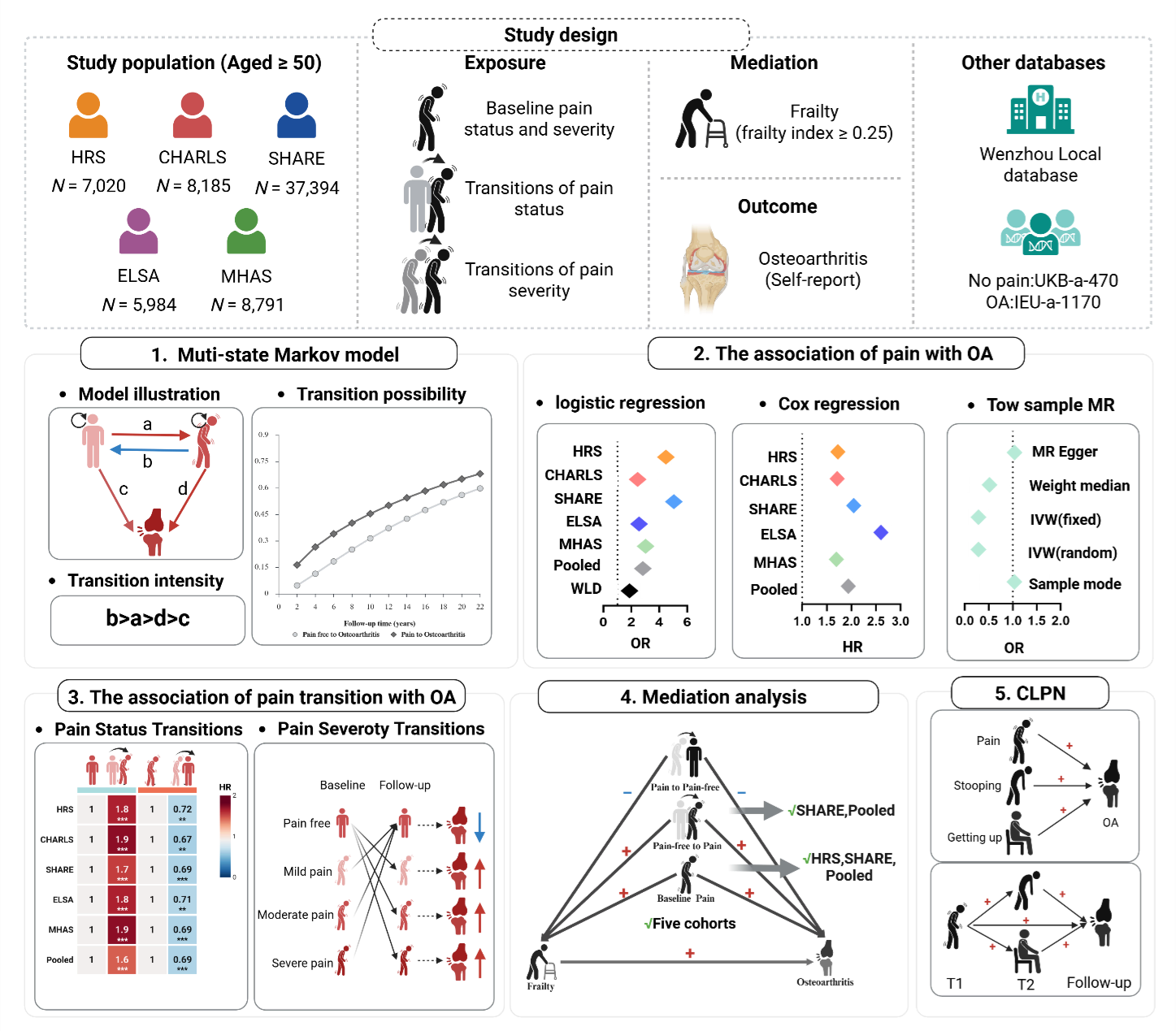
Limit: Self-reported diagnoses or medication use could misclassify incident osteoarthritis
In an observational study, researchers followed 67,374 adults aged 50 or older across five international cohorts to examine links between pain changes and new cases of osteoarthritis, a disease that damages joints. Developing pain was linked to higher osteoarthritis risk, while becoming pain-free was linked to lower risk. These patterns held across pain severity levels.
The statistical analysis suggested that frailty, a state of reduced resilience, accounted for 8.80%–21.70% of the association between pain and osteoarthritis. Mobility limitations, such as difficulty rising from a chair, were the main contributors to this statistical link. Pain in an earlier period predicted mobility decline in the next period, which in turn predicted osteoarthritis in a subsequent period.
Why it matters
Pain and frailty are concerns in aging populations. The findings support investigating whether addressing both together could help reduce the burden of osteoarthritis.
Caveats
The observational cohort results cannot establish that pain or frailty caused osteoarthritis, and these cohorts did not include people younger than 50. The report is a preprint and has not been peer-reviewed.
From the paper
- Participants
The primary longitudinal analyses included 67,374 participants.
Quoted word for word from the full text on researchsquare.com.
The paper
The Second Affiliated Hospital of Wenzhou Medical University; Wenzhou Medical University
Research Square, 16 Oct 2026, Open access, Preprint, not peer-reviewed
