Higher CTI is linked to osteoarthritis risk in prediabetes
Prediabetic adults in the highest CTI quartile had an increased osteoarthritis risk (hazard ratio 1.376) over nine years of follow-up.
Medicine
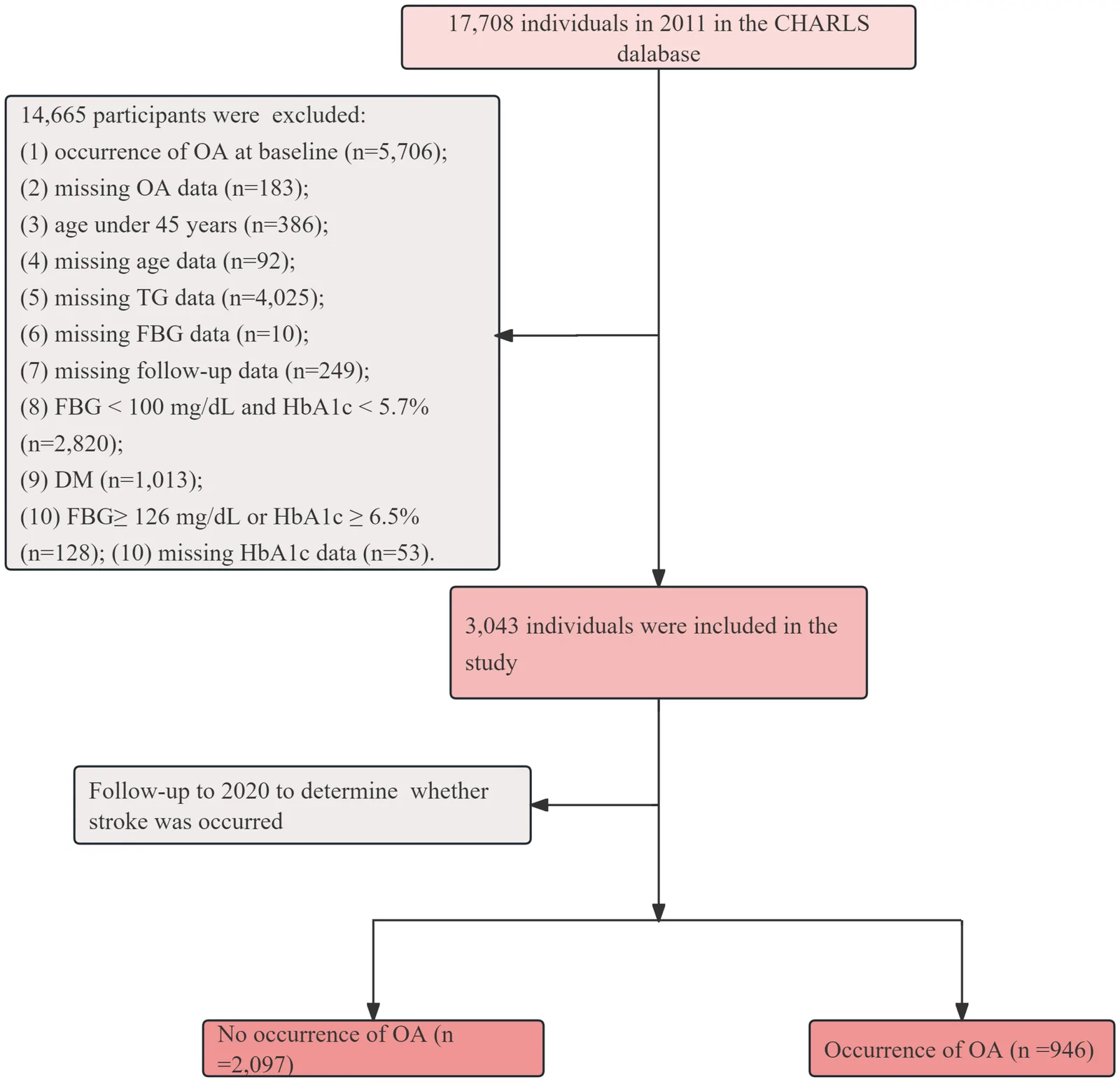
In 3,043 middle-aged and older adults with prediabetes from the China Health and Retirement Longitudinal Study, researchers evaluated the link between the C-reactive protein-triglyceride-glucose index (CTI) and incident osteoarthritis. The index serves as a candidate biomarker reflecting both insulin resistance and systemic inflammation.
Over the 9-year follow-up across Waves 1 to 5, 946 participants (31.09%) developed osteoarthritis. In fully adjusted models, individuals in the highest CTI quartile exhibited the greatest osteoarthritis risk, with a hazard ratio of 1.376 (95% CI, 1.12 to 1.692). The relationship between CTI and osteoarthritis risk was nonlinear (P for nonlinearity = .012). Subgroup analyses showed that participants with a body mass index under 24 and those with a body mass index between 24 and 28 were more sensitive to the adverse effects of higher CTI on osteoarthritis risk (P for interaction = .012).
Why it matters
Osteoarthritis and metabolic dysfunction frequently emerge together in aging populations. The findings suggest that combined measures of insulin resistance and inflammation may help identify individuals at elevated risk for joint degeneration before diabetes develops.
Caveats
Because the study is observational, it cannot determine whether elevated CTI causes osteoarthritis. In addition, the findings reflect a single cohort of prediabetic adults in China and may not generalize to other populations or metabolic profiles.
The paper
Suining Central Hospital
Medicine · 1 Sep 2026 · CC BY-NC