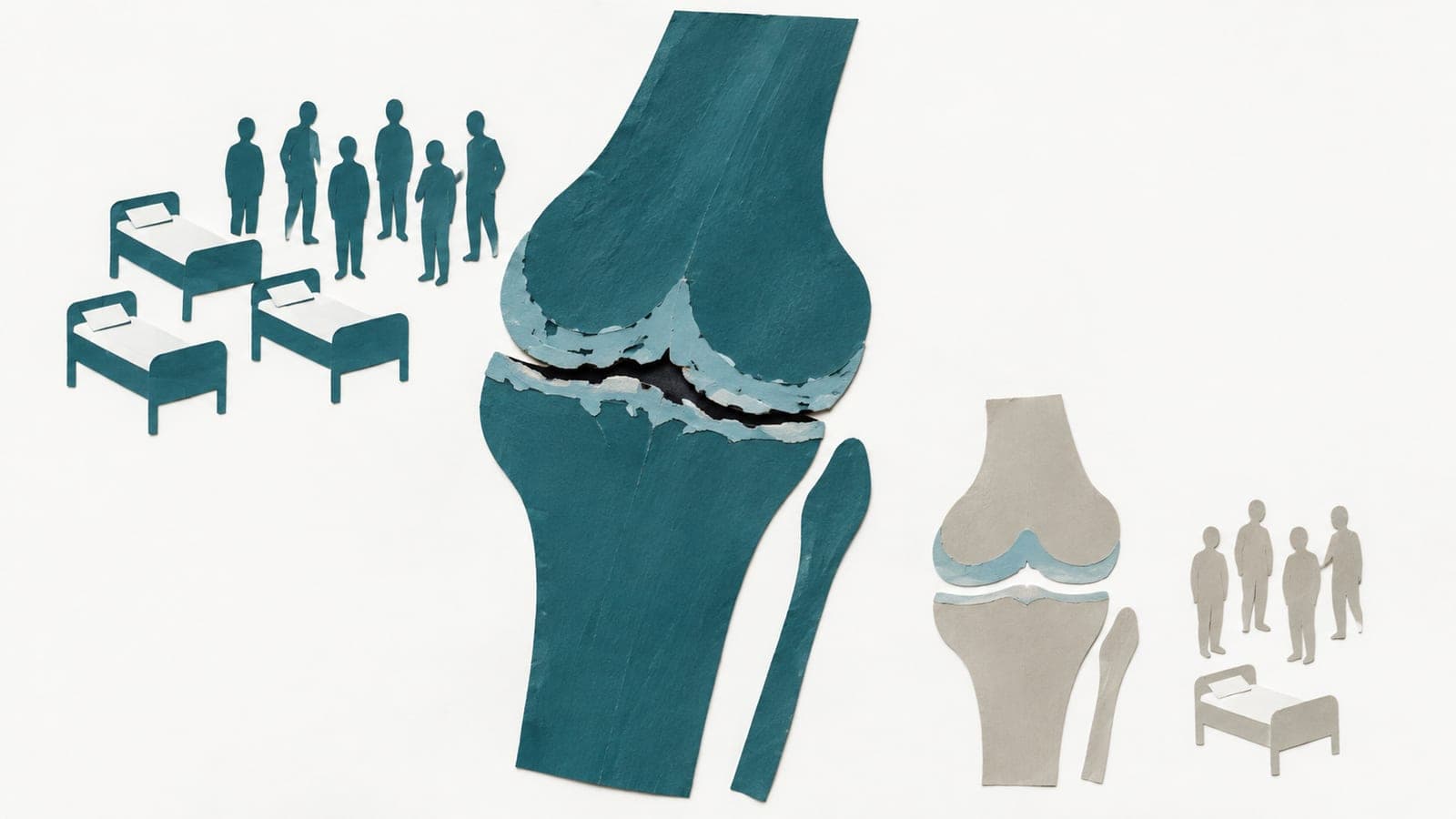
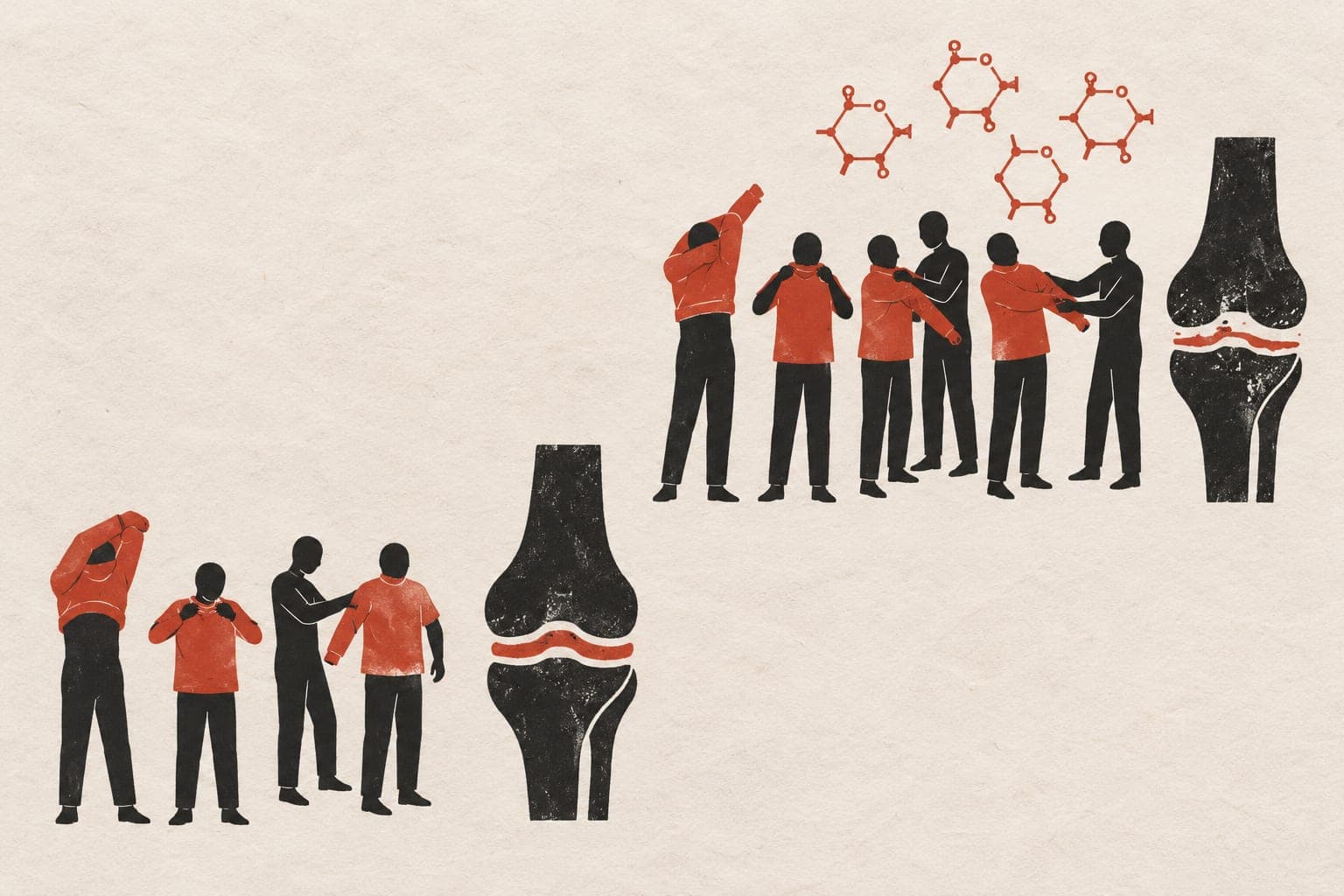
Pain linked to later arthritis diagnosis in adults in China
Pain was linked to later arthritis diagnosis over seven years, with a hazard ratio of 1.81 compared with no pain.
Dose-response, multicentre
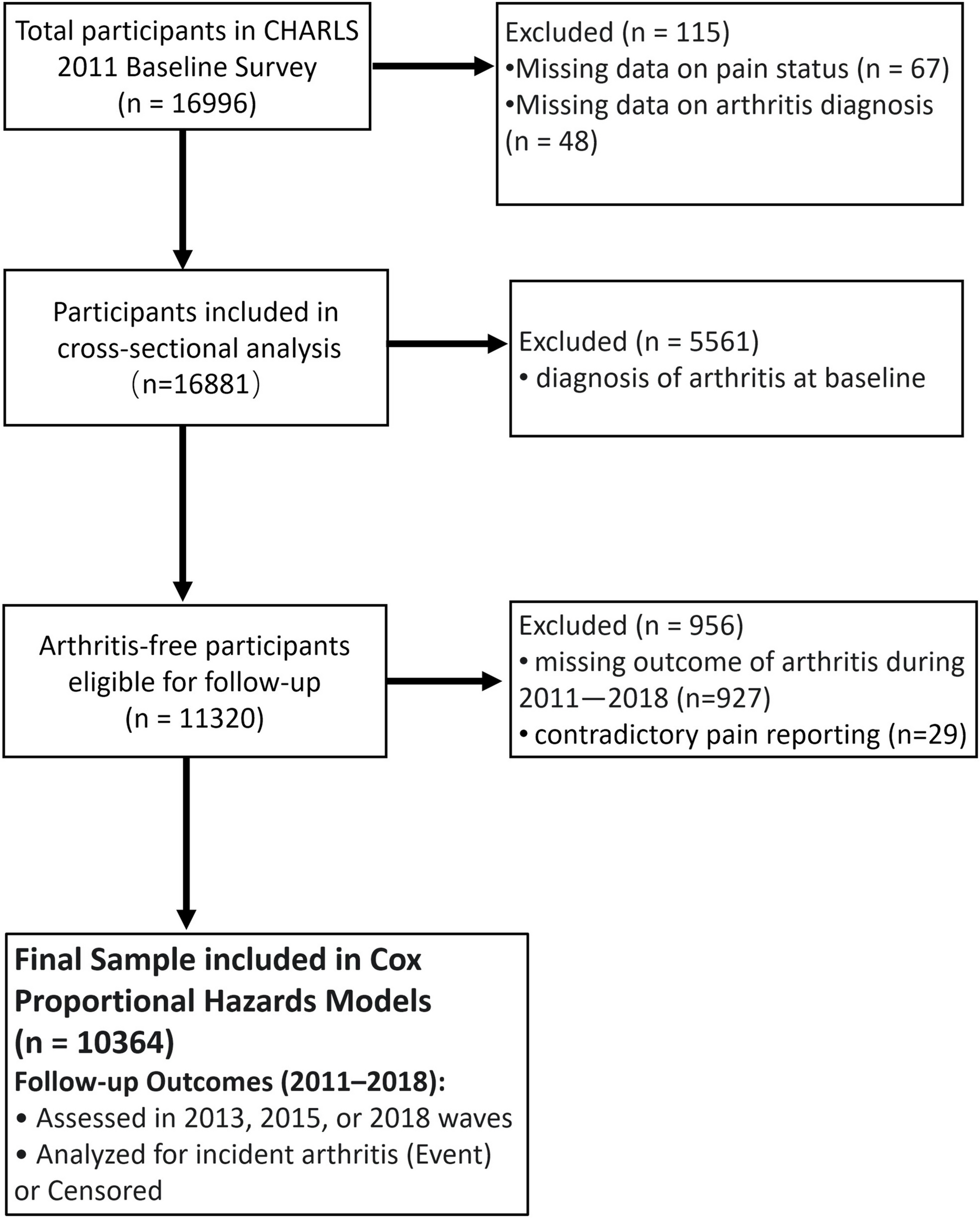
An observational cohort study followed 10,364 adults aged 45 or older in China who were free of arthritis at enrolment. Researchers analysed nationally representative data from 2011 to 2018. Participants reported whether they had pain and how many sites hurt. Researchers used reports from 2011 and 2013 to classify pain as persistent, new or resolved. The outcome was physician-diagnosed arthritis by 2018.
Initial pain was associated with later arthritis diagnosis. The hazard ratio, which compares diagnosis rates during follow-up, was 1.81 for pain versus no pain. The association strengthened as the number of painful sites rose. Pain that had resolved was also linked to later diagnosis. The associations remained in analyses that included a two-year lag to reduce the possibility that existing arthritis explained the pain.
Why it matters
For arthritis risk screening in midlife and later life, the findings support considering a person's history of pain, not just their current symptoms.
Caveats
The observational design could not establish that pain caused arthritis, and participants reported their own pain. The findings concerned adults aged 45 or older without arthritis at enrolment, not younger adults or people with existing arthritis.
The paper
Wenzhou Medical University
BMC Public Health, 14 Oct 2026, Open access, CC BY-NC-ND