Pain linked to later frailty in adults with fatty liver disease
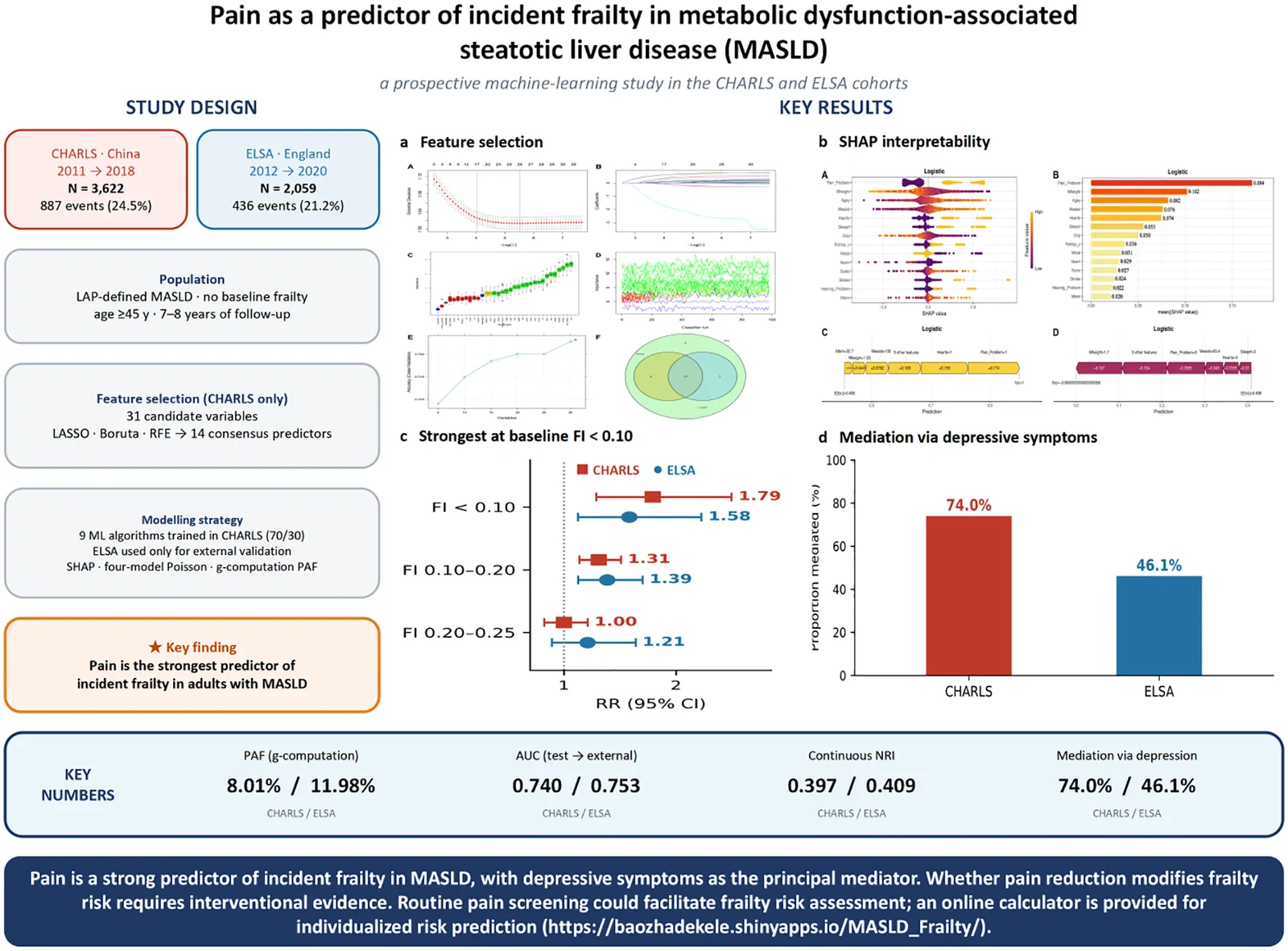
Pain was linked to higher frailty risk, with relative risks of 1.219 in China and 1.310 in England compared with no pain.
Independent replication
The prospective observational study followed 3,622 adults in China and 2,059 in England with metabolic dysfunction-associated steatotic liver disease, a form of fatty liver disease linked to metabolic problems. Their median ages were 56 and 64 years, respectively. None had frailty at the start, and follow-up lasted 7–8 years.
The researchers trained nine prediction models using the Chinese cohort and tested them in the English cohort. Pain was the strongest predictor of developing frailty. It remained linked to higher risk after adjustment for other factors, including participants’ initial frailty scores. The relative risks compared participants with and without pain. Statistical modelling estimated that depressive symptoms accounted for 74.0% of the link in China and 46.1% in England.
Why it matters
For middle-aged and older adults with this form of liver disease, routine pain screening could help assess the risk of becoming frail.
Caveats
This observational study cannot establish whether reducing pain would lower frailty risk, or whether depressive symptoms caused the link.
From the paper
- Participants
The 2011 baseline covered 150 county-level units and 450 communities across 28 provinces and enrolled 17,707 participants, who are followed biennially.
- Result
In CHARLS, the crude RR was 1.921 (95% CI 1.718–2.148); model 2 RR was 1.882 (1.684–2.102); model 3 RR was 1.871 (1.674–2.090); and the fully adjusted model 4 RR was 1.219 (1.085–1.368, P < 0.001).
Quoted word for word from the full text on frontiersin.org.
- Machine learning
- Pain
- Metabolic dysfunction-associated steatotic liver disease
- Depressive symptoms
- Frailty index
- Humans
The paper
Fuyang Second People's Hospital
Frontiers in Endocrinology, 28 Sep 2026