ASXL1-mutant clonal hematopoiesis links to aortic valve disease
In cohort data and cell models, ASXL1 mutations tracked with incident aortic stenosis and promoted valvular calcification that was reduced by IL-1 or IL-6 inhibition.
medRxiv
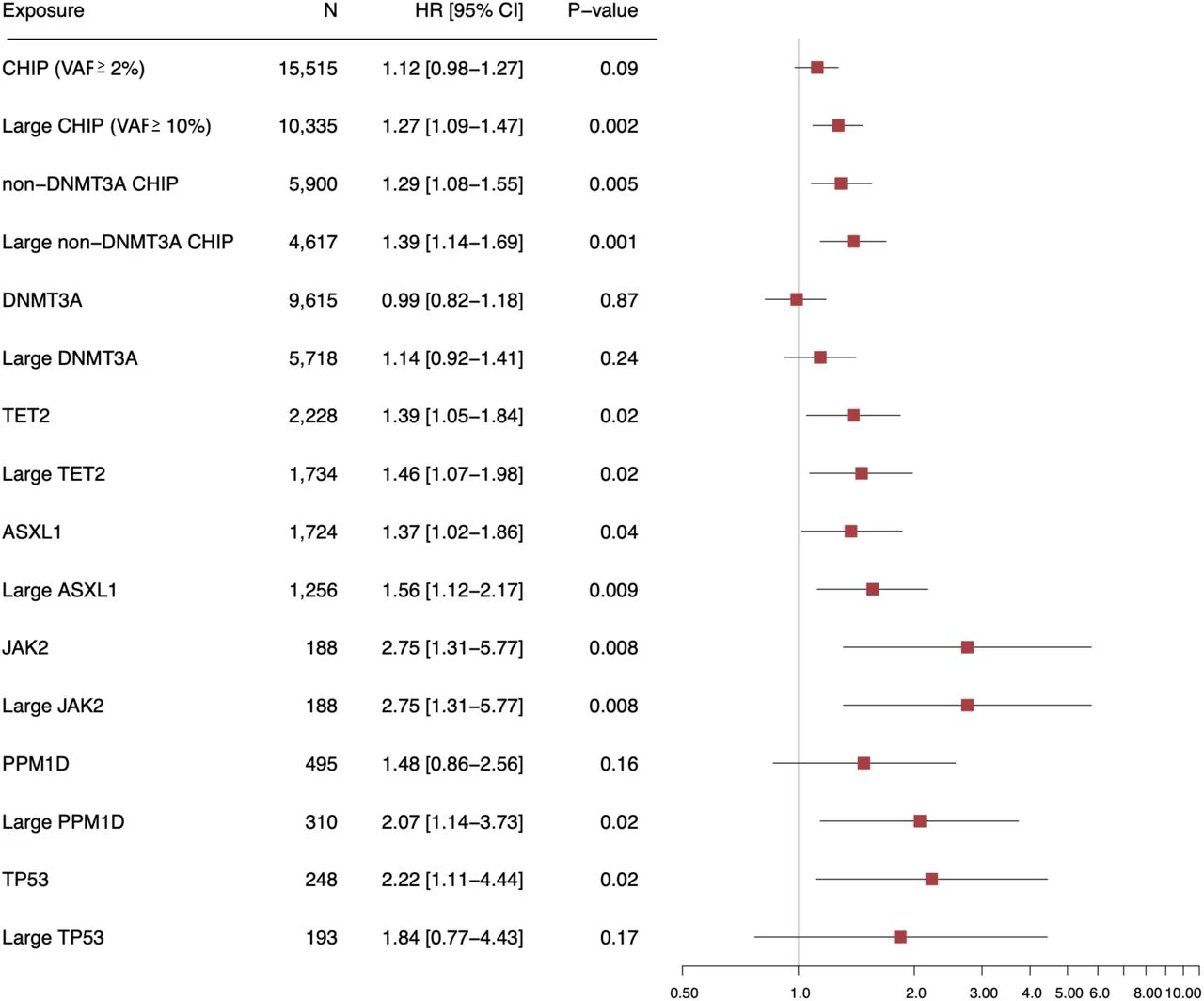
In an analysis of 449,109 participants in the UK Biobank, large clones and non-DNMT3A subtypes of clonal hematopoiesis of indeterminate potential—including ASXL1, TET2, and JAK2—were independently associated with incident aortic stenosis. Among 1,963 individuals in the Atherosclerosis Risk in Communities study, only ASXL1 mutations were associated with worse aortic valve hemodynamics. In cell culture experiments, conditioned media from human ASXL1-mutant macrophage-like cells accelerated calcification in human valvular interstitial cells. Proteomic profiling showed increased inflammatory proteins and AIM2 inflammasome activation in these mutant cells. Inhibiting interleukin-1 with anakinra or interleukin-6 with tocilizumab reduced the accelerated calcification in cultured valve cells.
Why it matters
Clonal hematopoiesis is an age-acquired condition that increases cardiovascular risk through inflammatory signaling. These findings suggest that specific mutation subtypes may contribute to distinct mechanisms of age-related valvular disease that could be targeted pharmacologically.
Caveats
The clinical findings are observational and cannot establish causality, while the mechanistic evaluations relied on cultured cell lines rather than in vivo models. The study is also a preprint that has not yet undergone peer review.
The paper
Show 21 more authors
Cesar De Jeronimo Diaz, Yuto Nakamura, Niekbachsh Mohammadnia, Huajun Liao, Yota Maekawa, Linke Li, Sasha A. Singh, Taku Kasai, Luisa Weiß, Md Mesbah Uddin, Art Schuermans, Spencer Flynn, Elby Mackenzie, James C. Engert, George Thanassoulis, Peter Libby, Amil M. Shah, Christie Mitchell Ballantyne, Pradeep Natarajan, Trevor P. Fidler, Elena Aïkawa,Brigham and Women's Hospital · Massachusetts General Hospital
medRxiv · 29 Sep 2026 · Preprint, not peer-reviewed