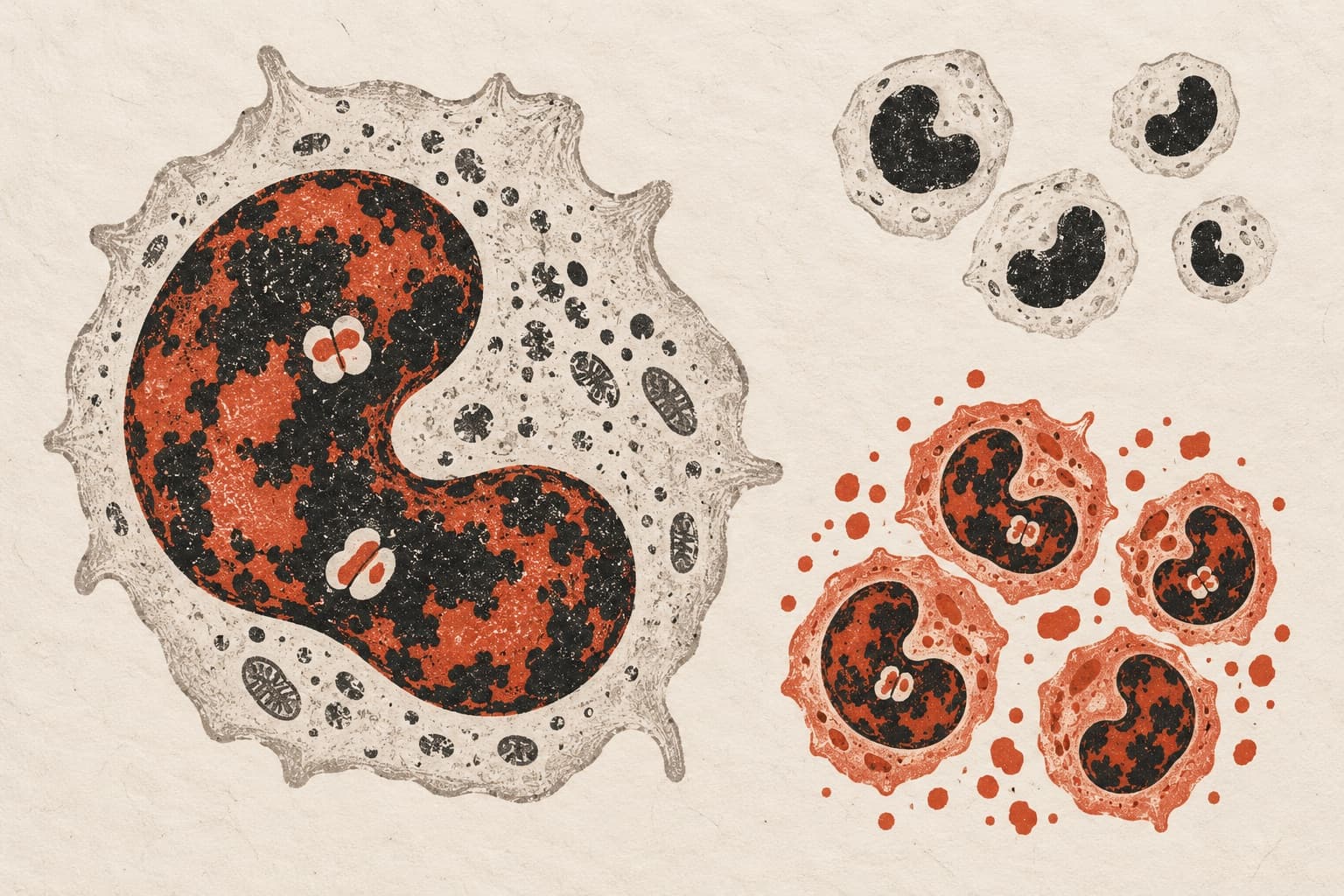
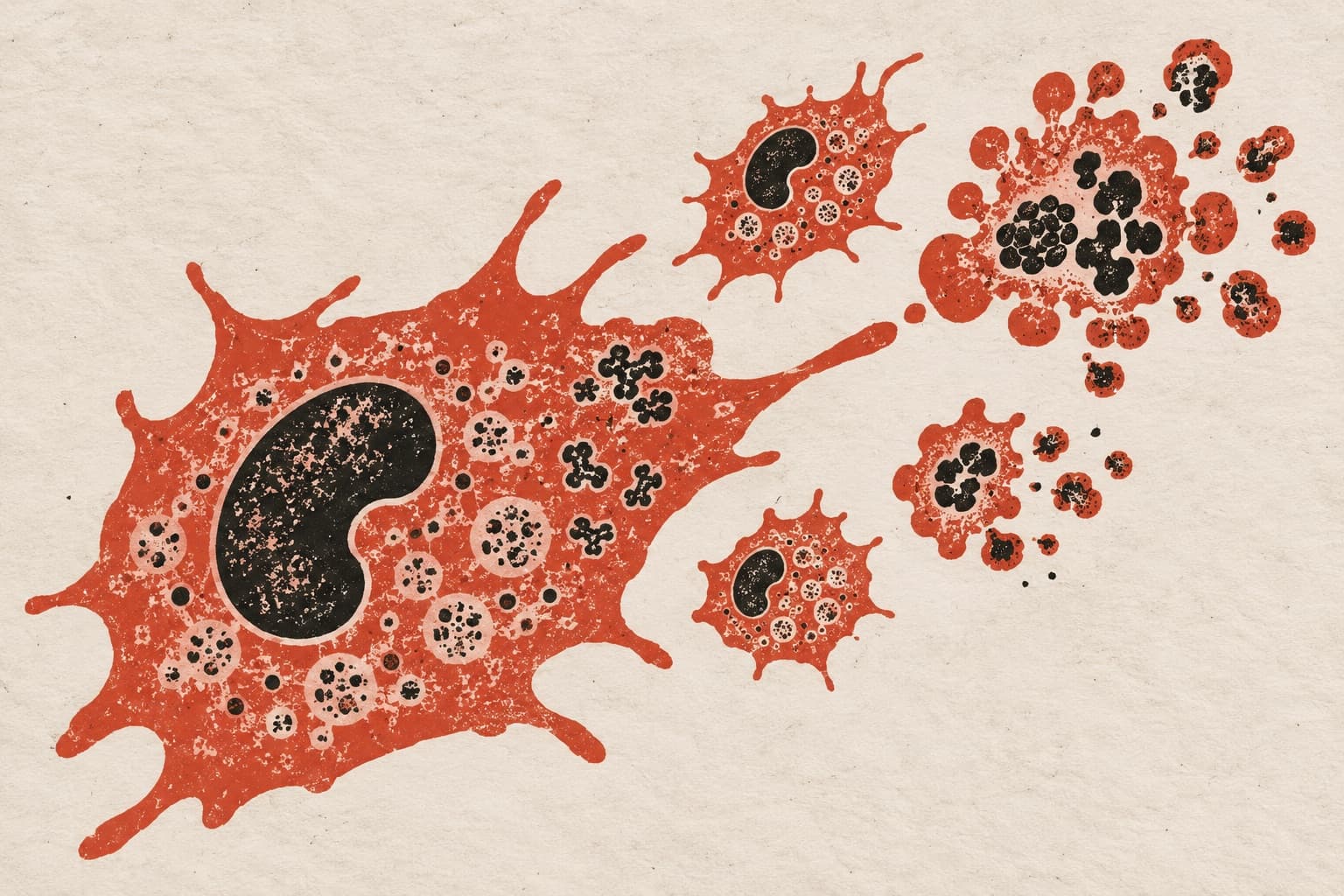
Aging alters neutrophil states across multiple organs in mice
Single-cell profiling of young and aged mice revealed organ-specific neutrophil remodeling, showing subsets enriched for inflammatory and IL-6 pathways that induced senescence-linked responses in vitro.
Aging Cell
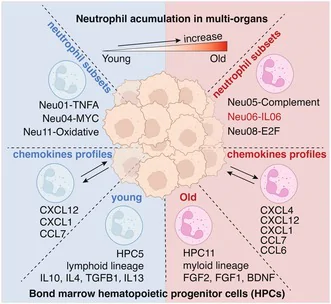
In young and aged mice, researchers integrated multi-organ single-cell RNA sequencing datasets to map aging-associated changes in neutrophils. They identified organ-dependent variations in neutrophil abundance and state composition, noting subsets enriched for transcriptional programs related to inflammation, oxidative stress, complement, and interleukin-6 signaling. In bone marrow, single-cell profiling showed age-associated shifts in progenitor composition, including an old-enriched HPC11 population marked by enhanced myeloid priming. In cell culture, exposing vascular smooth muscle and hepatocyte-derived cells to conditioned media from aged mouse neutrophils, or from IL-6-stimulated neutrophil-like cells, increased inflammatory and senescence-associated responses.
Why it matters
The findings highlight candidate neutrophil states and signaling pathways that may contribute to chronic, age-related inflammatory tissue environments across different organs.
Caveats
The study relies on observational single-cell datasets, computational modeling, and in vitro cell culture assays in mice rather than in vivo functional interventions.
- Aged mouse neutrophil conditioned media
- Resources: datasets, atlases and tools
- Inflammation
- Cellular senescence
- Complement system
- Mice
The paper
Single-Cell Mapping Identifies Aging-Associated Neutrophil Remodeling Across Multiple Organs