Purpurin reduced joint damage and osteoarthritis pain in mice
An animal experiment found that purpurin reduced degeneration of the meniscus, a knee cushion, in mice with surgically induced osteoarthritis.
Limit: Assessment ended 8 weeks after surgery; long-term benefits were not measured
Edited by Boris Djordjevic · AgingResearch.News
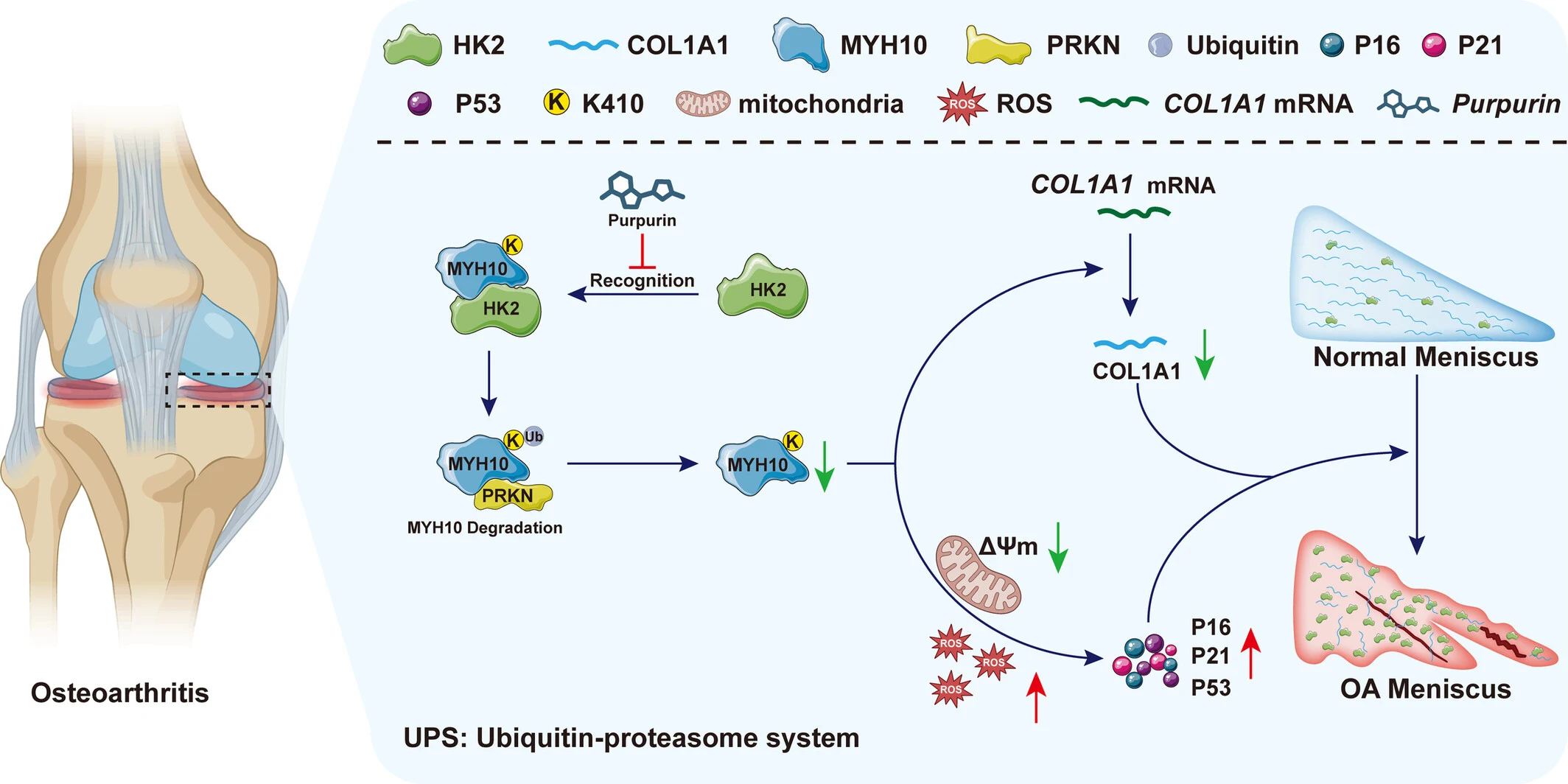
Experiments in mice with osteoarthritis induced by destabilizing the meniscus, a cushioning structure in the knee, found that purpurin reduced meniscus degeneration, loss of material surrounding its cells and osteoarthritis-associated pain.
The researchers also examined human meniscus tissue and primary meniscal cells grown in the lab. Human osteoarthritis tissue had higher levels of hexokinase 2, an enzyme that helps break down sugar, than normal tissue. In the cells, a form unable to perform its usual chemical reaction promoted loss of surrounding material and senescence, a state in which cells stop dividing. Purpurin disrupted an interaction between the enzyme and another protein and reduced senescence in lab experiments. The authors concluded that the enzyme promoted meniscal senescence through a function separate from sugar processing.
Why it matters
Cell senescence is an aging-related process that may offer a target for osteoarthritis research. The authors described purpurin as a promising starting point for drugs intended to change the disease’s course.
Caveats
The purpurin findings came from mice and lab experiments, not treatment studies in people. The abstract does not report animal numbers, purpurin dose or treatment duration.
From the paper
- Limitation
First, a meniscal specimen bank covering different OA stages was unavailable, limiting a comprehensive correlation analysis between HK2 expression and OA severity.
Quoted word for word from the full text on onlinelibrary.wiley.com.
- Purpurin
- Adeno-associated virus expressing catalytically inactive HK2
- HK2
- Cellular senescence
- Osteoarthritis
- Mice
The paper
The First Affiliated Hospital
Cell Proliferation, Oct 29, 2026


