Mice lacking a gut protein resist metformin-associated weight loss
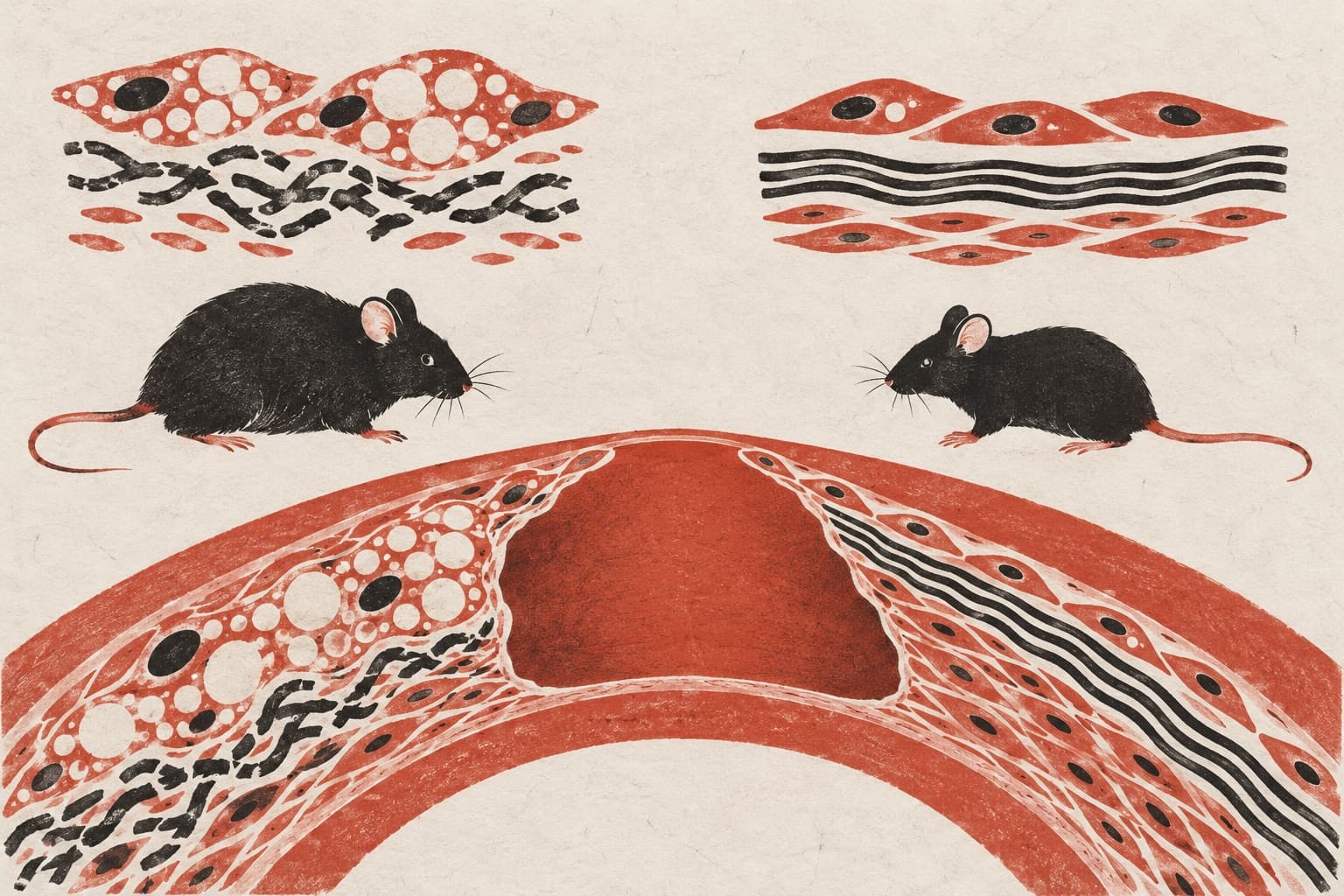
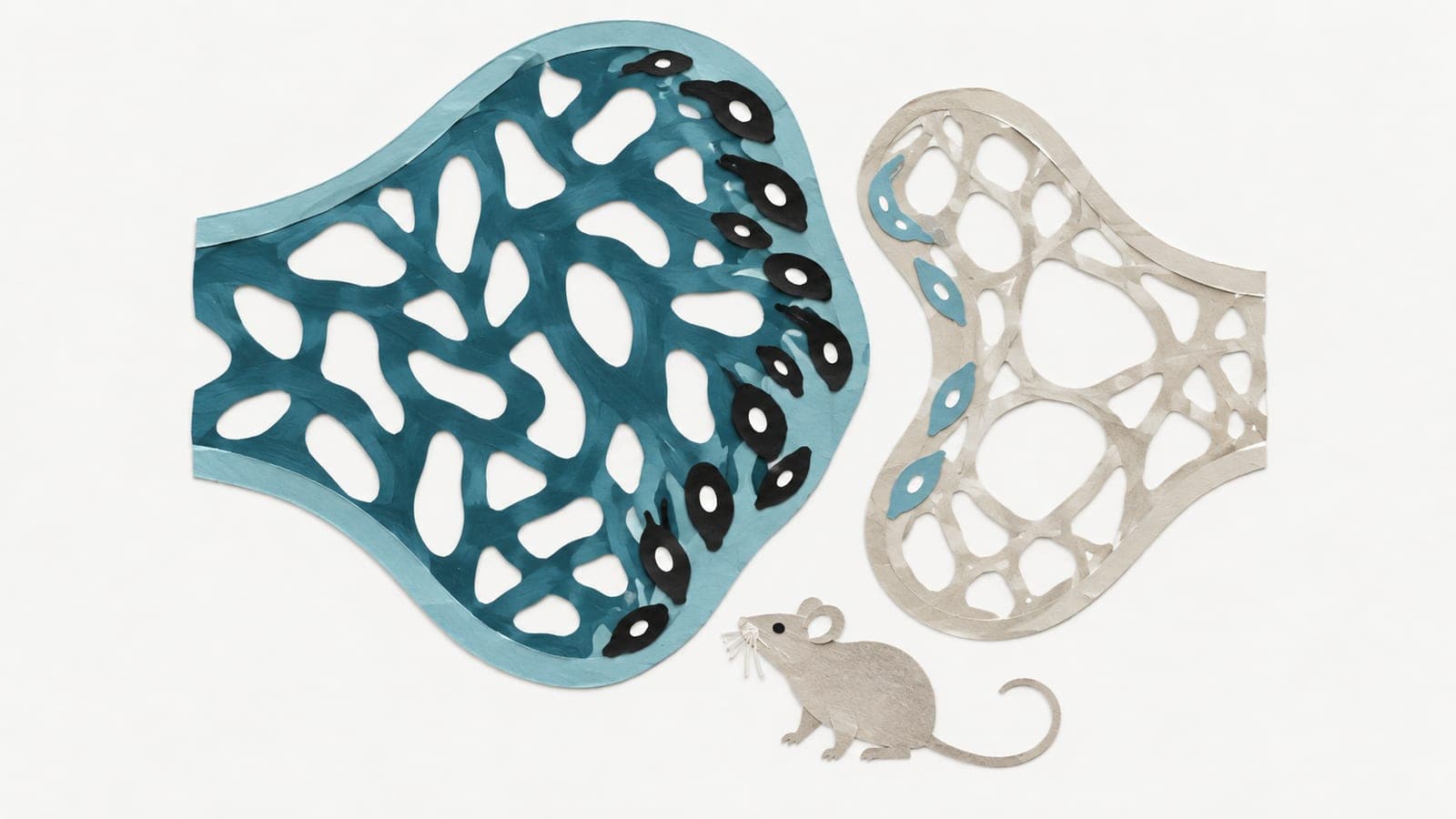
Mice fed a high-fat diet resisted metformin-associated weight loss when they lacked a protein that releases an appetite-suppressing molecule from intestinal cells.
Limit: The abstract omits group sizes, metformin doses, and treatment duration
Stake: An author founded Merrifield Therapeutics and holds shares in it. An author founded Arkana Therapeutics and holds shares in it.
Edited by Boris Djordjevic · AgingResearch.News
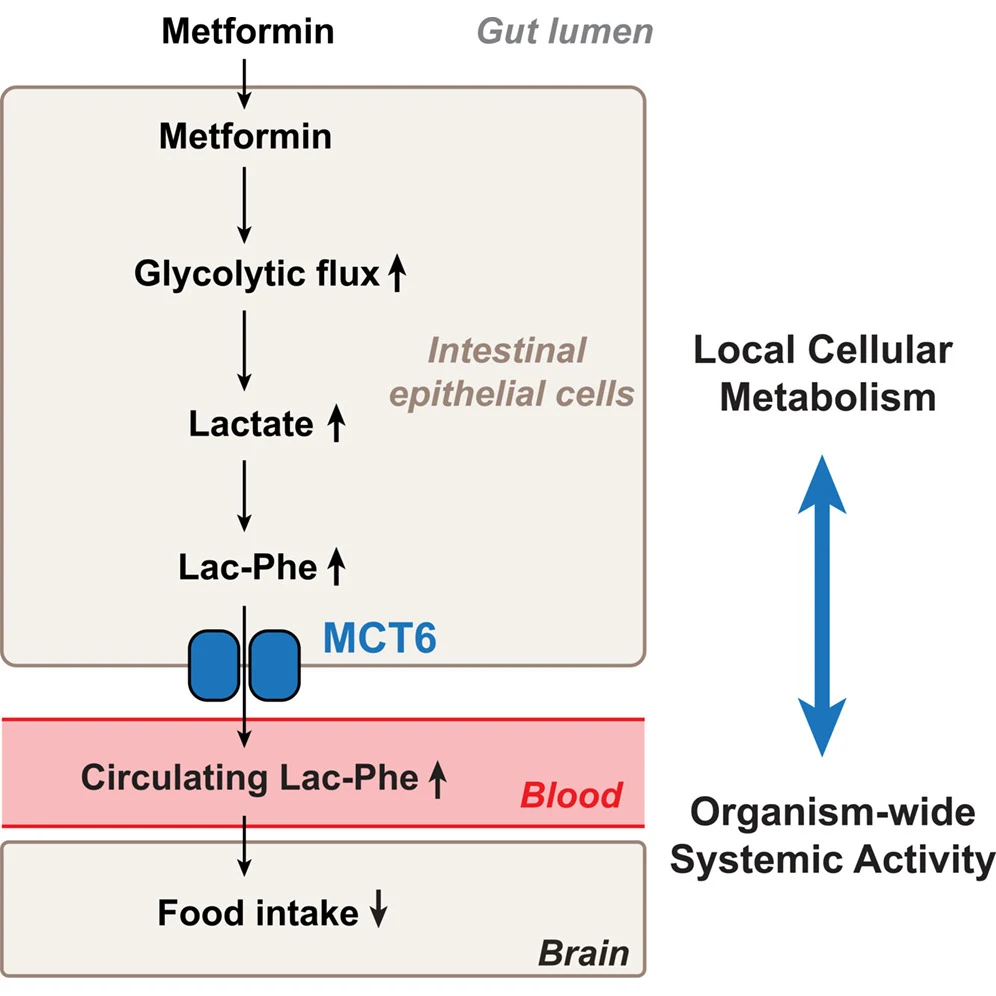
In experiments in mice fed a high-fat diet, researchers removed the gene for MCT6, a protein that transports molecules across cell membranes. They removed it either throughout the body or only in cells lining the intestine. Both groups resisted weight loss associated with metformin. Giving mice lacking MCT6 an external supply of N-lactoyl-phenylalanine, an appetite-suppressing molecule, normalized their body-weight response.
Experiments in cells showed that MCT6 moved this molecule out of cells. In mice, the protein was required to maintain normal levels of the molecule in the blood, particularly after metformin or high-intensity exercise. The findings identified MCT6 as an intestinal exporter that allows a molecule made inside cells to act elsewhere in the body.
Why it matters
The work addresses how intestinal metabolism influences whole-body weight regulation, a question relevant to metabolic health in aging research.
Caveats
The weight-loss evidence came from genetically altered mice fed a high-fat diet, not people. The abstract did not report group sizes, metformin doses or treatment duration.