Cold activates a chemical network that extends lifespan in worms
Experiments in worms found that boosting production of a cold-induced molecule in muscle promoted longevity and reduced protein clumping at normal or elevated temperatures.
Limit: Experiments were not blinded, creating potential bias in lifespan scoring
Edited by Boris Djordjevic · AgingResearch.News
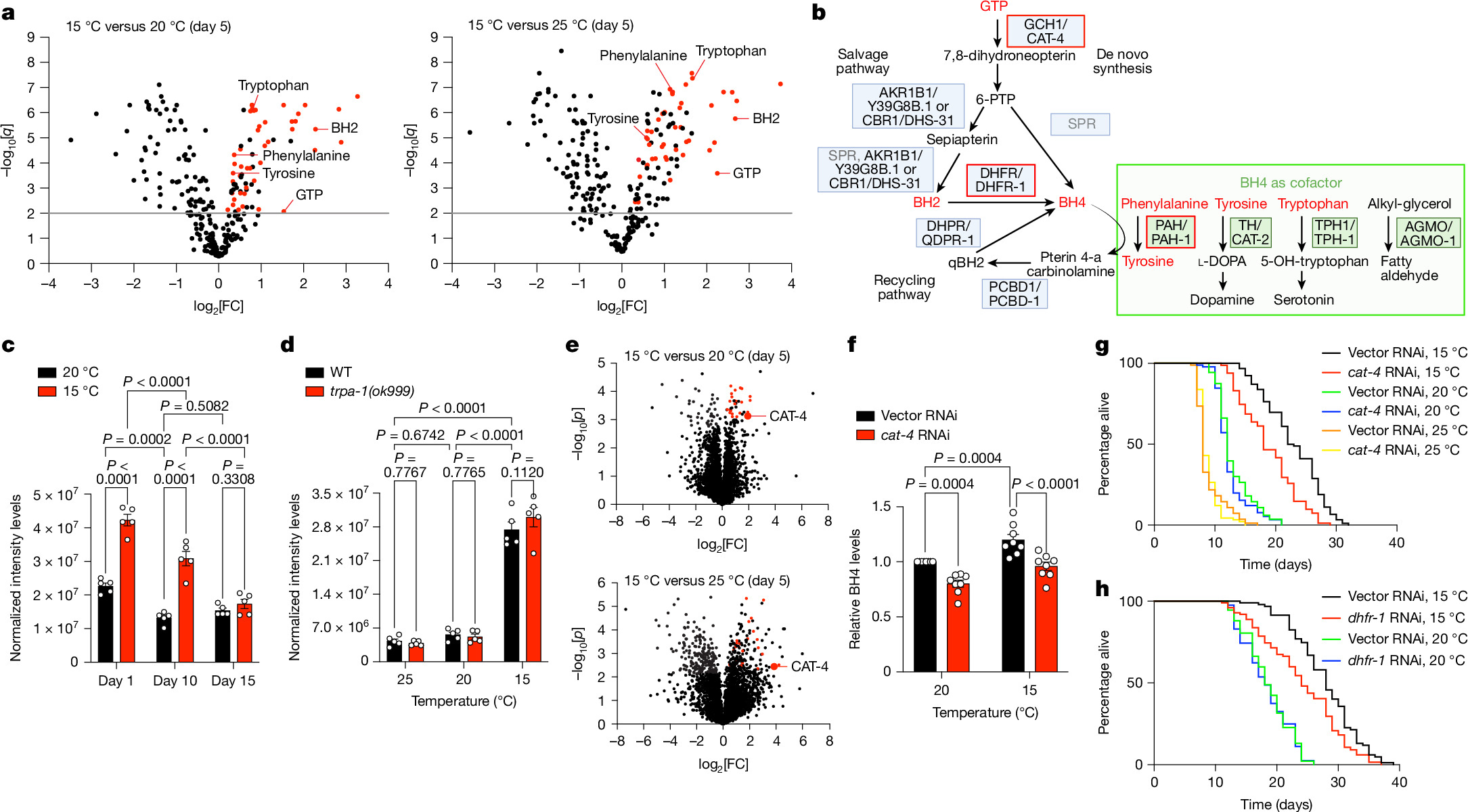
In experiments with Caenorhabditis elegans worms, researchers found that cold increased production of dihydrobiopterin (BH2), a molecule made by metabolism. Muscle produced BH2 and sent it to other tissues, including the intestine and nerve cells. There, cells converted it into an active form that helped an enzyme make tyrosine, an amino acid. This process extended lifespan.
Increasing BH2 production only in muscle also promoted longevity and reduced disease-related protein clumping in distant tissues, even at normal or elevated temperatures. In human cells grown in the lab, adding BH2 or tyrosine reduced clumping of proteins linked to Huntington’s disease and amyotrophic lateral sclerosis, a disease that damages nerve cells.
Why it matters
The study addresses how temperature can influence lifespan and the ability to keep proteins from clumping as animals age.
Caveats
These were laboratory experiments in worms and human cells, not studies in people. The lifespan findings came from worms and do not establish benefits for human longevity.
The paper
Cold activates a BH2 metabolic network promoting longevity and proteostasis
University of Cologne
Nature, Oct 21, 2026, Open access


