Ginseng compound extended lifespan and preserved movement in worms
In worm experiments, the ginseng-derived compound also preserved touch sensitivity and restored age-impaired function in nerve cells’ waste-processing compartments.
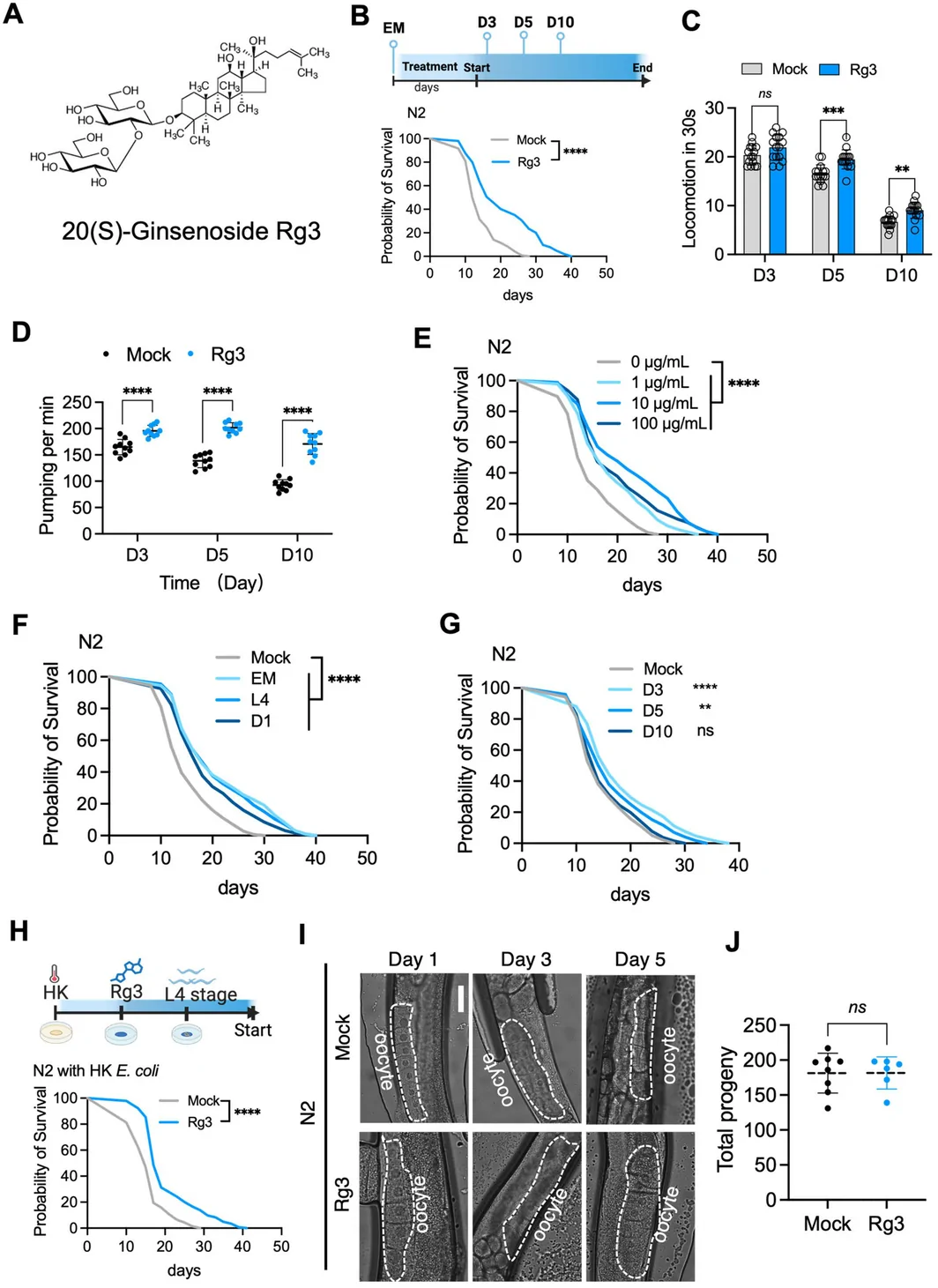
In experiments with Caenorhabditis elegans worms, researchers tested 20(S)-ginsenoside Rg3, a ginseng-derived compound, for effects on lifespan and function during aging. The compound extended lifespan and preserved movement and pharyngeal pumping, the muscular action worms use to feed. It also maintained touch-sensing nerve cells and touch sensitivity.
In nerve cells, Rg3 restored age-impaired function in lysosomes, compartments that break down cellular waste. It also restored the flow of material through autophagy, a process that delivers cell components for breakdown. Together, the lifespan and physical-function results indicated that Rg3 delayed functional aging in these worms.
Why it matters
Declining lysosome function and failing protein maintenance contribute to vulnerability to neurodegeneration during aging. The study points to regulation of lipids at lysosomal membranes as a possible target for healthy aging and nerve-cell protection.
Caveats
These were laboratory experiments in worms, not tests in people. The abstract did not give the size of the lifespan extension, sample sizes, doses or treatment duration.