Gold nanoparticles reversed ovary shrinkage in mice
In a mouse model of pollutant-induced ovarian dysfunction, the particles also reversed shrinkage of the uterus and normalized levels of a hormone involved in reproduction.
Limit: The abstract omits nanoparticle doses and treatment duration
Edited by Boris Djordjevic · AgingResearch.News
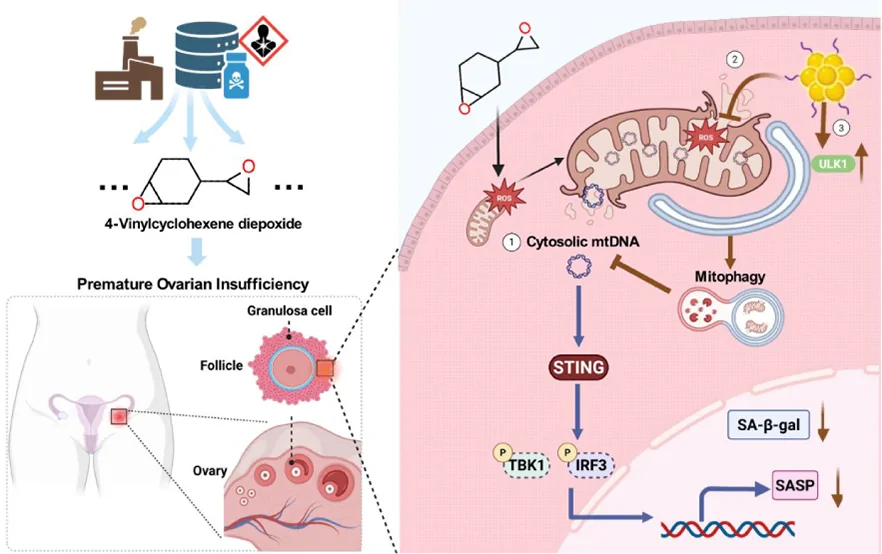
In an animal experiment, mice with pollutant-induced premature ovarian insufficiency received ultrasmall gold nanoparticles. This condition means the ovaries stop working normally too early. The researchers induced it with 4-vinylcyclohexene diepoxide, an environmental pollutant. The particles reversed shrinkage of the ovaries and uterus. They also normalized levels of follicle-stimulating hormone, which helps regulate reproduction. The researchers detected no toxicity.
The researchers also reported that the particles eased pollutant-induced aging in granulosa cells, which support developing eggs. The particles neutralized reactive oxygen molecules in mitochondria, the cells’ energy-producing structures. They also activated mitophagy, the removal of damaged mitochondria. Together, these effects restored mitochondrial function and prevented the release of mitochondrial DNA.
Why it matters
Pollutant-induced early reproductive decline has limited treatment options. The work suggests that maintaining mitochondrial function may offer a way to address this condition by targeting processes involved in cell aging.
Caveats
The findings came from animal research using a chemically induced condition, not a study in people. The abstract did not report sample sizes, doses or treatment duration.
- Gold nanoparticles
- Mitophagy
- Cellular homeostasis
- Premature ovarian insufficiency
- Follicle stimulating hormone
- Mice
The paper
Beijing University of Technology
Environment & Health, Jul 2, 2026, Open access
