Bile acid corrected abnormal fat-cell formation in human cells
Lab experiments in bone marrow cells from patients with postmenopausal osteoporosis also found reduced senescence, a state in which cells stop dividing.
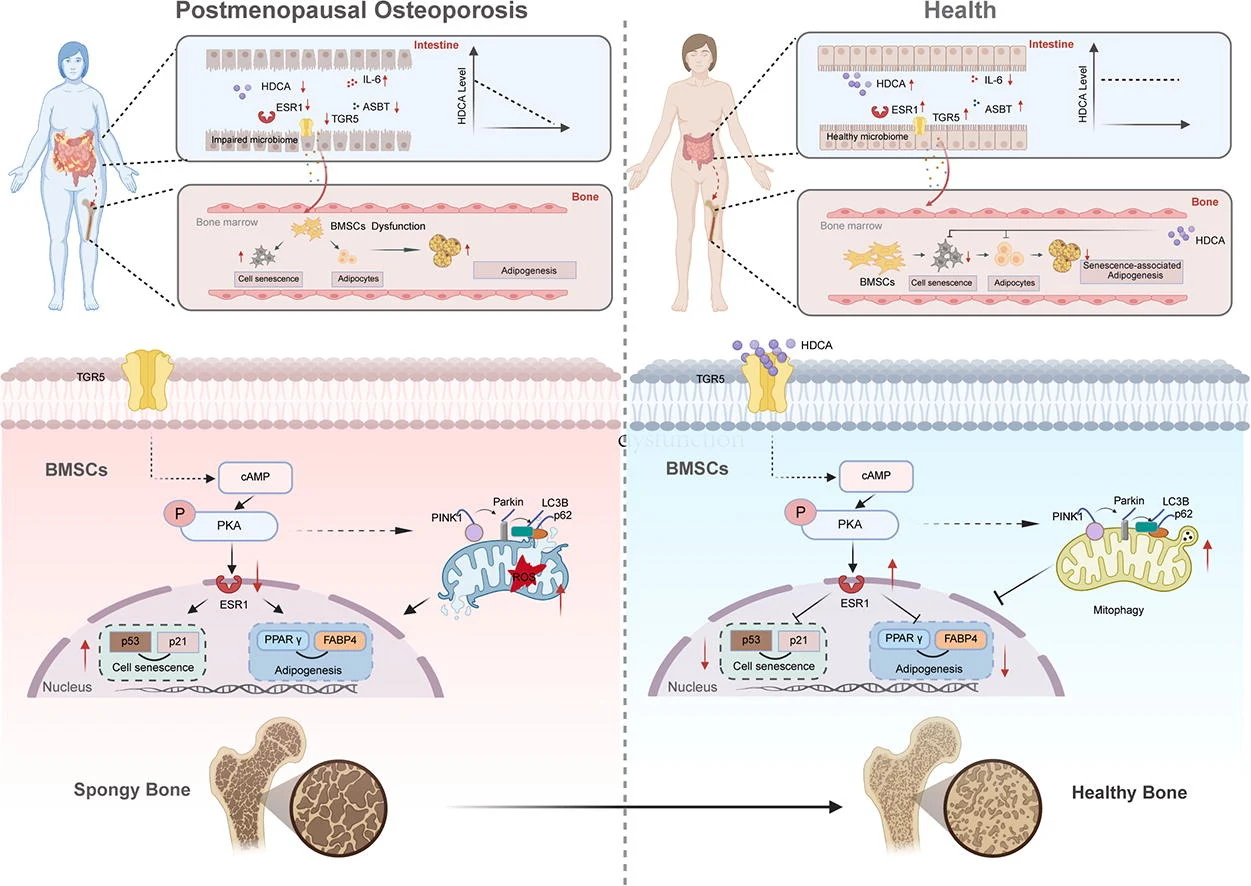
In laboratory experiments, researchers exposed bone marrow stromal cells—cells that can develop into bone or fat cells—from patients with postmenopausal osteoporosis to hyodeoxycholic acid, a bile acid. Osteoporosis weakens bones; this form occurs after menopause. The researchers also compared blood bile acids in patients and healthy donors.
Hyodeoxycholic acid showed the largest reduction among bile acids that differed between the groups. Lower levels were linked to more senescence, a state in which cells stop dividing, and fat-cell formation. Adding the bile acid to patient-derived cells reduced senescence more at higher doses and corrected abnormal fat-cell formation. It activated signalling that promoted mitophagy, the removal of damaged mitochondria, the cells’ energy-producing structures. In mice whose ovaries had been removed, oral hyodeoxycholic acid reversed deterioration in bone structure.
Why it matters
Bone marrow cell senescence is implicated in osteoporosis after menopause. The work offers a basis for exploring non-hormonal approaches to this age-related condition.
Caveats
The supplementation experiments involved lab-grown cells and mice, not patients. The abstract did not report sample sizes, doses or treatment duration.
The paper
the First Affiliated Hospital of Sun Yat-sen University
Journal of Advanced Research, 10 Oct 2026