Microneedle patch improved muscle mass and endurance in mice
Researchers tested a patch designed to release muscle-targeted packages from human umbilical cord stem cells in mice with age-related muscle loss.
Limit: Adverse effects were not reported in the abstract
Edited by Boris Djordjevic · AgingResearch.News
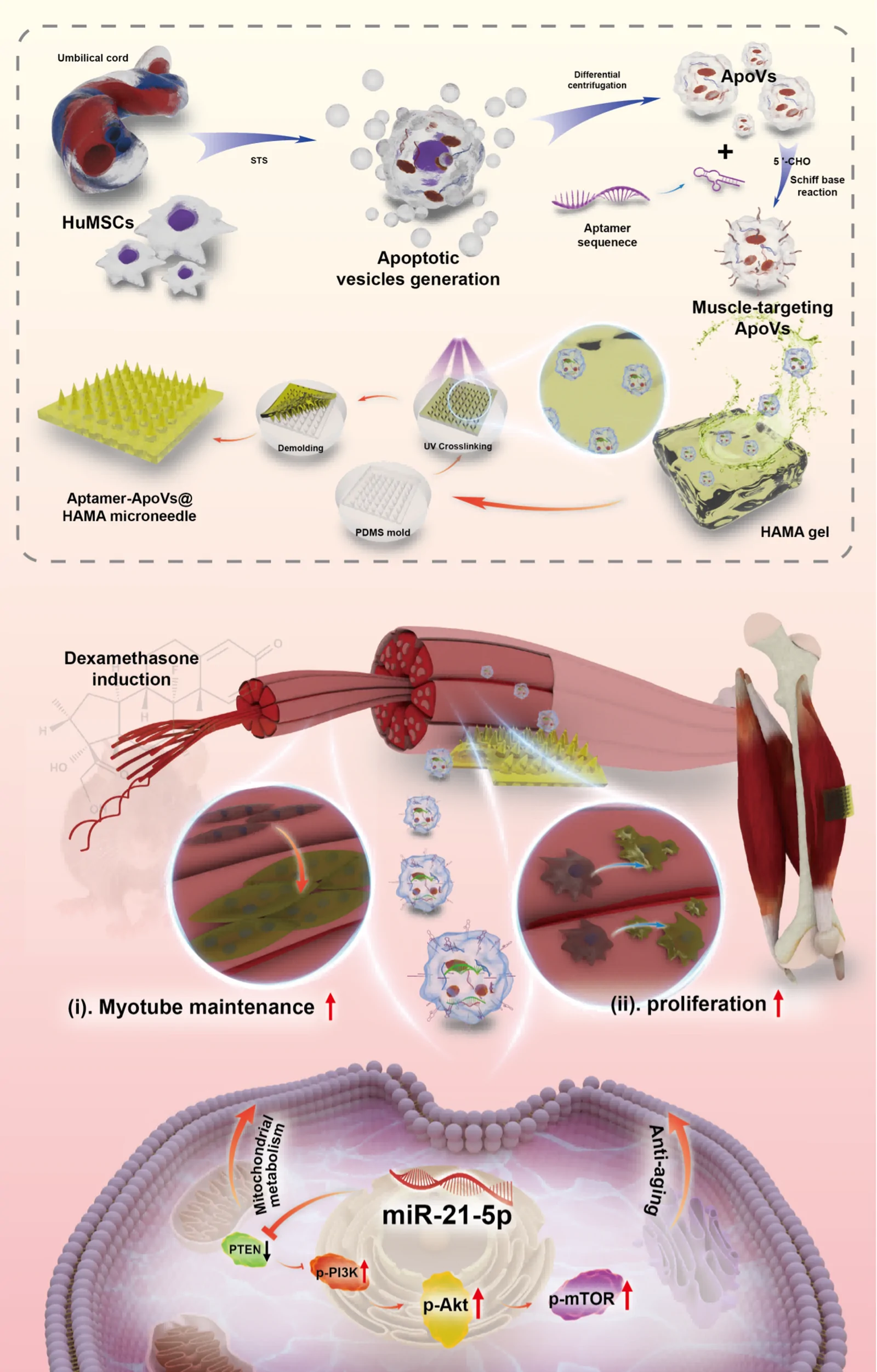
In an animal experiment, researchers tested a microneedle patch in mice with sarcopenia, an age-related loss of muscle mass and function. The patch carried tiny membrane-bound packages from human umbilical cord stem cells undergoing programmed cell death. Researchers engineered these packages to target muscle and embedded them in a gel patch with tiny needles, designed for sustained release.
Compared with controls, mice given the patch had greater muscle mass, larger muscle fibers in cross section and better endurance. The researchers also reported improved mitochondrial oxidative capacity—the ability of cells’ energy-producing structures to use oxygen to generate energy.
Why it matters
Mitochondrial dysfunction is implicated in age-related muscle loss. The work supports investigating targeted, cell-free delivery approaches for addressing muscle decline.
Caveats
The mouse experiment does not establish benefits in people. The abstract did not report the number of mice, treatment dose or duration, or adverse effects.
- Mesenchymal stem cell-derived apoptotic vesicles
- Muscle-targeted apoptotic vesicle microneedle patch
- Cellular homeostasis
- Oxidative phosphorylation
- Sarcopenia
- Mice
The paper
Fujian Medical University
Journal of Nanobiotechnology, Jul 24, 2026, Open access
