A gene-control protein reduced senescence in nerve cells
Experiments examined how raising Glis1, a protein that controls gene activity, affected aging-related cell dysfunction after spinal cord injury.
Limit: Animal and laboratory-cell results are not separated, obscuring which system showed reduced senescence
Edited by Boris Djordjevic · AgingResearch.News
In animal experiments and experiments in nerve cells grown in the lab, researchers examined Glis1, a protein that controls gene activity, after spinal cord injury. They focused on senescence, an aging-related state of lasting cell dysfunction.
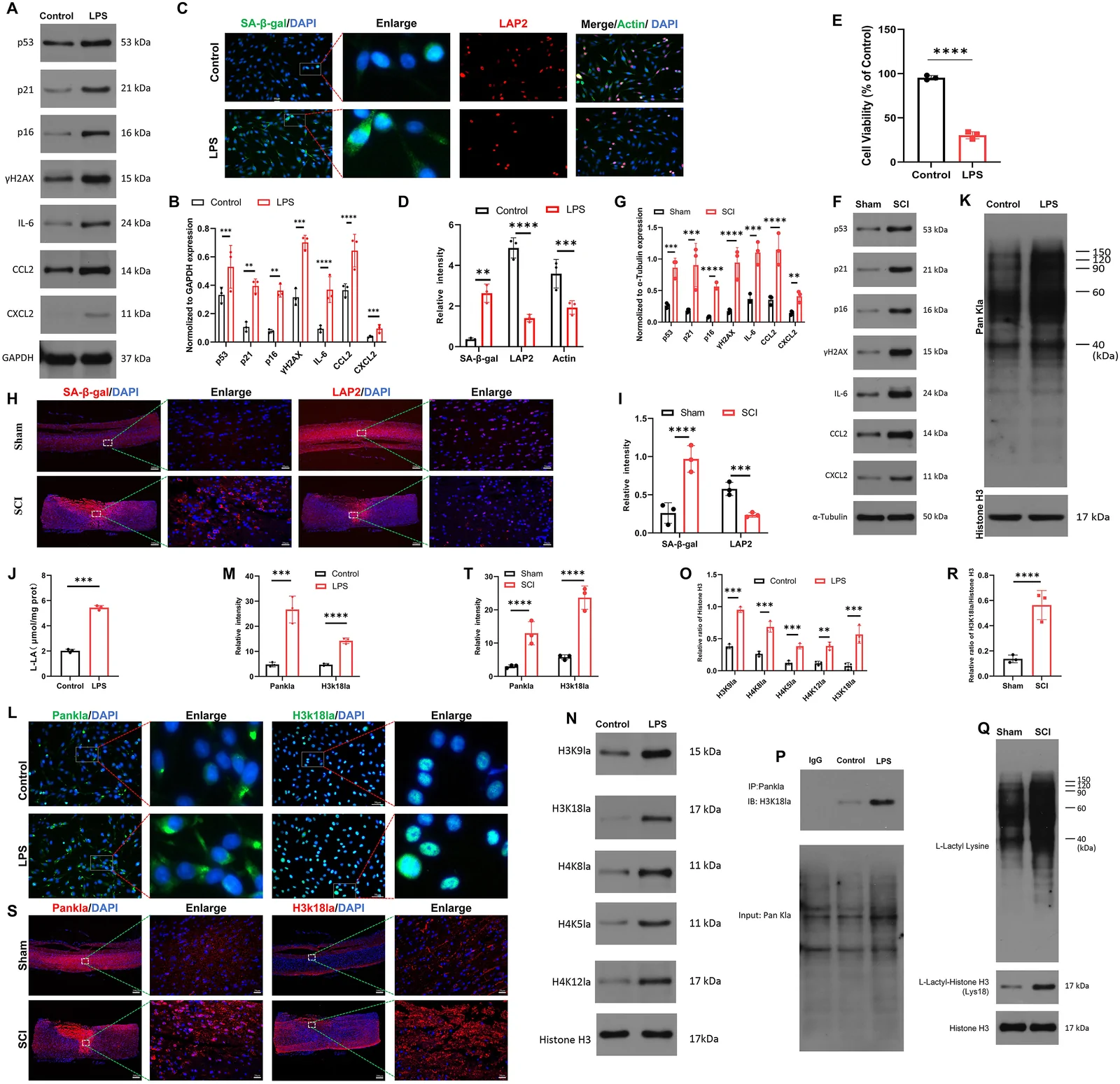
After injury, lactate levels rose in nerve cells alongside senescence. Raising Glis1 levels reduced senescence and increased histone lactylation, a chemical change that uses lactate to modify proteins around which DNA is wrapped. The researchers also identified secretogranin II, a protein regulated downstream of Glis1. It provided negative feedback by curbing sugar breakdown and lactylation, while suppressing nerve-cell senescence. The findings pointed to a pathway connecting Glis1, changes to DNA-packaging proteins and senescence after spinal cord injury.
Why it matters
Nerve-cell senescence impedes spinal cord repair. Understanding how cells regulate this aging-related state may identify targets for research on repairing an injured spinal cord.
Caveats
These were animal and laboratory-cell experiments, not studies in people. The abstract did not identify the animal species, sample sizes or experimental durations, or separate the results from the two systems.
- GLIS1
- Cellular senescence
- Epigenetic regulation of gene expression
- Spinal cord injury
- Lactate
- H3K18 lactylation
The paper
Fudan University
Genes & Diseases, Jul 23, 2026, Open access


