Mitochondria-targeted drug delivery systems for aging-related diseases: Mechanisms, strategies, and advances
Abstract
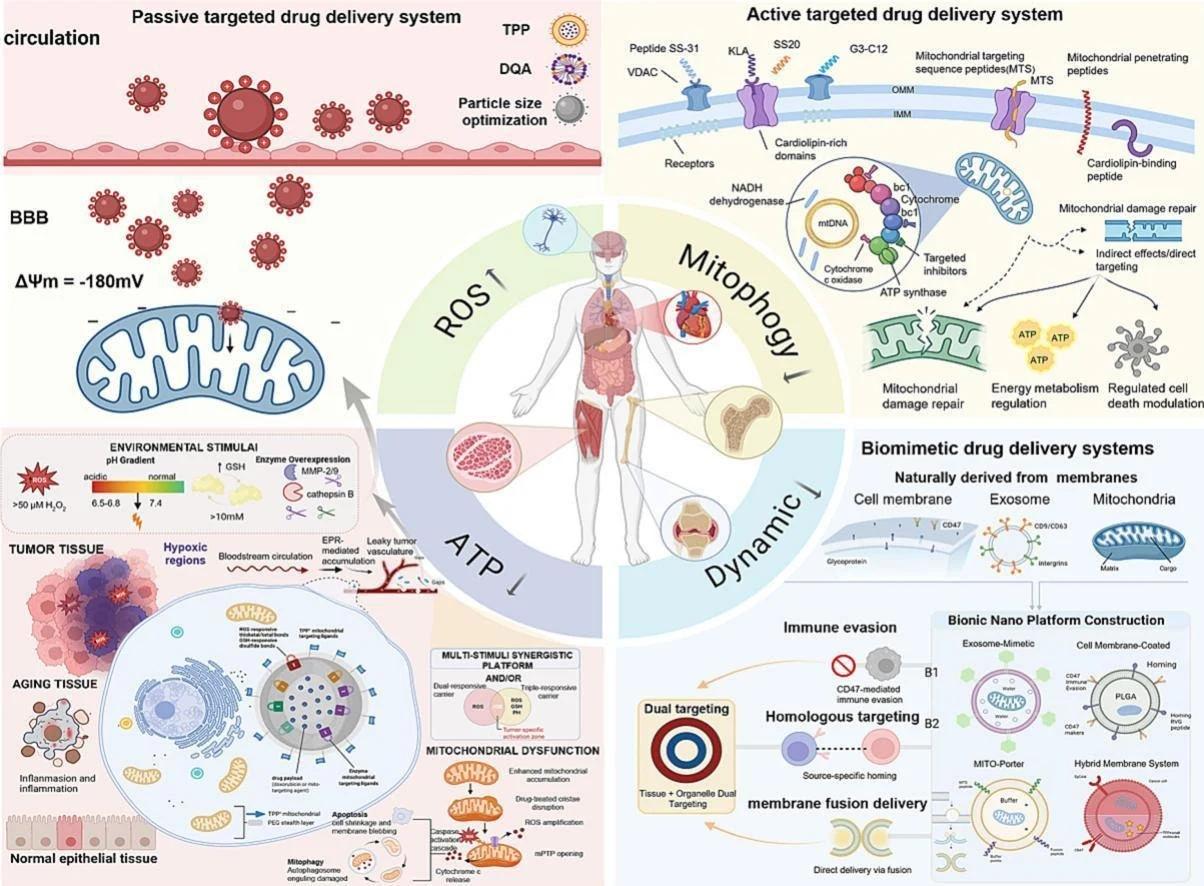
Mitochondrial dysfunction, characterized by increased oxidative stress, impaired energy metabolism, disrupted mitochondrial dynamics, abnormal quality control, and activation of apoptosis, represents a critical pathological basis for a wide range of aging-related diseases (ARDs), including neurodegenerative diseases, cardiovascular disorders, sarcopenia, and osteoarthritis. Mitochondria-targeted drug delivery systems increase the effective concentration of bioactive molecules within these dysfunctional organelles, offering novel strategies for the precise modulation of mitochondrial function. This review summarizes structural and functional changes in mitochondria during aging and their associations with major ARDs. We comprehensively review key advances in the design principles, mechanisms of action, and applications of passive targeting, stimuli-responsive systems, active targeting, and biomimetic drug delivery platforms. In addition, emerging interventions such as NAD⁺ supplementation, mitochondrial gene delivery, EV-mediated mitochondrial delivery and mitochondrial transplantation are discussed. Despite the demonstrated potential of these systems to restore mitochondrial homeostasis and tissue functionality in various disease models, their clinical translation remains constrained by obstacles including unstable targeting efficacy under pathological conditions, insufficient long-term safety of materials, manufacturing complexity, and a lack of standardized evaluation criteria. Future efforts should focus on integrating disease heterogeneity, advanced materials, and multi-omics technologies to advance mitochondria-targeted therapies toward standardization, individualization, and diagnostic-therapeutic integration.
- Mitochondria-targeted drug delivery systems
- Ev-mediated mitochondrial delivery
- Cellular homeostasis
- NAD+ metabolism
- Cardiovascular disorder
- Neurodegenerative disease
The paper
College of Pharmacy and Food; Sichuan Academy of Medical Science & Sichuan Provincial People's Hospital
Journal of Controlled Release, 16 Oct 2026

