Low-Frequency Whole-Body Vibration and Isometric Exercise in Cardiac Rehabilitation: Improved Capacity and Triglyceride-Glucose Index
1 participants, 8 weeks
Abstract
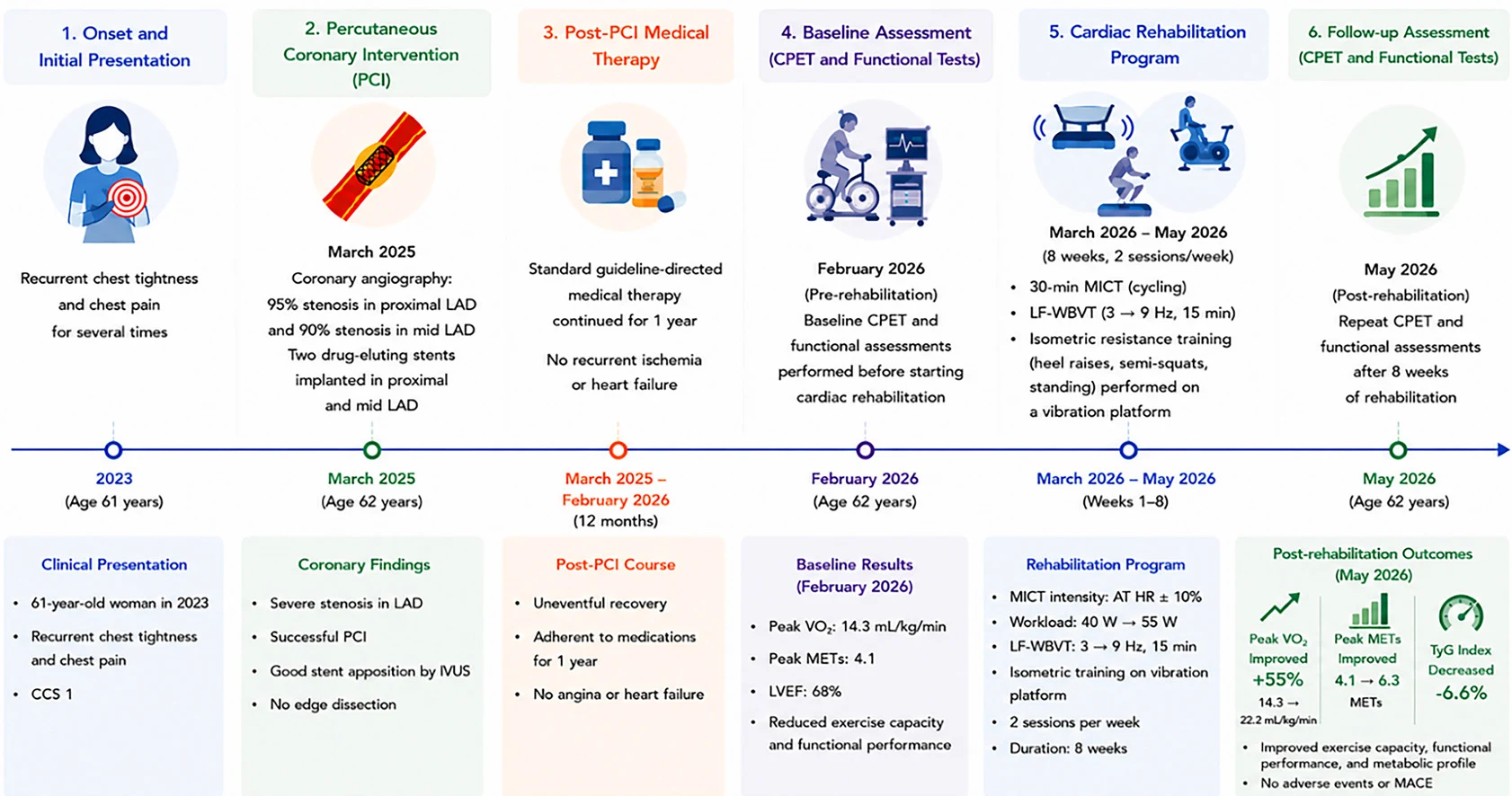
BACKGROUND: Exercise intolerance may persist in patients with chronic coronary syndrome despite successful percutaneous coronary intervention. Evidence regarding low-frequency whole-body vibration training (LF-WBVT) remains limited. CASE SUMMARY: A 62-year-old woman underwent cardiac rehabilitation for reduced exercise capacity 1 year after percutaneous coronary intervention. Baseline peak oxygen uptake was 14.3 mL/kg/min. She completed an 8-week program consisting of moderate-intensity continuous aerobic training, LF-WBVT (3-9 Hz), and isometric lower-extremity resistance exercise. Peak oxygen uptake increased to 22.2 mL/kg/min, and oxygen pulse increased from 8.7 to 9.6 mL/beat. No major adverse cardiovascular events occurred. DISCUSSION: This combined strategy improved both cardiorespiratory fitness and metabolic health. The triglyceride-glucose index reduction is a novel finding, suggesting lower future cardiovascular risk. TAKE-HOME MESSAGES: LF-WBVT with isometric exercise is safe in selected patients with chronic coronary syndrome. Triglyceride-glucose index may serve as a metabolic biomarker for rehabilitation outcomes.