Chios Mastic in Well-Controlled Hypertension: Findings From the HYPER-MASTIC Randomized Controlled Trial
3 months, double-blind, placebo-controlled, dose-response
Abstract
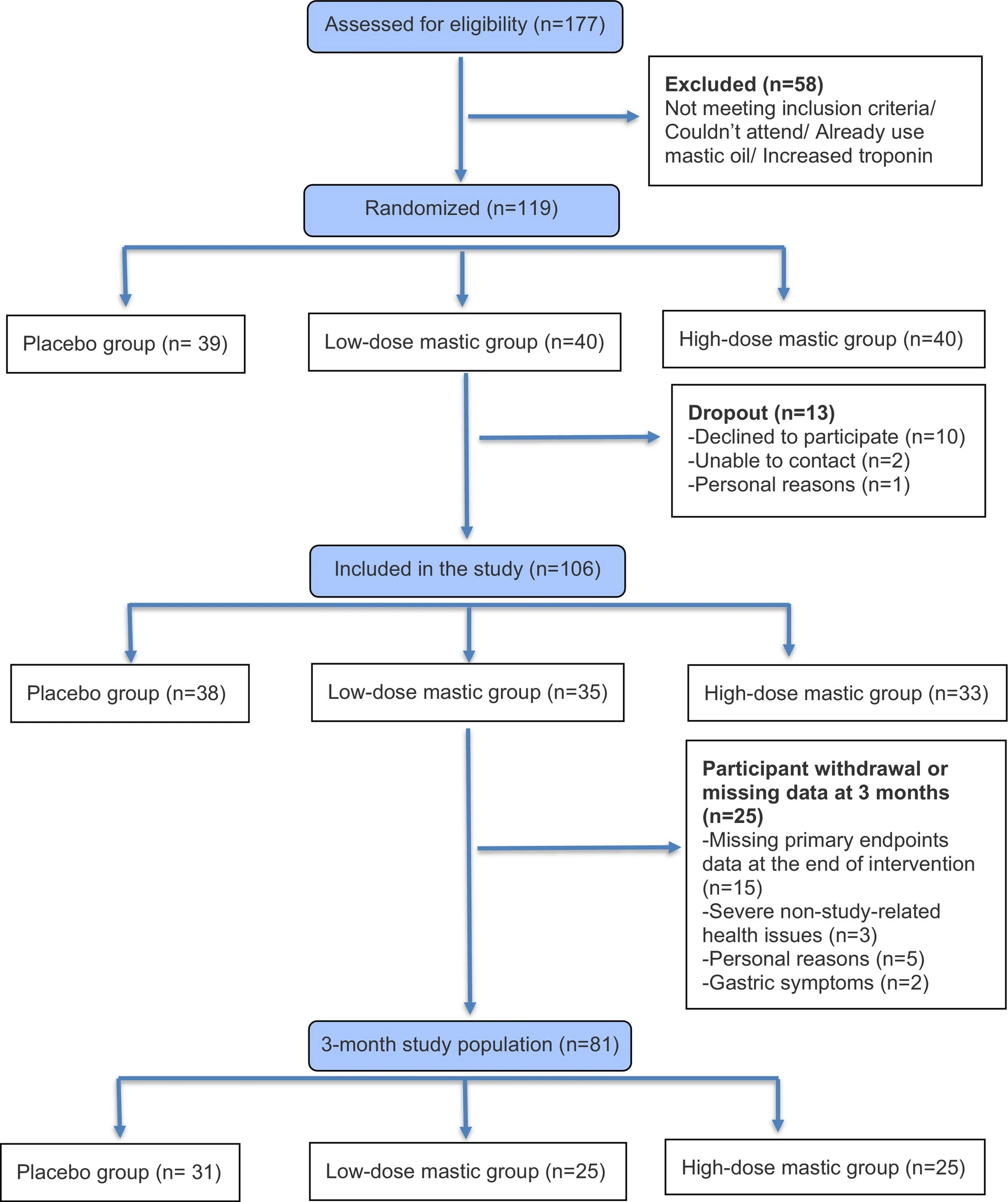
Residual cardiovascular risk persists in patients with adequately controlled hypertension, driven partly by inflammation, oxidative stress and endothelial dysfunction. Chios mastic (Pistacia lentiscus var. Chia) has shown antihypertensive, antioxidant and vascular effects in experimental and clinical settings. This trial evaluated whether Chios mastic supplementation confers additional cardiovascular benefits in well-controlled hypertensive individuals. In this double-blind, randomized, placebo-controlled trial, 106 adults with stable, well-controlled hypertension and variable cardiovascular risk, based on SCORE2, received low-dose Chios mastic (1500 mg/day), high-dose Chios mastic (2800 mg/day) or placebo for 3 months. Primary endpoints were changes in 24-h ambulatory systolic and diastolic blood pressure. Secondary endpoints included vascular function, oxidative stress and proteasome activity in peripheral blood mononuclear cells and red blood cells. Transcriptomic profiling was performed in a predefined high-risk subgroup. Chios mastic supplementation was well tolerated, with high adherence confirmed by dose-dependent increases in plasma masticadienonic and isomasticadienonic acids. No significant between-group differences were observed in 24-h systolic or diastolic blood pressure after the intervention. Oxidative stress markers and proteasome activity remained unchanged across groups. In high-risk participants, mastic supplementation induced distinct transcriptomic changes, particularly in pathways related to endothelial junction organization and vascular integrity. Overall, in adults with well-controlled hypertension and low baseline cardiovascular risk, Chios mastic supplementation did not lower blood pressure over 3 months, likely reflecting a ceiling effect. Transcriptomic findings suggest biologically meaningful vascular effects in individuals with higher residual cardiovascular risk, supporting future investigation in higher-risk populations.
- Pistacia lentiscus
- Oxidative stress and ROS signalling
- Ubiquitin–proteasome system
- Hypertension
- 24-h ambulatory diastolic blood pressure
- Humans
The paper
Harokopio University of Athens; National and Kapodistrian University of Athens
Pharmacology Research & Perspectives, 16 Oct 2026