Genome sequencing detected rare mutations in human cells
The approach accurately detected single-letter changes present in fewer than 1% of DNA copies at a given position in cells grown in the lab.
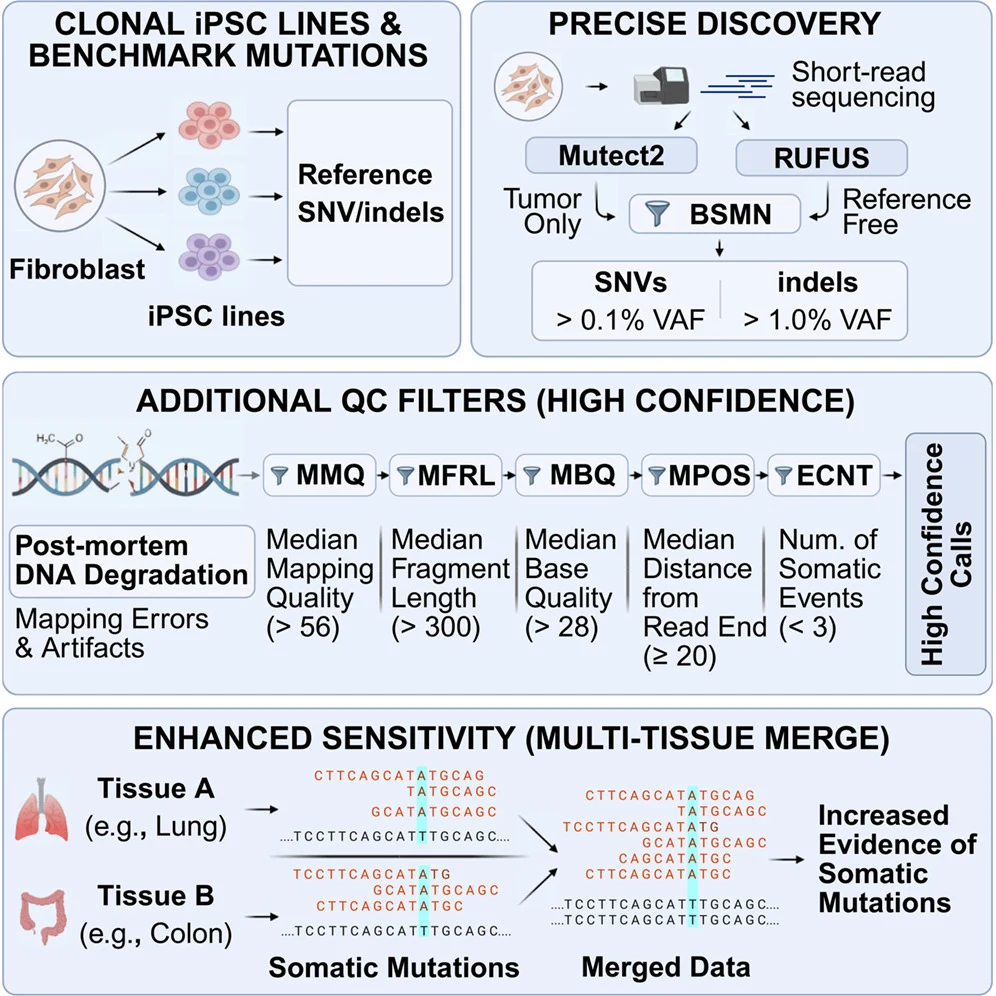
In an experiment using primary human fibroblasts, cells that make connective tissue, researchers tested how accurately whole-genome sequencing detected rare mutations. They also used induced pluripotent stem cells, reprogrammed cells that can develop into many cell types, to identify mutations known to be present or absent in the fibroblasts.
The researchers used Illumina sequencing to search for mutations and PacBio and AVITI sequencing to confirm them. In DNA regions reliably accessible to methods that read short DNA fragments, they accurately detected single-letter changes below a 1% variant allele fraction—the share of DNA copies carrying a change at a given position. They detected small insertions or deletions outside repeated runs of one DNA letter down to 1%. Within those runs, reliable detection required more than 3%.
Why it matters
Accurate measurement of mutations acquired during life could help researchers investigate their role in aging.
Caveats
This was a laboratory benchmark, not a study of aging or disease outcomes. Performance depended on the DNA region and mutation type, and detection was poorer in samples collected after death.
The paper
Accurate detection of sub-1% frequency somatic mutations by whole-genome sequencing
Mayo Clinic
American Journal of Human Genetics, 15 Oct 2026