Single-neuron sequencing reveals widespread low-frequency somatic mutations in dementia brains
Human neurons from frontotemporal lobar degeneration patients showed ultra-low-frequency TARDBP variants that were less abundant in individuals who died at older ages.
bioRxiv
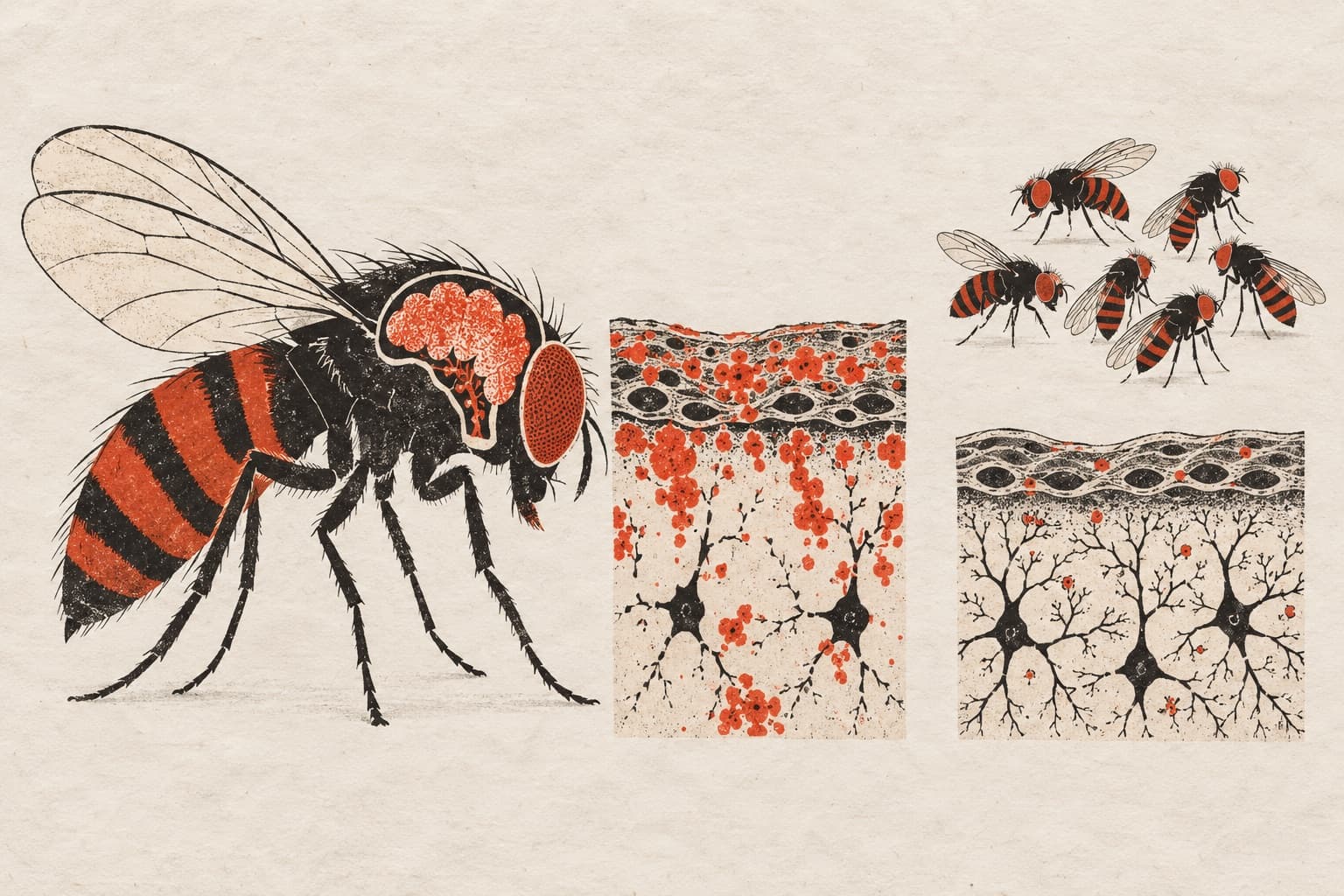
In a preprint analyzing postmortem human brain tissue, researchers sequenced 39,800 neurons from 52 individuals with sporadic frontotemporal lobar degeneration with TDP-43 pathology and 26 non-demented controls. The team used targeted single-nucleus amplicon sequencing on the superior temporal gyrus to profile TARDBP and other disease-associated genes. They identified widespread somatic mutations at frequencies below 1% across all studied genes. Notably, known ALS- and FTD-associated TARDBP variants appeared only in patient neurons. TARDBP carried the highest proportion of mutated neurons among the tested genes, yet this somatic burden was lower in donors who died at older ages. Furthermore, the C-terminal domain of TDP-43 showed fewer somatic mutations than its other domains, suggesting that cells carrying severe mutations may die before autopsy.
Why it matters
Accumulating somatic mutations in long-lived, post-mitotic cells represent a key facet of brain aging and neurodegeneration. Demonstrating that ultra-low-frequency mosaic variants arise in specific disease genes clarifies how localized genetic errors could influence neuronal survival across the lifespan.
Caveats
The study is a preprint that has not yet undergone peer review. Findings are based on postmortem tissue from a single cortical region, meaning surviving neurons at autopsy may introduce survival bias.
- Somatic mutations
- Frontotemporal lobar degeneration
- Somatic TARDBP variants
- TARDBP neuronal mutational burden
- Humans
The paper
Show 31 more authors
Cristina T Vicente, Fahri Küçükali, Marleen Van den Broeck, Jeroen GJ van Rooij, Merel O. Mol, Laura L Donker Kaat, Safa Al-Sarraj, István Bódi, Andrew King, Claire Troakes, Christos Proukakis, Jolien M. Schaeverbeke, Dietmar Rudolf Thal, Rik R. Vandenberghe, Mathieu Vandenbulcke, Aivi T. Nguyen, Robert Ross Reichard, Julia Kofler, Oscar L Lopez, Charles L. White, Bradley F. Boeve, Neill R. Graff‐Radford, Keith A Josephs, Ronald C Petersen, Nikhil B Ghayal, Melissa Erin Murray, Dennis W. Dickson, John C van Swieten, Kristel Sleegers, Harro Seelaar, Wouter De Coster,University of Antwerp · Mayo Clinic
bioRxiv · 22 Sep 2026 · Preprint, not peer-reviewed