First body-wide map charts genetic differences in human cells
The paper describes a research network’s map of mutations acquired during life, providing a reference for testing their roles in aging and disease.
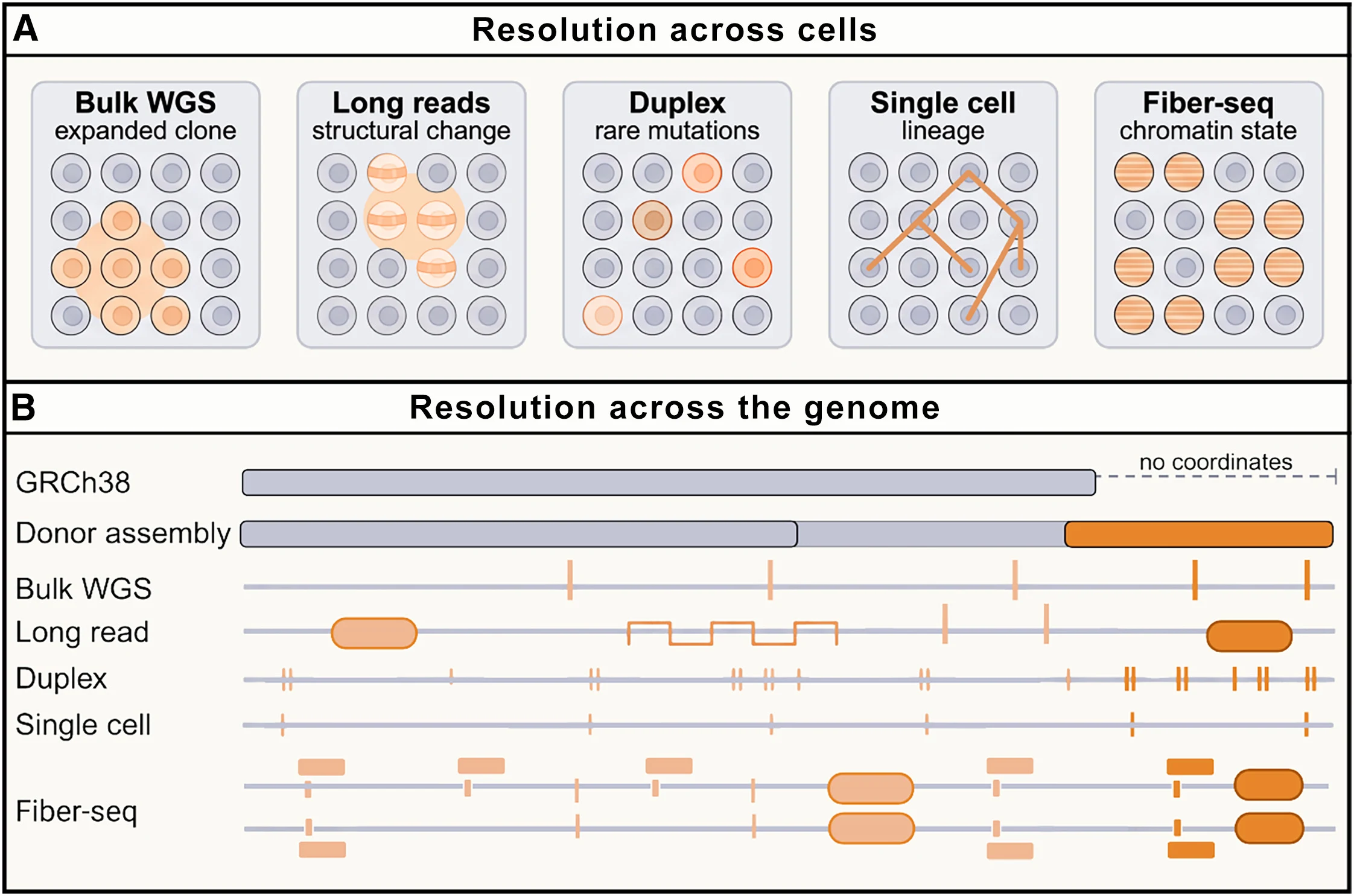
Human cells each carry a genome shaped by mutations acquired over a lifetime. The paper reported on a research network’s work to chart this variation across the body. The network delivered tested tools and the first body-wide map of somatic mosaicism, the genetic differences between cells within a person.
The work addressed a measurement problem: this vast variation had been nearly impossible to measure. The map set a baseline for what the researchers called “normal” variation. Researchers can use that reference to test the roles of mutations acquired during life in development, aging and disease.
Why it matters
For aging research, the question is whether—and how—mutations acquired over a lifetime contribute to the changes that come with age.
Caveats
This map does not establish whether the mutations cause aging or disease. The abstract gives no participant numbers, ages or details of the tissues studied.