Amyotrophic lateral sclerosis and aging share muscle changes in mice
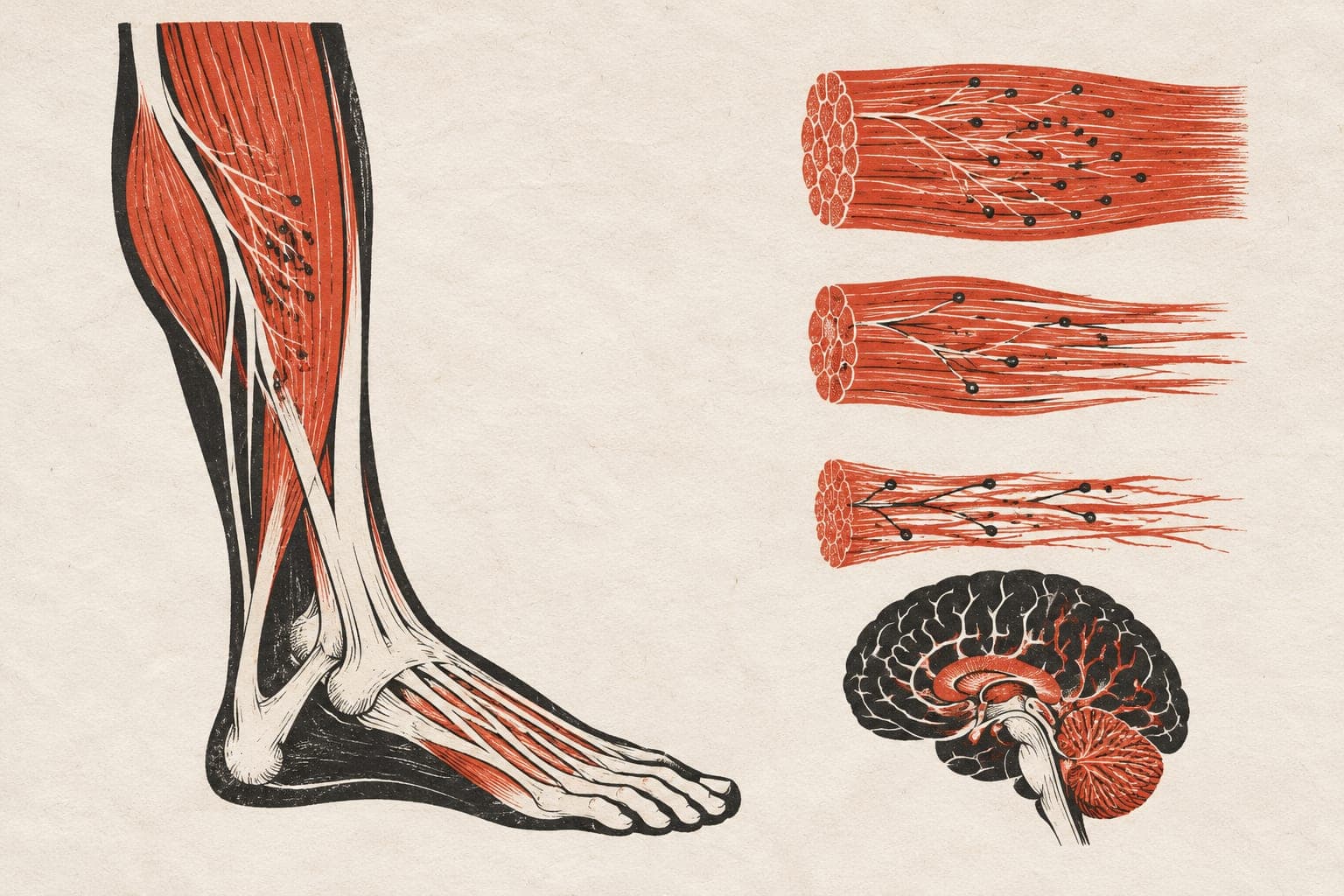
An experiment comparing mice modelling the nerve disease with mice across the lifespan mapped shared and distinct patterns of gene activity in muscle.
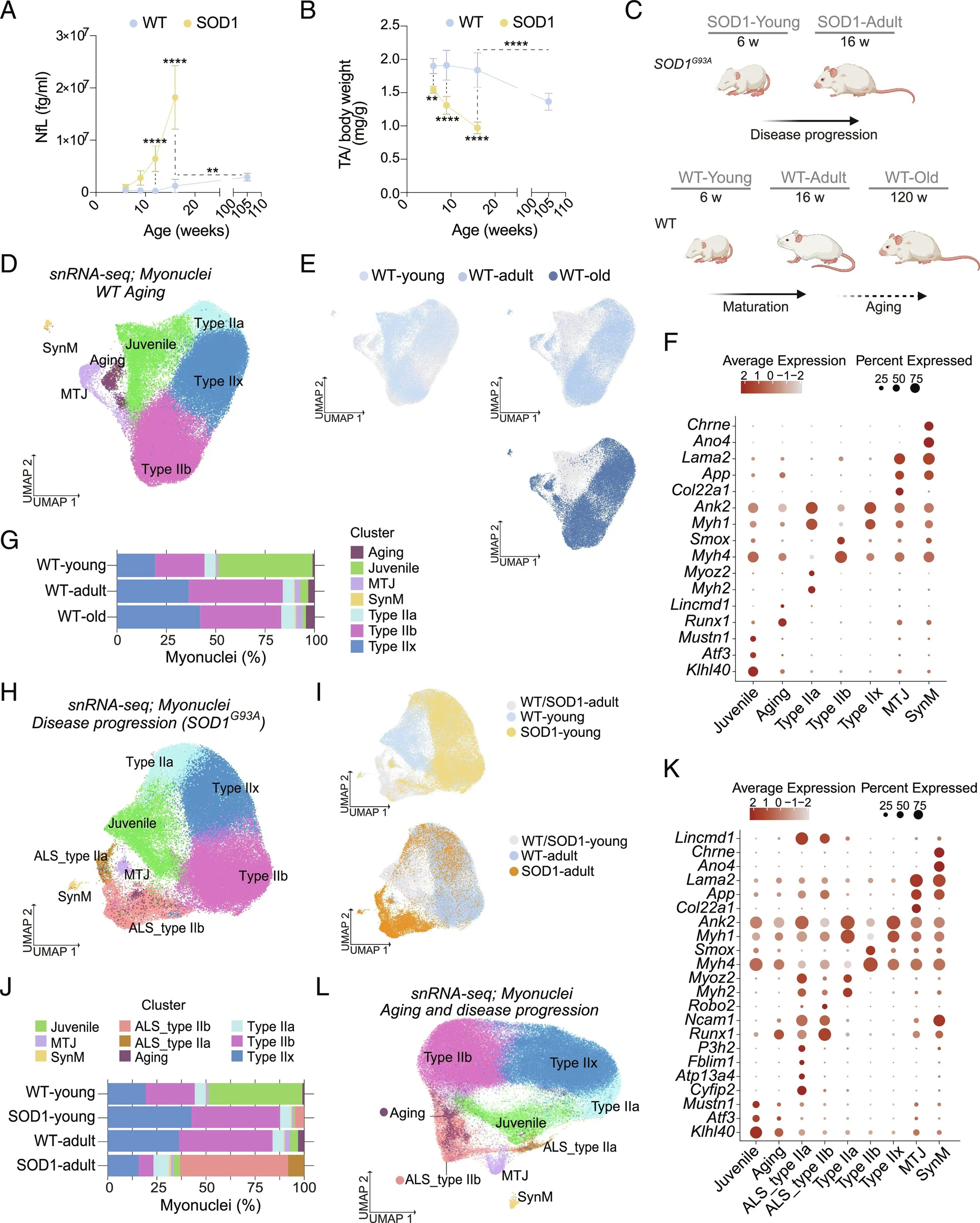
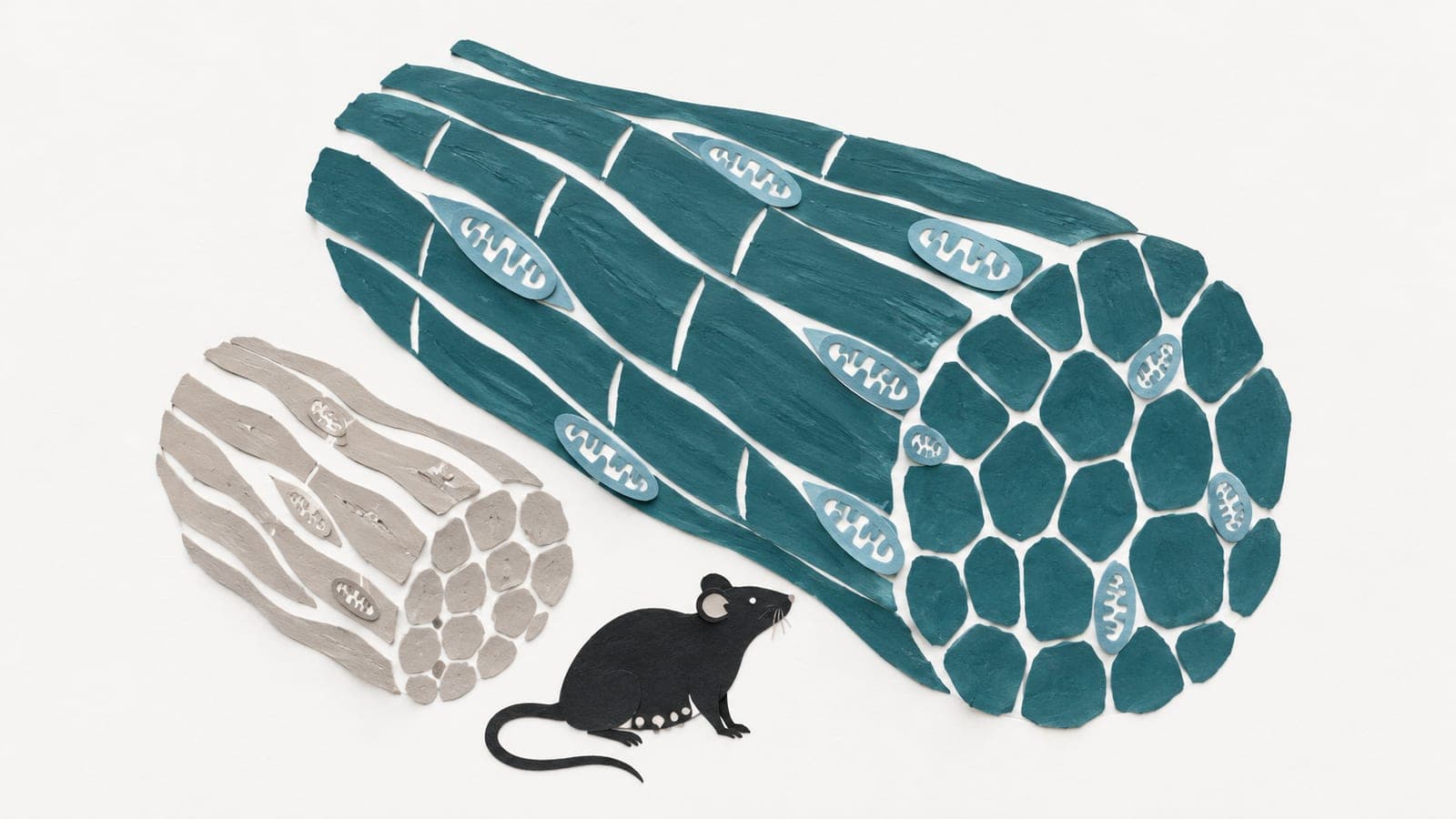
Researchers compared mice carrying a mutation used to model amyotrophic lateral sclerosis (ALS), a disease affecting nerves that control movement, with unmodified mice across the lifespan. The animal experiment mapped gene activity in individual nuclei, the DNA-containing compartments within cells, and examined muscle structure and function.
The team identified both shared and distinct patterns of muscle gene activity in ALS and aging. Early in disease, muscle fibres in ALS mice showed molecular features of aged muscle. In advanced disease and old age, groups of nuclei in fast, sugar-fuelled muscle fibres followed similar patterns of degeneration. However, a group of nuclei enriched in ALS mice showed distinct gene activity not seen in aged muscle. The researchers suggested this might help account for the faster, more severe muscle wasting in ALS.
Why it matters
Age-related muscle wasting and ALS progress at very different speeds. The atlas provides a resource for identifying potential treatment targets tailored to each condition.
Caveats
This was an animal experiment using a genetic model of ALS, not a study in people. The proposed link between ALS-specific gene activity and more severe muscle wasting remains a possibility.