DNA damage differed by sex in mice with impaired DNA repair
Experiments in mice with impaired DNA repair identified a female-specific metabolic pathway; a dietary supplement restored muscle force and metabolic profiles in females.
Research Square
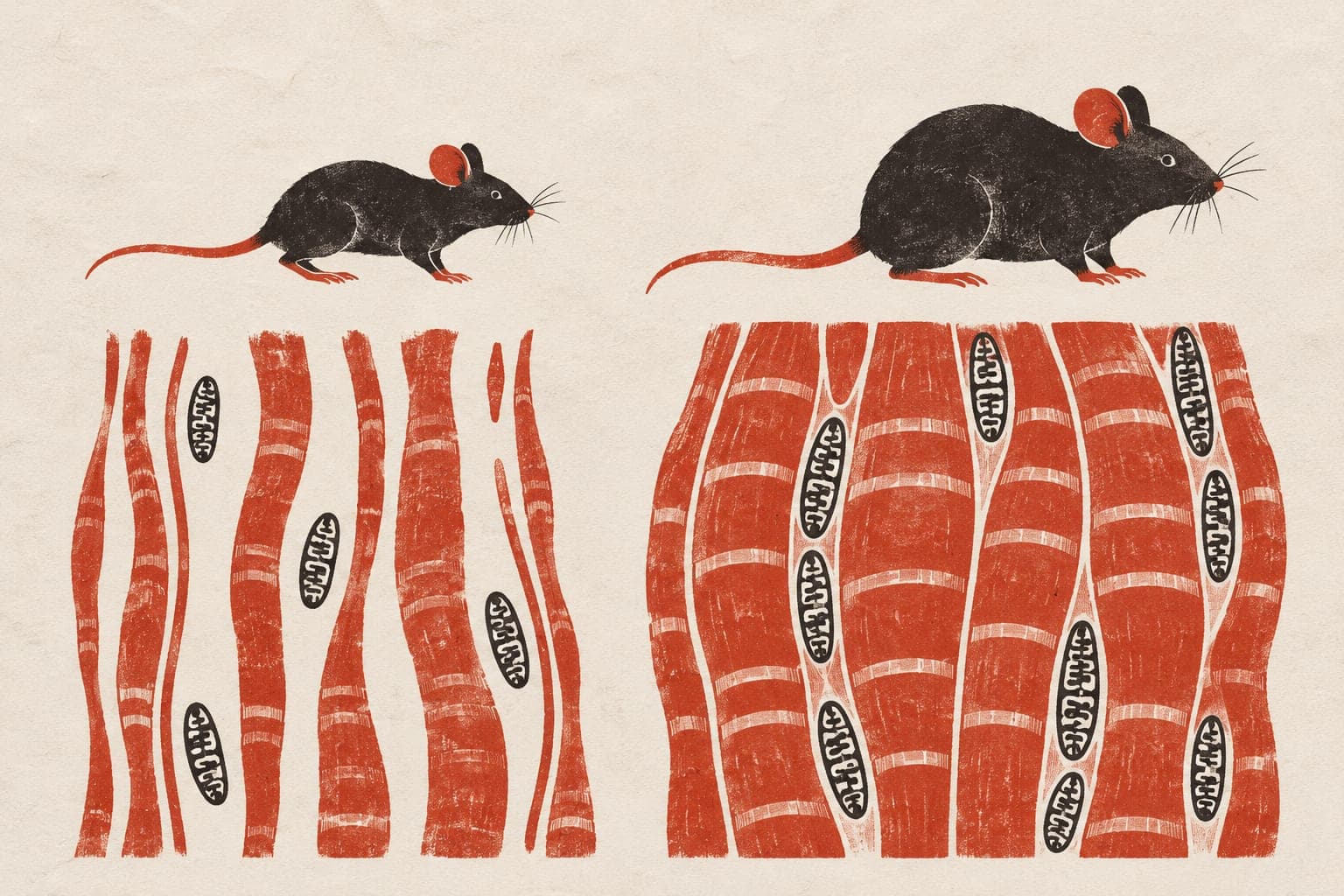
Researchers studied mice with impaired DNA repair specifically in fast-twitch type II muscle fibres in an animal experiment. The same DNA-damaging stress produced different patterns of damage in females and males. Females showed greater activity in pathways involved in muscle wasting.
Analyses of gene activity and metabolism identified pyruvate dehydrogenase kinase 4 (PDK4), an enzyme that regulates energy use, as the key female-specific metabolic driver. Blocking PDK4 with a drug restored oxygen-based energy metabolism and health in myotubes, immature muscle fibres. Dietary alpha-ketoglutarate, a compound involved in energy metabolism, restored muscle force and metabolic profiles in female mice. Analyses of human aging data also supported the presence of the same pathway.
Why it matters
Fast-twitch muscle fibres are particularly vulnerable to age-related wasting. Understanding how DNA damage alters their energy use may help guide research into female-predominant frailty.
Caveats
The main experiments used mice with impaired DNA repair, rather than testing a treatment in people with frailty. The paper is a preprint and has not been peer reviewed.
The paper
Sex-dimorphic DNA lesion accumulation drives a PDK4 metabolic checkpoint in skeletal muscle
Gurkar A, Pulipaka S, Sachan A et al.
Research Square · 6 Oct 2026 · Preprint, not peer-reviewed