Controlled Trial of Cervical Cancer Screening Frequency Among Human Papillomavirus Vaccinated Women II: Cervical Pre-Cancer End-Points by Specific Non-Vaccine HPV Types
Abstract
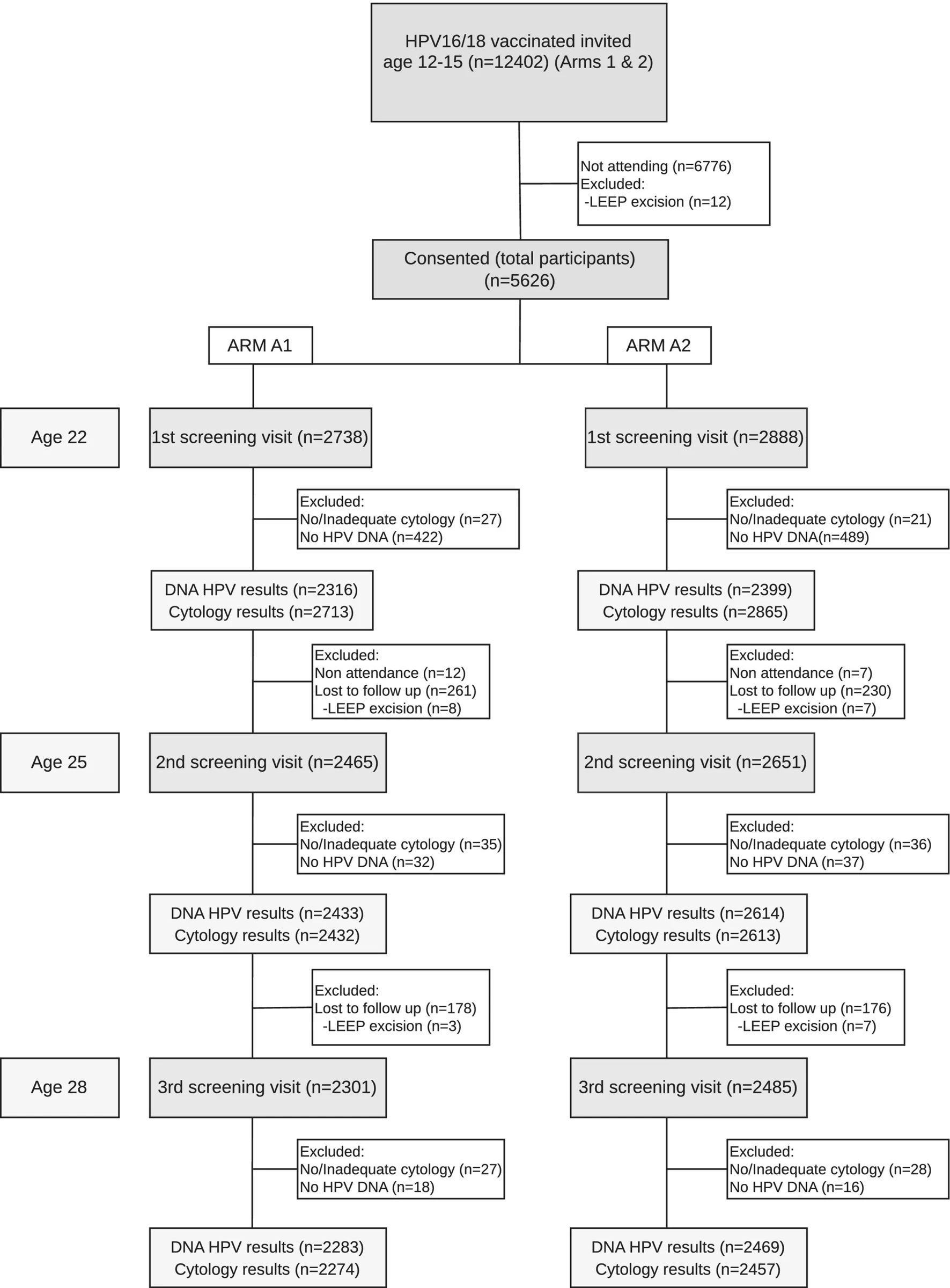
We conducted a controlled trial among 5626 early adolescent women vaccinated in 2007-2009 against human papillomavirus (HPV) types 16/18 to evaluate the impact of high-intensity versus low-intensity cervical screening, respectively at ages 22/25/28 and 28 years with squamous-cell intraepithelial lesions (SILs) as the end-point. Over the 16-year follow-up, most of the cytologically and/or histologically confirmed low-grade and high-grade SILs were associated with non-vaccine-targeted, medium oncogenicity HPV types 33/35/52/58 belonging to clade A9. The low-intensity cervical screening was non-inferior to the high-intensity screening in the identification of these lesions. Possibly, the transition from cervical infections with vaccine-covered HPV types to infections with non-vaccine-covered HPV types contributes to more manageable occurrence of the screen-detected cervical lesions. Reduction of cervical screening among vaccinated women to a minimum may be warranted to balance the harm-benefit ratio of screening.
From the paper
- Participants
A total of 12 LSIL cases were positive for non-vaccine targeted clade A9 HPV types (Table 4).
- Events by group
Overall, the cytological identification of LSIL cases associated with HPV31/33/35/52/58, clade A9 infections was non-inferior in the low-intensity screening arm A2 (0.87%) as compared to the high-intensity screening arm A2 (0.81%) (Table 5).
Quoted word for word from the full text on onlinelibrary.wiley.com.
- Cervical screening
- Cervical human papillomavirus infection
- High-grade cervical squamous-cell intraepithelial lesion
- Low-grade and high-grade cervical squamous-cell intraepithelial lesions
- Low-grade cervical squamous-cell intraepithelial lesion
- Humans
The paper
Centre for Cervical Cancer Elimination
International Journal of Cancer, 15 Oct 2026