TET2 loss alters DNA copying during drug treatment in cells
Lab experiments showed that Olaparib treatment lengthened copied DNA tracts, increased DNA breaks and heightened drug sensitivity in cells lacking TET2, but not DNMT3A.
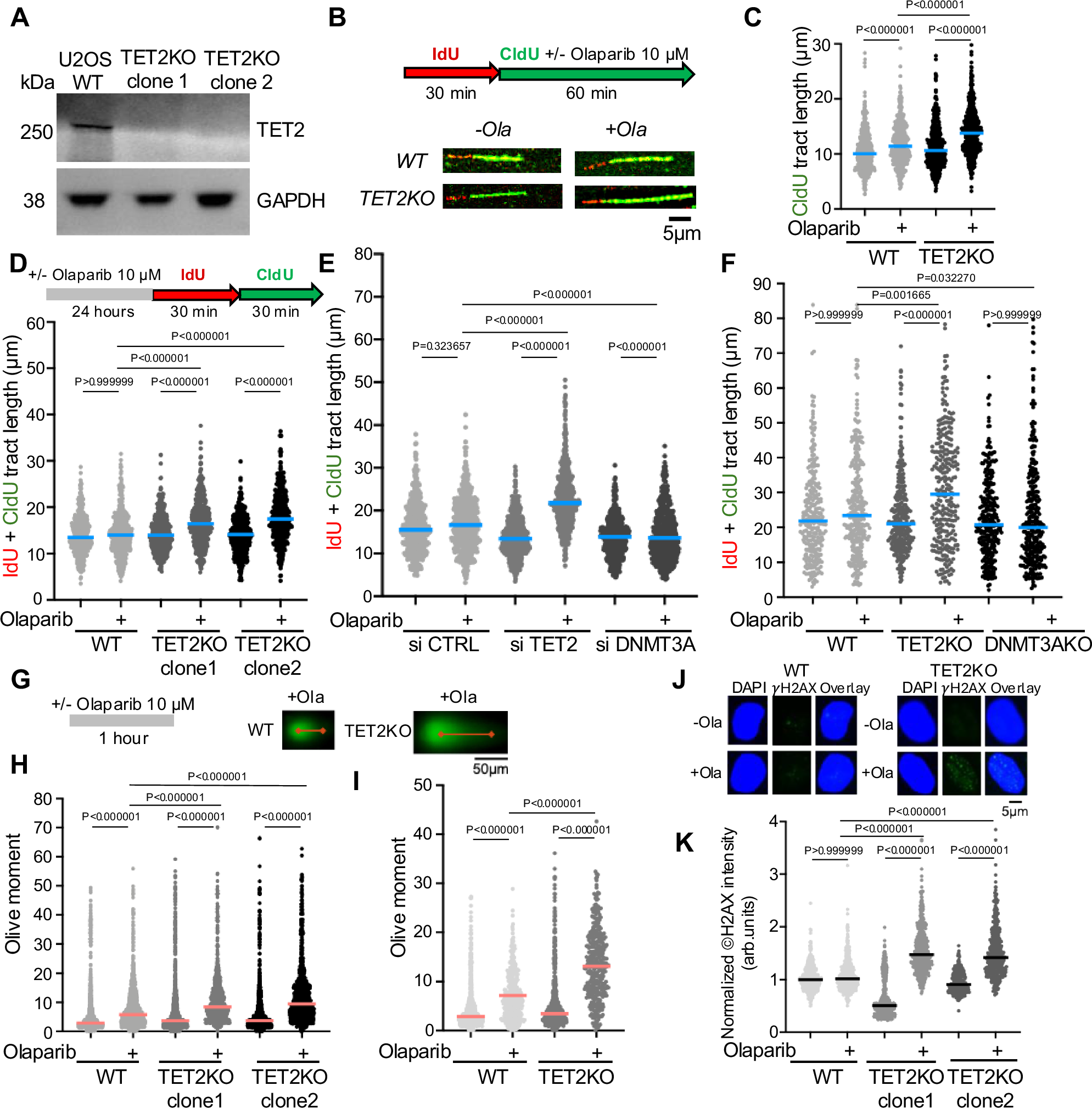
In an experiment in cells grown in the lab, researchers investigated how losing the gene TET2 altered responses to Olaparib, a drug that blocks the DNA repair enzyme poly(ADP-ribose) polymerase, or PARP. They found that TET2 loss altered how DNA copying progressed during Olaparib treatment, resulting in longer copied DNA tracts and more DNA breaks. These elongated copying sites contained single-stranded DNA gaps. In contrast, losing another gene often mutated in blood disorders, DNMT3A, produced no such changes.
Lacking TET2 also caused an imbalance in chemical marks on DNA, creating damaged sites. The researchers proposed that these sites lead to single-stranded gaps that the repair enzyme APE1 converts into DNA breaks, increasing drug toxicity. Finally, in bone marrow samples from patients with myeloid malignancies, cancers of blood cells, TET2 mutations served as an unrecognised predictor of response to PARP inhibitors.
Why it matters
TET2 mutations are common in age-related clonal haematopoiesis, an expansion of blood cells carrying shared mutations. Clarifying how these mutations affect DNA copying may help researchers understand differences in responses to drugs that block DNA repair.
Caveats
The mechanistic findings come from experiments in cells grown in the lab rather than living organisms, and the proposed sequence of molecular events remains a theoretical model. Furthermore, patient data were limited to bone marrow samples, without clinical trial evidence on treatment effectiveness or side effects.
The paper
TET2 loss triggers ssDNA gap accumulation and heightened PARP inhibitor sensitivity
Washington University in St. Louis
Nature Communications, 12 Sep 2026