TET deficiency drives selection of aneuploid cells in mice
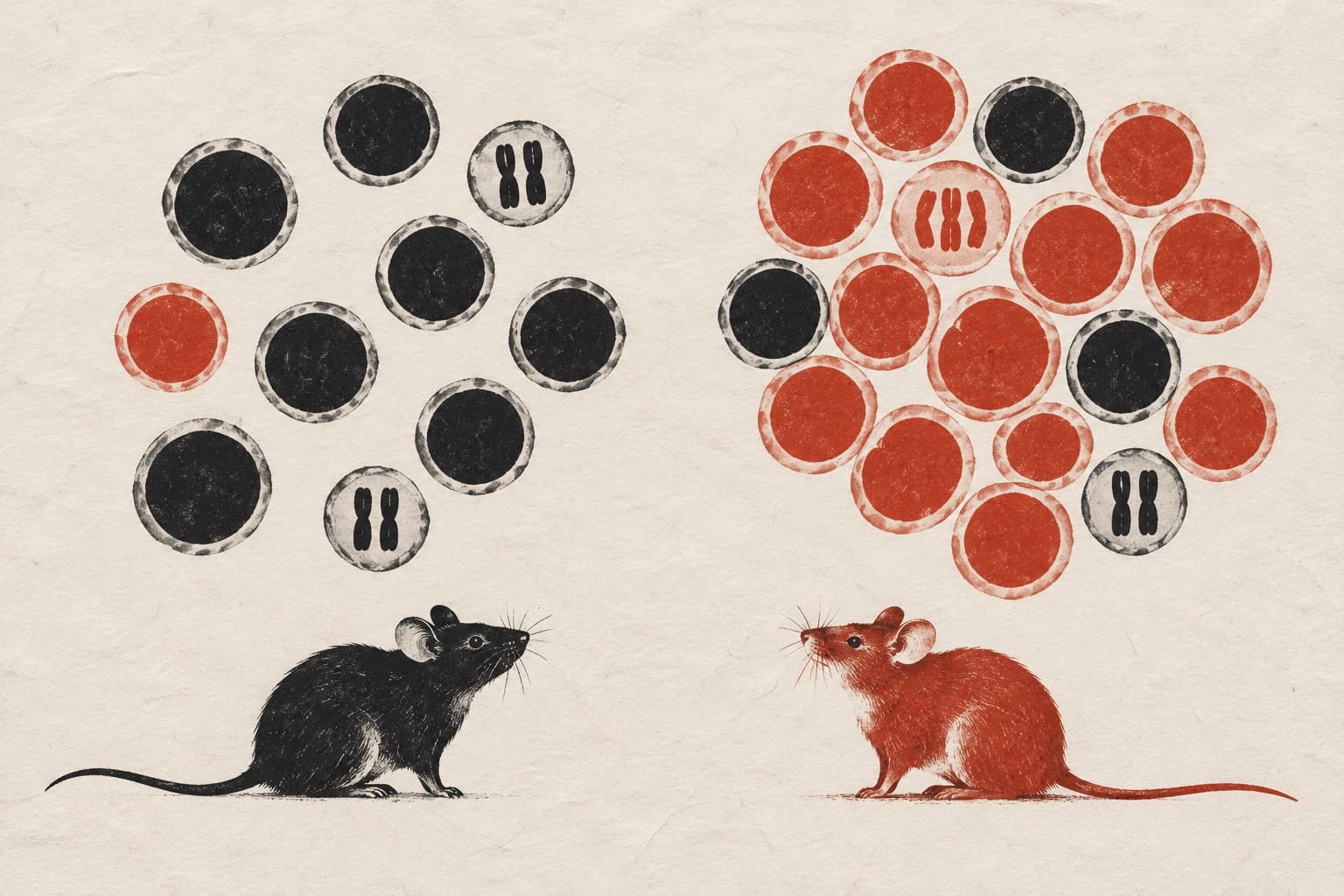
In mice and mouse cells, disrupting TET enzymes allowed rare pre-existing aneuploid subclones, including chromosome 17 trisomy, to dominate during rapid cellular expansion.
bioRxiv
In mice, invariant natural killer T cells lacking Tet2 and Tet3 drove aggressive lymphoid expansion consistently marked by recurrent chromosome 17 trisomy. Researchers observed this dominant aneuploid state across more than ten independently derived tumors after transplantation into immunocompetent recipient mice. Single-cell whole-genome sequencing of cultured, proliferating mouse cells revealed that rare cells harboring chromosome 17 trisomy appeared shortly after Tet deletion in the thymus alongside other copy number alterations, but only these trisomic cells progressively enriched during cellular expansion. Inducibly Tet-deficient mouse embryonic stem cells similarly selected for pre-existing aneuploid states, including chromosome 6 trisomy. Reanalysis of datasets from Dnmt3a-deficient mouse lymphomas also identified recurrent chromosome gains, including chromosome 17 trisomy.
Why it matters
TET mutations frequently arise in age-related clonal hematopoiesis and hematologic cancers. These findings suggest that altered DNA methylation pathways may contribute to clonal outgrowth in part by favoring specific karyotypic abnormalities.
Caveats
The investigation relies on mouse models, cell cultures, and retrospective reanalyses rather than human clinical samples. Additionally, the study is a preprint that has not yet completed peer review.
The paper
TET loss of function selects for aneuploidies that confer a proliferative advantage
La Jolla Institute for Immunology
bioRxiv · 1 Oct 2026 · Preprint, not peer-reviewed