Multi-domain interventions for the prevention of motoric cognitive risk syndrome among Chinese older adults: An application of the parametric G-formula based on an intrinsic capacity framework
Abstract
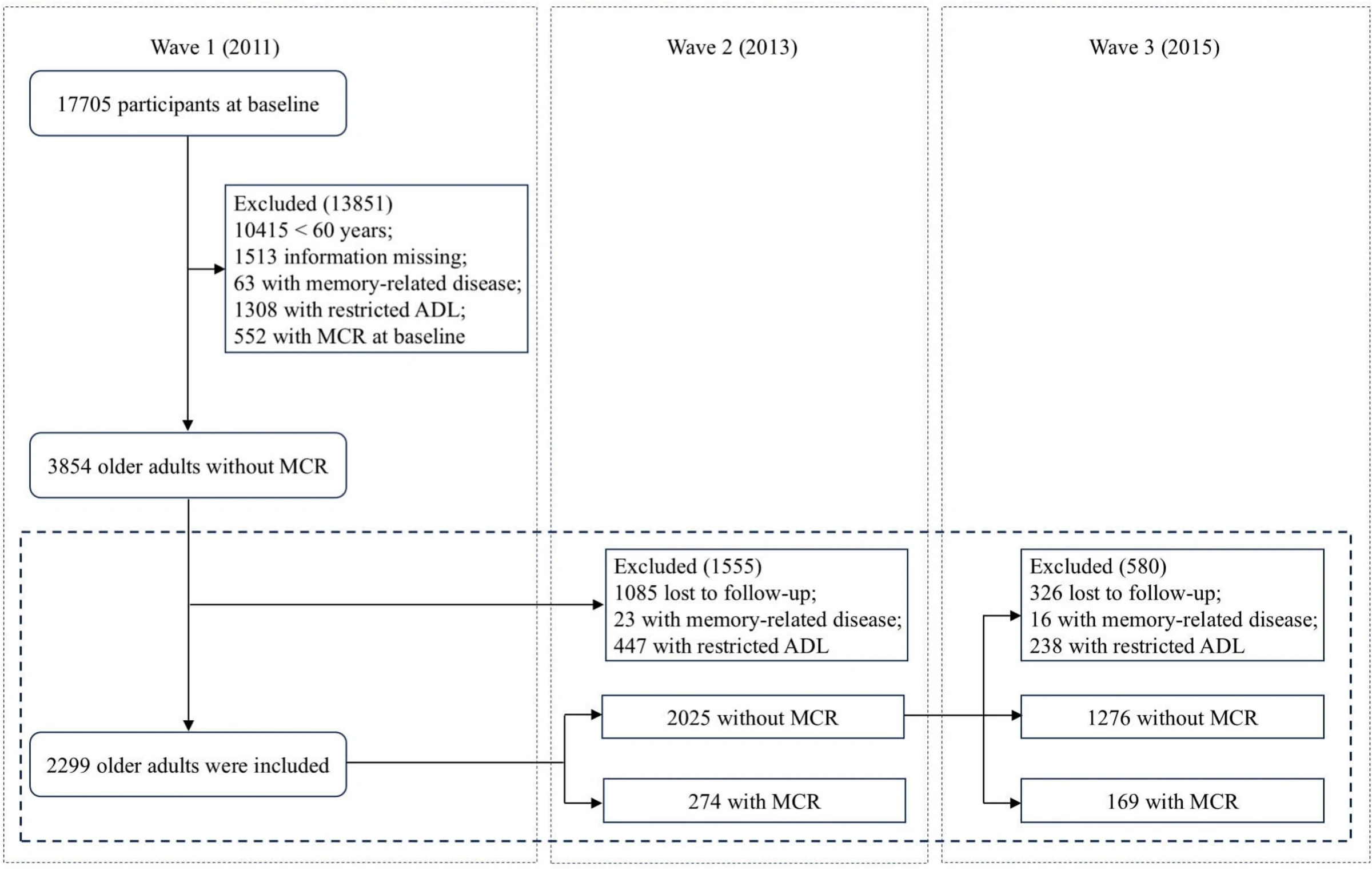
OBJECTIVES: Evidence on large-scale prevention of motoric cognitive risk syndrome remains limited. This study aimed to identify potentially modifiable targets for the prevention of motoric cognitive risk syndrome within an intrinsic capacity framework and to estimate their potential effects using hypothetical intervention scenarios. METHODS: 2299 individuals aged ≥60 years were included from the China Health and Retirement Longitudinal Study (2011-2015). Candidate targets were selected using theory-driven and data-driven approaches. Behavioral targets included social participation and physical activity. The parametric g-formula was used to estimate 4-year risks under hypothetical interventions and the natural course. RESULTS: During the 4-year follow-up, 443 participants (19.3%) developed incident motoric cognitive risk syndrome. The joint hypothetical interventions targeting peak expiratory flow, depression symptoms, and pain achieved the largest estimated risk reduction (risk ratio 0.74, 95% confidence interval 0.59-0.90). The joint scenario targeting social participation and physical activity also yielded a lower estimated risk (risk ratio 0.78, 95% confidence interval 0.58-0.99). CONCLUSIONS: An intervention integrating enhanced respiratory function and psychological resilience with pain management may be a promising strategy in the prevention of motoric cognitive risk syndrome among older adults. Combinations of social participation and physical activity also warrant further evaluation. Future randomized controlled trials are needed to determine the potential causal efficacy of these multi-domain interventions for the prevention of motoric cognitive risk syndrome.