Moderate activity linked to better thinking skills after menopause
Moderate activity was associated with cognitive scores 0.559 higher than in the lowest activity group in an observational study of 5,614 postmenopausal women.
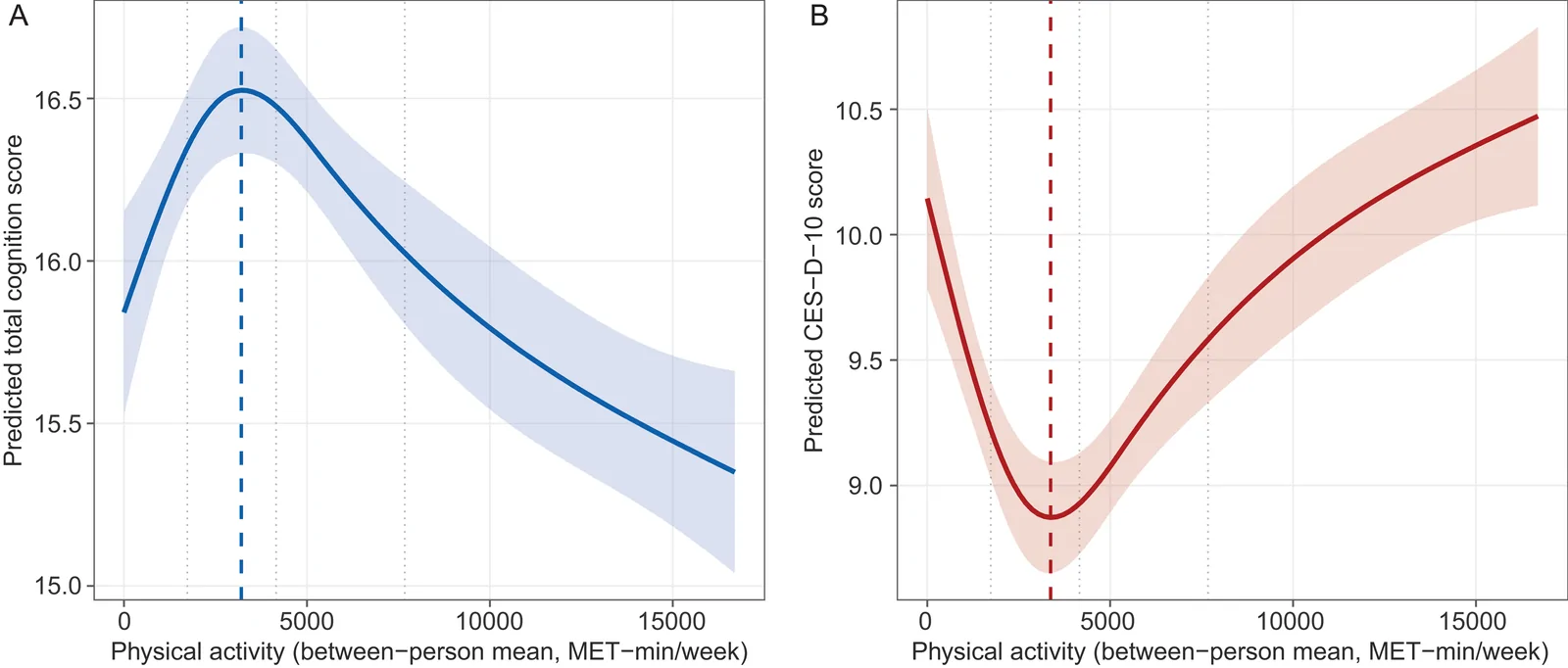
Dose-response
An observational study analysed data from 5,614 postmenopausal women in the China Health and Retirement Longitudinal Study between 2011 and 2018. Researchers divided physical activity levels into four groups and examined their links with cognitive scores, depressive symptoms and sleep duration.
The second-lowest activity group, described as moderately active, had higher cognitive scores than the lowest group. The highest activity group, reflecting heavy physical labour, had scores 0.354 lower than the lowest group. Statistical models suggested that fewer depressive symptoms and improved sleep partly accounted for the association between moderate activity and better cognition. An analysis of measurements over time also linked moderate activity to fewer later depressive symptoms and better later cognitive scores.
Why it matters
Depressive symptoms and sleep may be relevant when planning strategies to preserve cognitive health after menopause, the authors suggested.
Caveats
Observational data cannot establish that activity caused the cognitive differences, or that mood and sleep caused part of the association. The findings concern postmenopausal women in China.
From the paper
- Participants
A total of 5614 postmenopausal women were included in this study (Table 1).
- Result
In the total-effect model (M0), and relative to the Q1 group, PA in the Q2 group was positively associated with cognitive score (β = 0.559; 95% CI, 0.232 to 0.887; P < 0.001).
- Limitation
The CHARLS items ask about activity of each intensity without distinguishing its domain, so the resulting volume aggregates agricultural and other occupational work, housework, active transport and leisure-time exercise, and these domains cannot be disaggregated.
Quoted word for word from the full text on dovepress.com.
The paper
Chengdu Sport University; Sichuan University
Psychology Research and Behavior Management, 5 Oct 2026