Early cognitive frailty can reverse in rural older adults
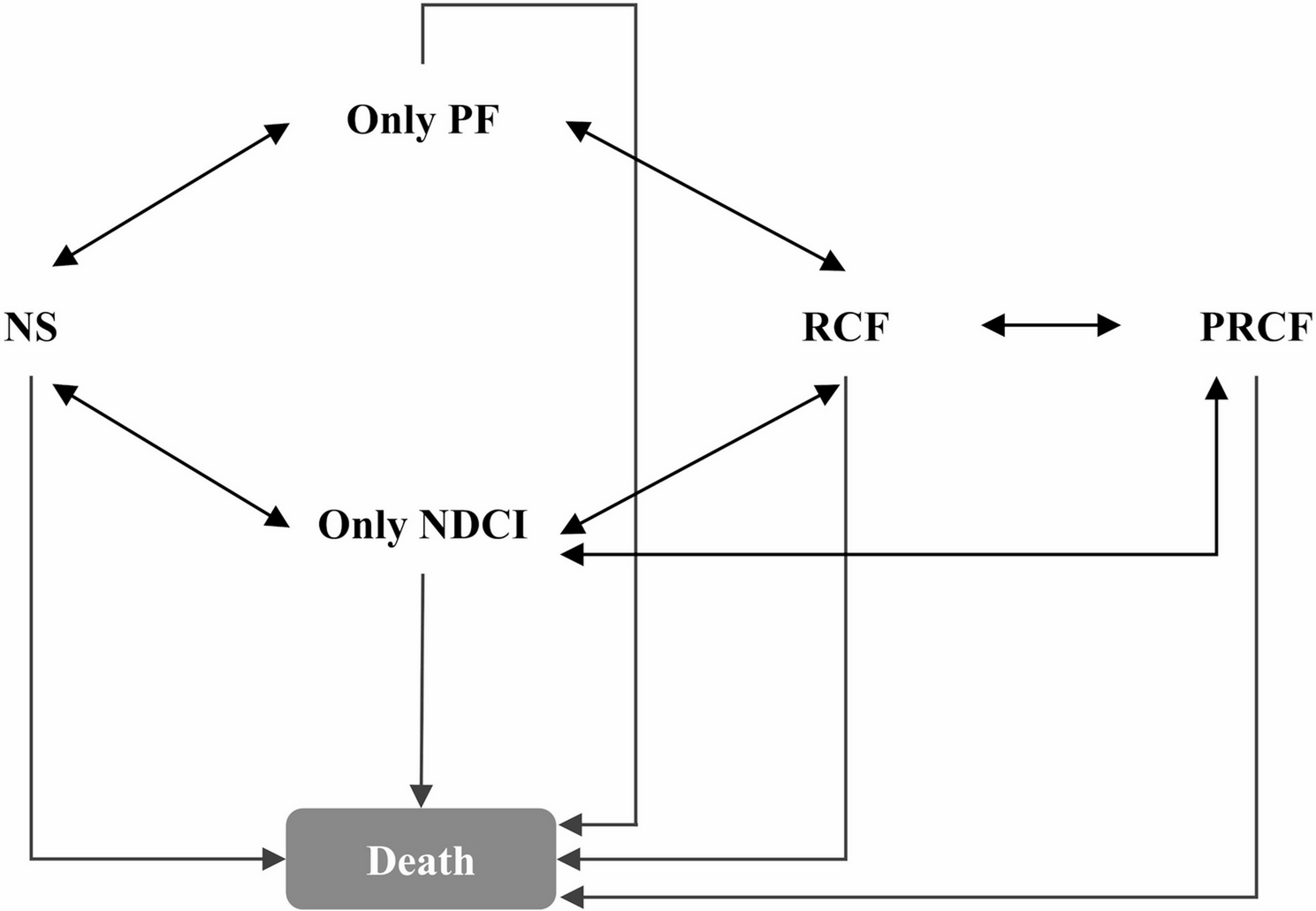
In rural older adults, transition intensity from reversible cognitive frailty was 0.429 toward cognitive impairment alone and 0.291 toward physical frailty, versus 0.224 toward further deterioration.
BMC Geriatrics
In a prospective cohort study of 3,243 rural older adults from the China Health and Retirement Longitudinal Study, researchers tracked 4,146 transitions across cognitive frailty states over survey waves in 2011, 2013, and 2015. Cognitive frailty was defined as the coexistence of physical frailty and non-dementia cognitive impairment, categorizing participants into reversible or potentially reversible states. Among participants with reversible cognitive frailty, the intensity of transitioning back to cognitive impairment alone (0.429) or physical frailty alone (0.291) exceeded the intensity of deteriorating to potentially reversible cognitive frailty (0.224). Potentially reversible cognitive frailty carried the lowest likelihood of recovery and the highest transition intensity to death at 0.048. Transitions between states were associated with age, gender, education, marital status, physical activity, comorbidities, possible sarcopenia, depressive symptoms, and social participation.
Why it matters
The findings suggest that cognitive frailty is dynamic rather than uniformly progressive, pointing to an early window where combined physical and cognitive deficits may still regress. Identifying factors associated with these shifts could inform targeted behavioral interventions to delay severe functional decline.
Caveats
The findings are based on observational cohort data, precluding causal conclusions about the identified predictive factors. In addition, the results come from rural older adults in China and may not generalize to populations with different healthcare access or living conditions.
The paper
Sun Yat-sen University
BMC Geriatrics · 3 Oct 2026 · CC BY-NC-ND