Newborn spinal cord particles improved recovery in adult mice
In an animal experiment, targeted delivery of tiny packages from newborn mouse spinal cords improved movement and bladder control after spinal cord injury in adult mice.
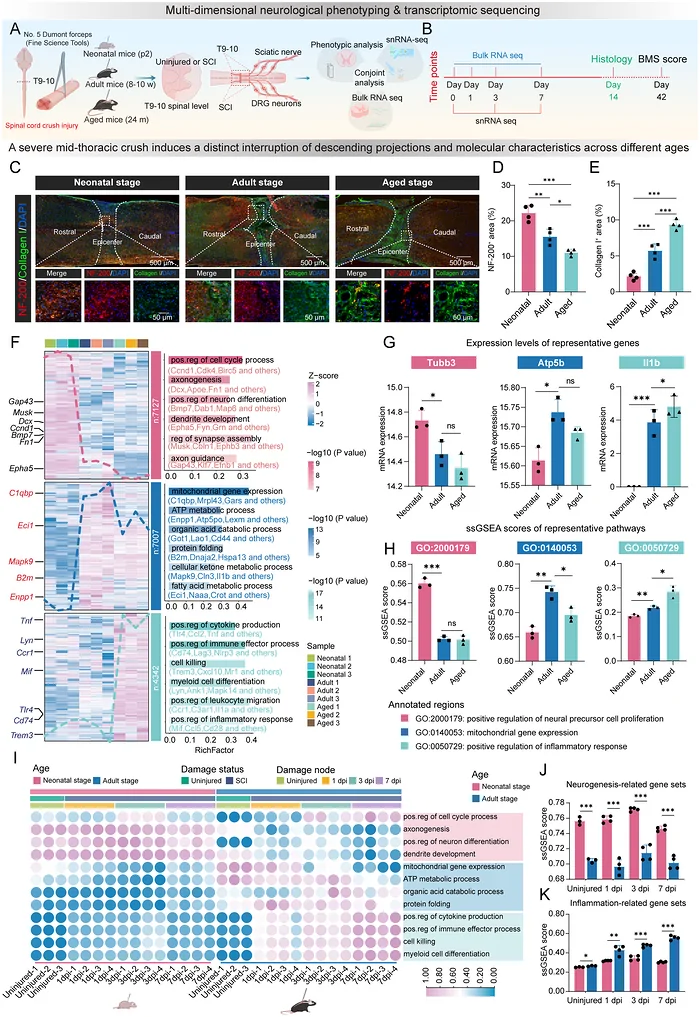
In neonatal (newborn), adult and aged mice with spinal cord injury, researchers ran experiments and compared molecular profiles to study age-dependent repair. They found that the window for regeneration, inflammation and communication between cells all depended on age.
The team identified extracellular vesicles, tiny packages released by cells, from newborn spinal cords. These carried a set of proteins linked to regeneration and played a critical role in restoring repair in newborn mice. Researchers then developed a system to deliver these vesicles in a targeted way. In adult mice with spinal cord injury, it enhanced functional recovery, including movement and bladder control.
Why it matters
Understanding why spinal cord repair differs with age may help guide attempts to restore function after injury. The authors propose these cell-released packages as a potential approach to spinal cord repair.
Caveats
These were mouse experiments, not a test in people. The abstract did not report sample sizes or how long the improvements lasted.
From the paper
- Events by group
In the SCI model, compared to the control group, mice with Agrin (Agrn) knockdown exhibited significantly impaired spinal cord repair function, as evidenced by a reduction of approximately 22.6% in NF-200 fluorescence signal and 31.9% in NeuN fluorescence signal (Figure 6N and O).
Results, 2.7 Neurogenic Effects of nSC-EVs Are Mediated via the Agrin Protein
Quoted word for word from the full text on isevjournals.onlinelibrary.wiley.com.
- Neonatal spinal cord-derived extracellular vesicles
- Inflammation
- Wnt/β-catenin signalling
- Extracellular vesicle
- Spinal cord injury
- Mice
The paper
First Affiliated Hospital of Xi'an Jiaotong University; Xijing Hospital
Journal of Extracellular Vesicles, 1 Oct 2026, Open access