Bone-targeting particles improved bone structure in mice
An experiment in mice whose ovaries had been removed found that engineered, bone-targeting particles also reduced pain-related behaviours.
ACS Biomaterials Science & Engineering
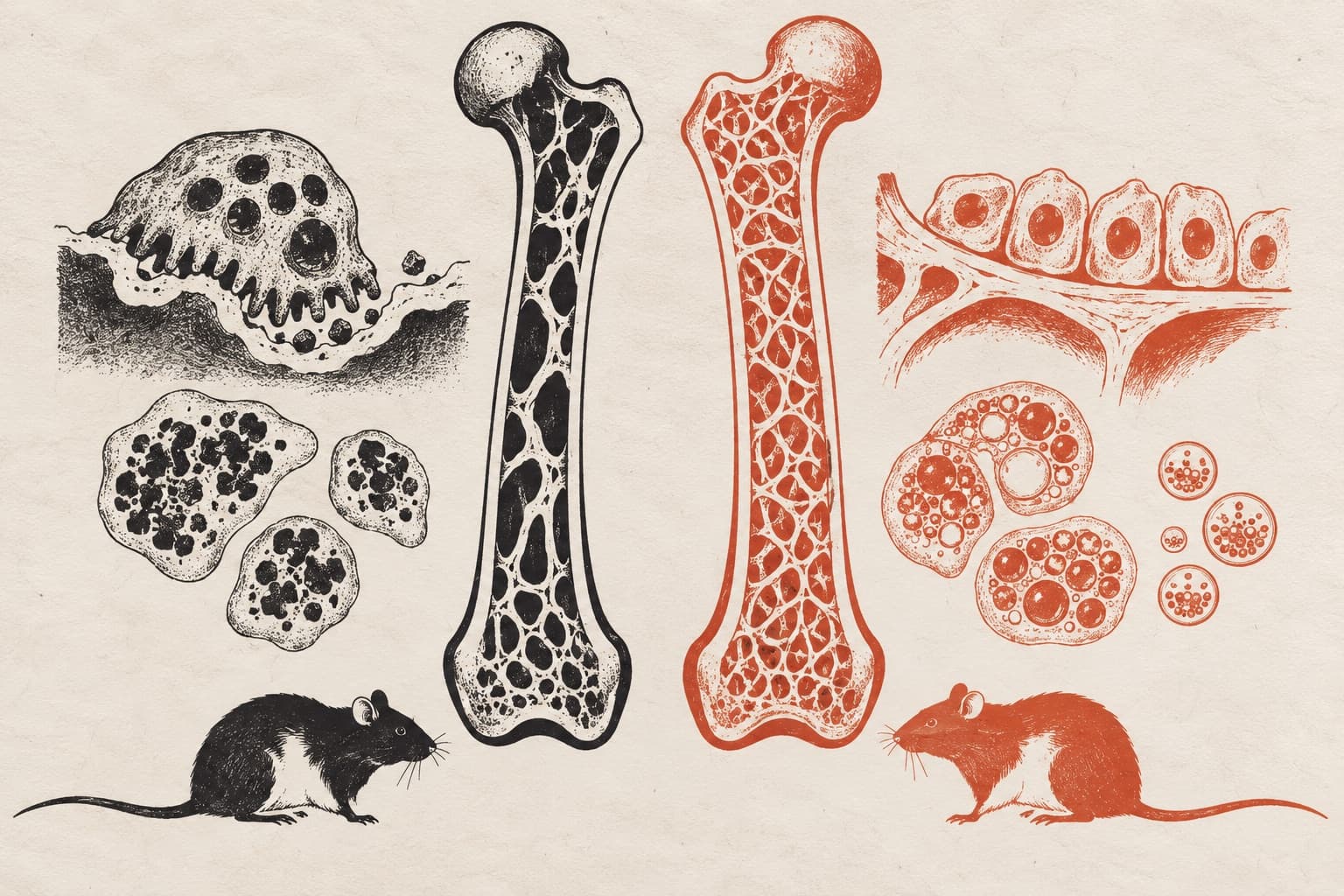
In an animal experiment, mice whose ovaries had been removed received engineered particles designed to target bone. These were exosomes, small packages released by cells. Researchers collected them from Schwann cells, which support nerves, after exposing those cells to nerve growth factor, a protein that supports nerve growth.
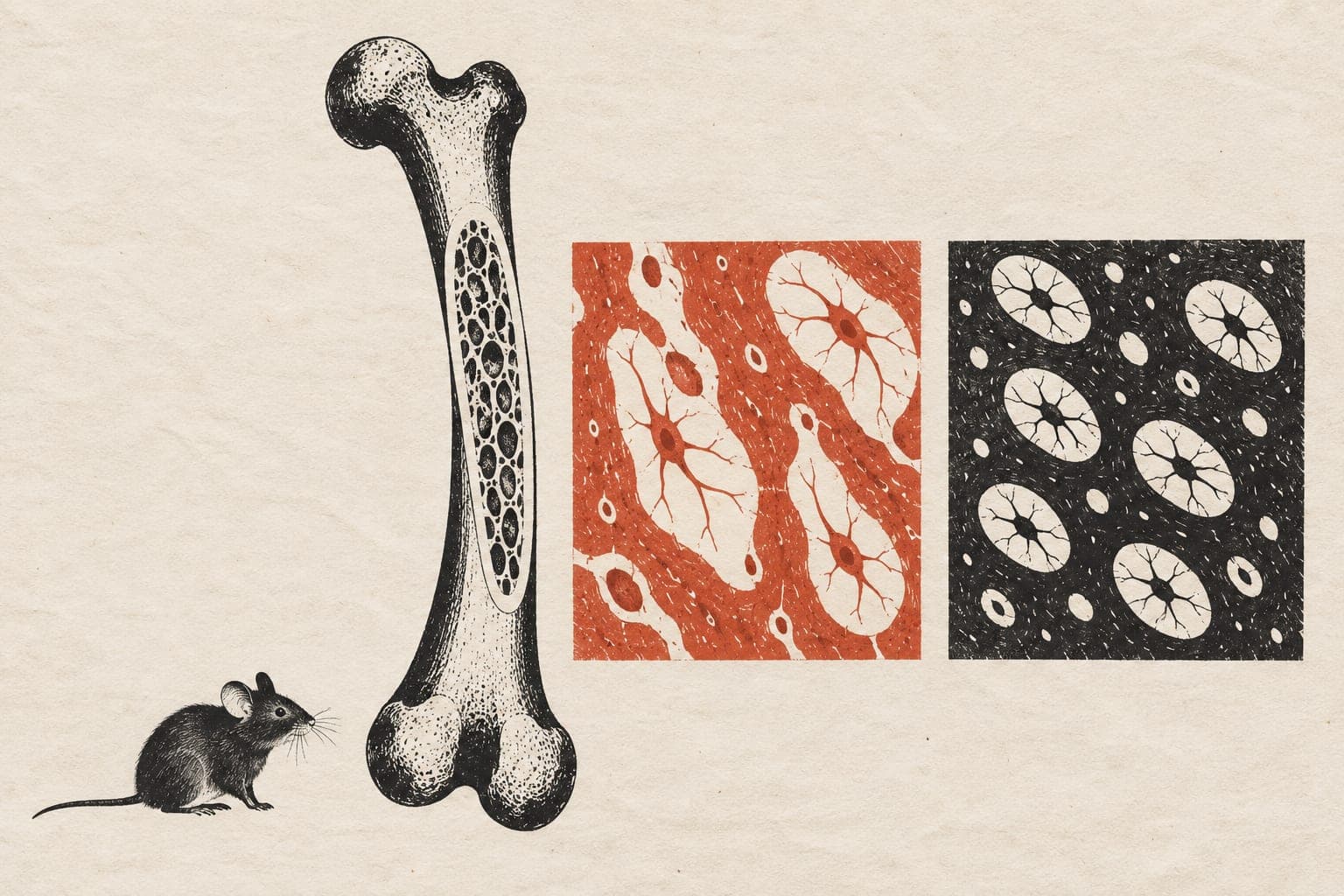
The particles improved microscopic bone structure in the mice. They increased the activity of bone-building cells and reduced the activity of cells that break down bone. They also reduced pain-related behaviours. In bone marrow mesenchymal stem cells—cells that can develop into bone-forming cells—grown in the lab, the particles promoted bone-forming development and mineral deposition.
Why it matters
Osteoporosis involves fragile bones and chronic pain. The work addressed whether nerve growth factor’s regenerative properties could be used while limiting its pain-inducing side effects.
Caveats
The pain outcome was measured through behaviour in mice, not people’s reports of pain. These animal and lab-cell experiments do not establish safety or benefit in people with osteoporosis.
- Bone-targeting exosomes derived from ngf-pretreated schwann cells
- NGF-Exo-Pep
- Extracellular vesicle
- Pain
- Osteoporosis
- Mice
The paper
Shanxi Medical University
ACS Biomaterials Science & Engineering · 28 Sep 2026