3D breast screening may reduce cancers between scans
Over 24 months after a negative screen, invasive cancer rates were 14.2 per 10,000 women with 3D screening versus 18.6 with standard mammography.
24 months, multicentre, registered NCT03377036
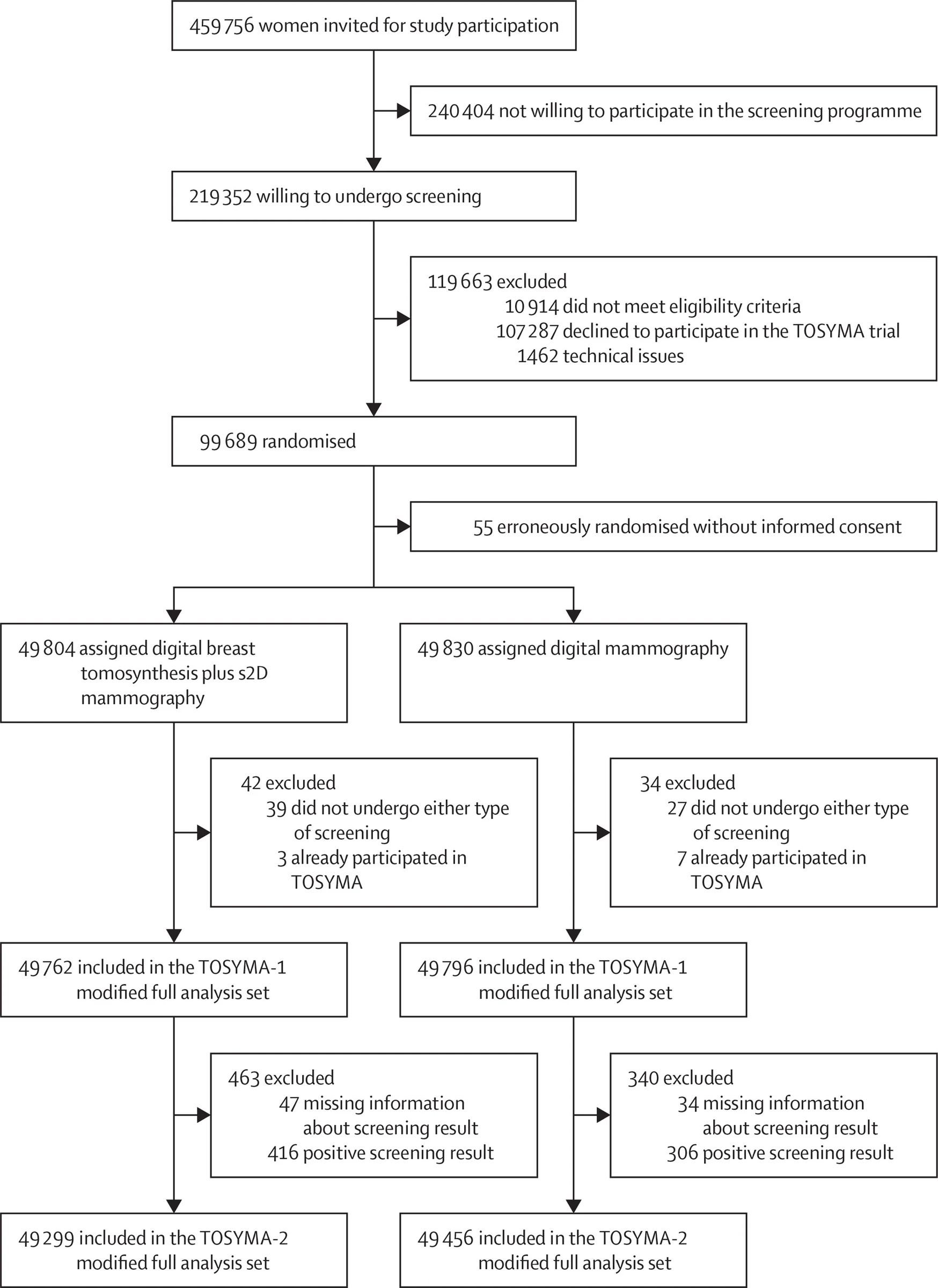
Women aged 50–70 in Germany took part in a randomised breast-screening trial that enrolled 99,689 participants at 17 sites. One group received three-dimensional breast imaging, called digital breast tomosynthesis, plus computer-generated two-dimensional mammograms. The other received standard digital mammography. Researchers used cancer registries to identify invasive cancers, which grow into surrounding tissue, during the 24 months after a negative screening result.
These cancers occurred in 70 of 49,299 women in the 3D group and 92 of 49,456 in the standard group. The primary result did not reach statistical significance: the range of likely effects included no difference. The researchers suggested that the combined method might avoid about a quarter of these cancers over two years.
Why it matters
Screening women aged 50–70 raises a question about cancer detection in later life: whether high detection rates translate into fewer cancers diagnosed between screening rounds.
Caveats
The main analysis included only women with negative screening results, and the 24-month comparison remained uncertain. The findings concern women aged 50–70 in Germany; the abstract did not report screening harms.
- Digital breast tomosynthesis plus synthesised two-dimensional mammography
- Invasive breast cancer
- Invasive interval breast cancer incidence
- Humans
The paper
University Hospital Münster
The Lancet Oncology, 9 Oct 2026