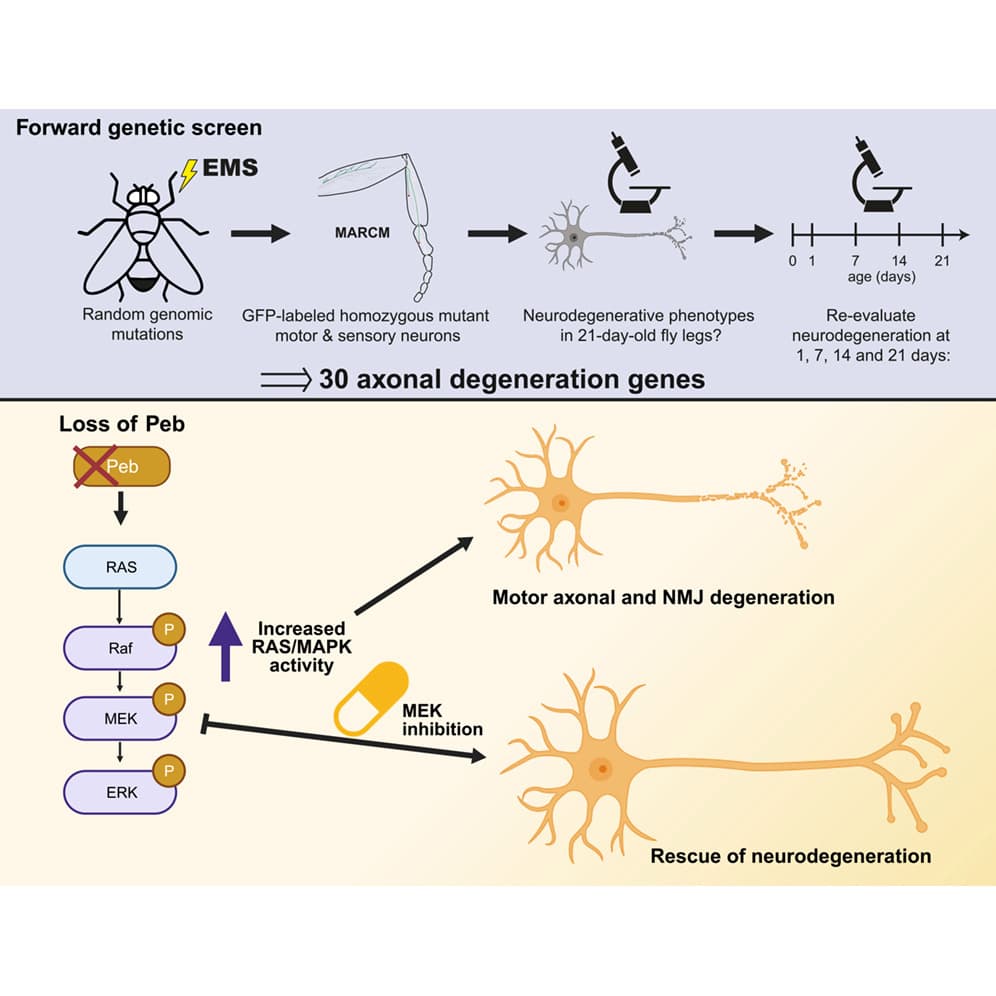
Graphical abstract
Graphical abstractFrom iScience
Brain agingModel organisms

RAS/MAPK overactivation drives motor axon loss in flies

An unbiased genetic screen in Drosophila revealed that excessive RAS/MAPK signaling causes adult-onset neurodegeneration that a MEK inhibitor rescues in a dose-dependent manner.

iScience

In fruit flies (Drosophila), researchers conducted an unbiased forward genetic mosaic screen to identify genes required to maintain adult motor axons and neuromuscular junctions. The screen revealed 49 mutations in 30 genes, including eight that cause adult-onset progressive degeneration. Loss of pebbled, the fly ortholog of mammalian RREB1, triggered adult-onset motor axonal and neuromuscular junction degeneration alongside age-dependent motor deficits. The gene encodes a zinc-finger transcription factor that negatively regulates RAS/MAPK target genes. Its loss, as well as the loss of other negative regulators, caused RAS/MAPK overactivation and motor decline. Treating adult mutant flies with the MEK1/2 inhibitor mirdametinib produced a dose-dependent rescue of the neurodegenerative phenotypes.

Why it matters

Axonal and synaptic degeneration are key hallmarks of age-related neurodegenerative diseases. Uncovering that excessive RAS/MAPK signaling triggers adult-onset degeneration highlights this pathway as a candidate mechanism and potential target for preserving motor function.

Caveats

The findings are limited to invertebrate models, and researchers have yet to confirm whether these mechanisms and drug responses translate to mammalian motor systems.

The paper

Excessive activation of the RAS/MAPK pathway triggers adult-onset motor axonal degeneration

Been M, Lambert E, Serna A et al.

iScience · 21 Sep 2026
See all
bioRxivHumansPreprint

Human neurons accumulate far more mutations over lifespan than shorter-lived mammals

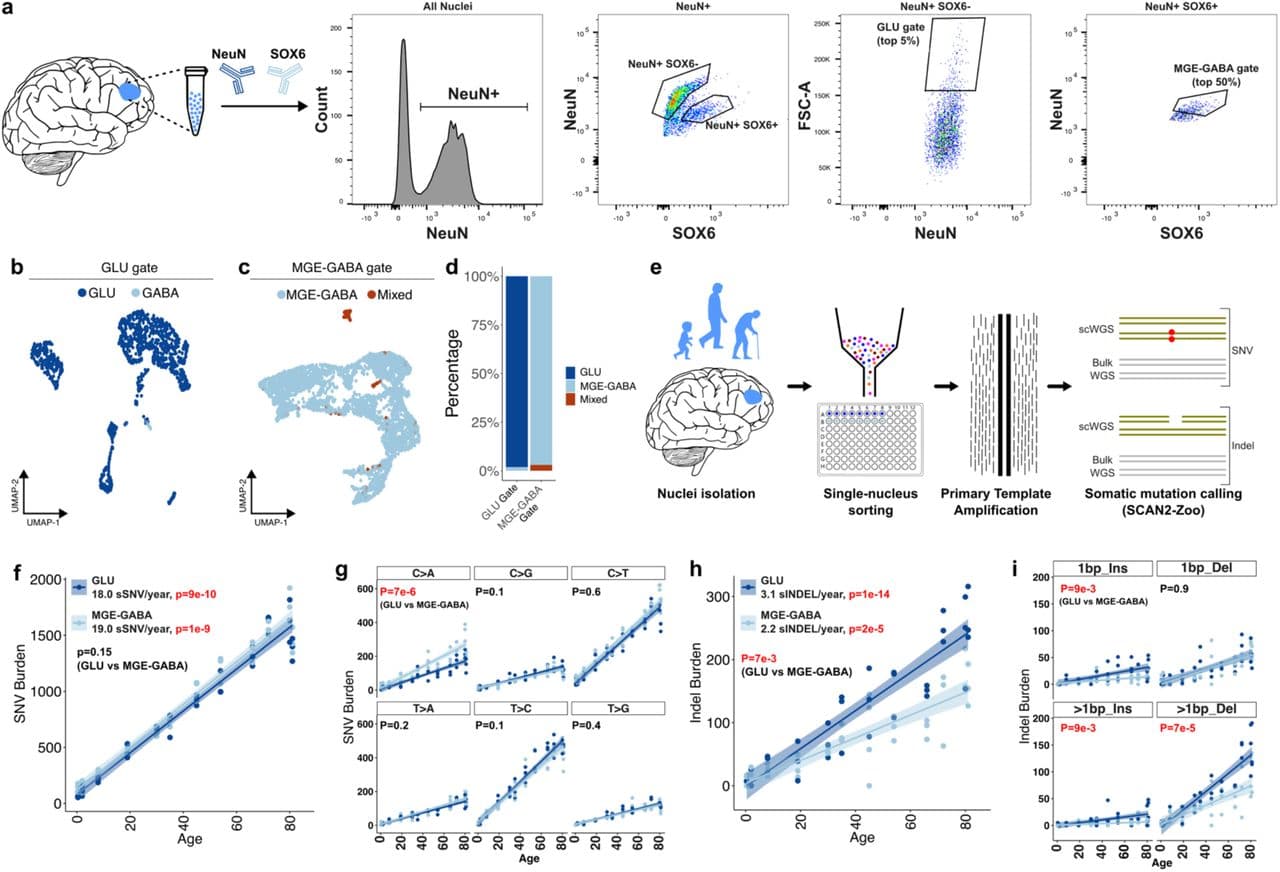
Cortical neurons gain mutations at similar yearly rates across six species, leaving aged humans with uniquely high mutational burdens and…Cortical neurons gain mutations at similar yearly rates across six species, leaving aged humans with uniquely high mutational burdens and transcriptomic dysregulation. In a preprint analyzing humans, chimpanzees, rhesus macaques, marmosets, ferrets, and mice, researchers evaluated genomic…

Distinct cerebral cortical neuronal subtypes display subtle yet specific differences in their mutational landscape.
bioRxivAnimalsPreprint

CAR T cells targeting inflammatory bone marrow progenitors restore cognition in aged mice

Clearing these peripheral myeloid cells remodeled brain macrophages and improved cognitive performance without requiring the engineered immune cells…Clearing these peripheral myeloid cells remodeled brain macrophages and improved cognitive performance without requiring the engineered immune cells to enter the brain. In aged mice and mouse models of Alzheimer's disease, researchers tested CAR T cell therapies targeting inflammatory…

Nature NeuroscienceHumans

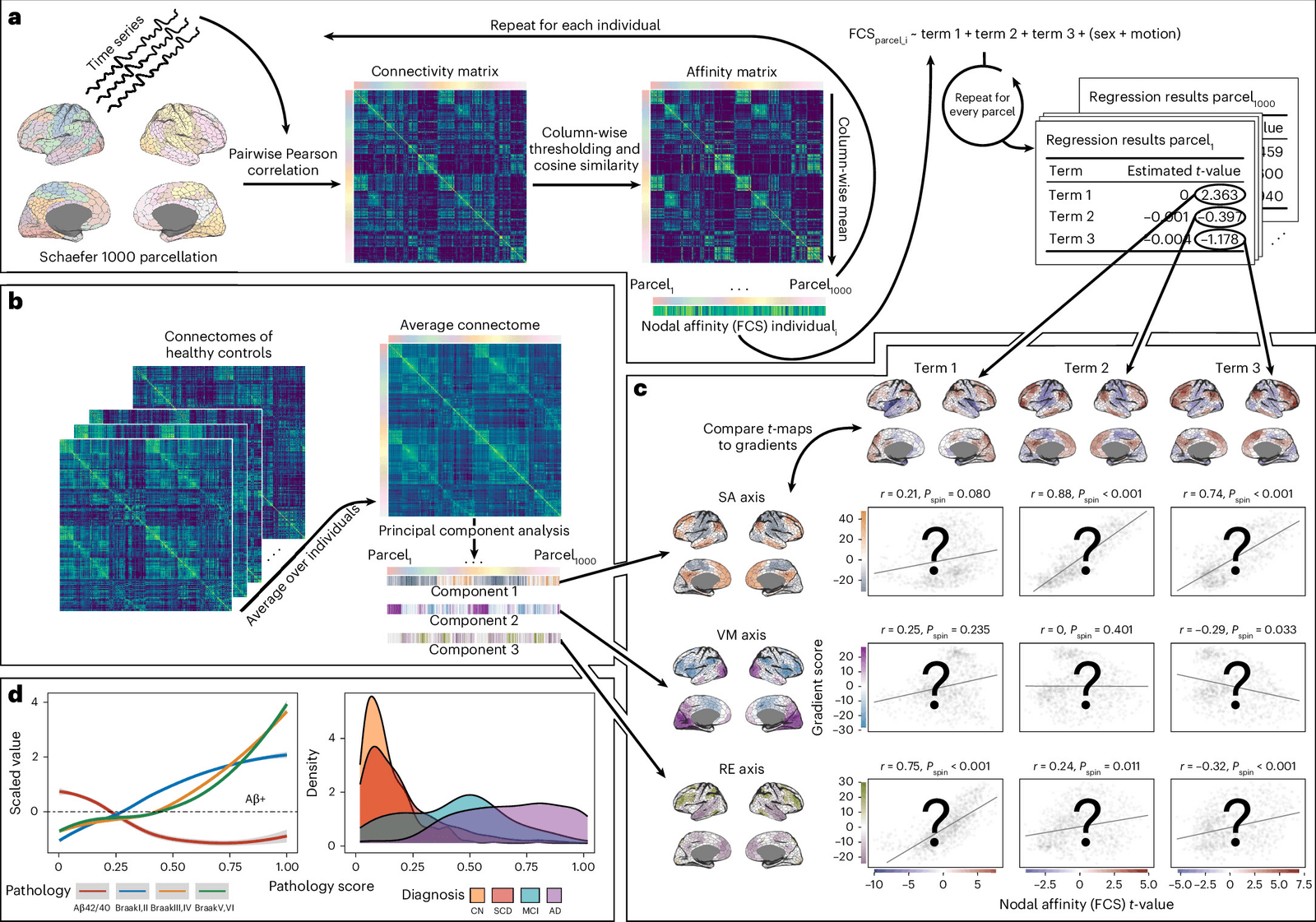
Aging and Alzheimer's alter separate functional brain pathways

Two human cohorts of 973 and 129 individuals revealed that aging and Alzheimer's disease disrupt separate, orthogonal functional communication axes…Two human cohorts of 973 and 129 individuals revealed that aging and Alzheimer's disease disrupt separate, orthogonal functional communication axes across the brain. In two independent human cohorts (BioFINDER-2, N = 973; Alzheimer's Disease Neuroimaging Initiative, N = 129), researchers…

Figure 1
bioRxivAnimalsPreprint

Extracellular cGAMP drives neuroinflammation and premature aging phenotypes in mice

Loss of the cGAMP-degrading enzyme ENPP1 allows microglia-derived signaling molecules to trigger STING-dependent inflammation across multiple brain…Loss of the cGAMP-degrading enzyme ENPP1 allows microglia-derived signaling molecules to trigger STING-dependent inflammation across multiple brain cell types. In a mouse study, researchers found that advanced age and experimental autoimmune encephalomyelitis cause microglia to accumulate…

medRxivHumansPreprint

Auditory nerve myelin degeneration defines a subtype of age-related hearing loss

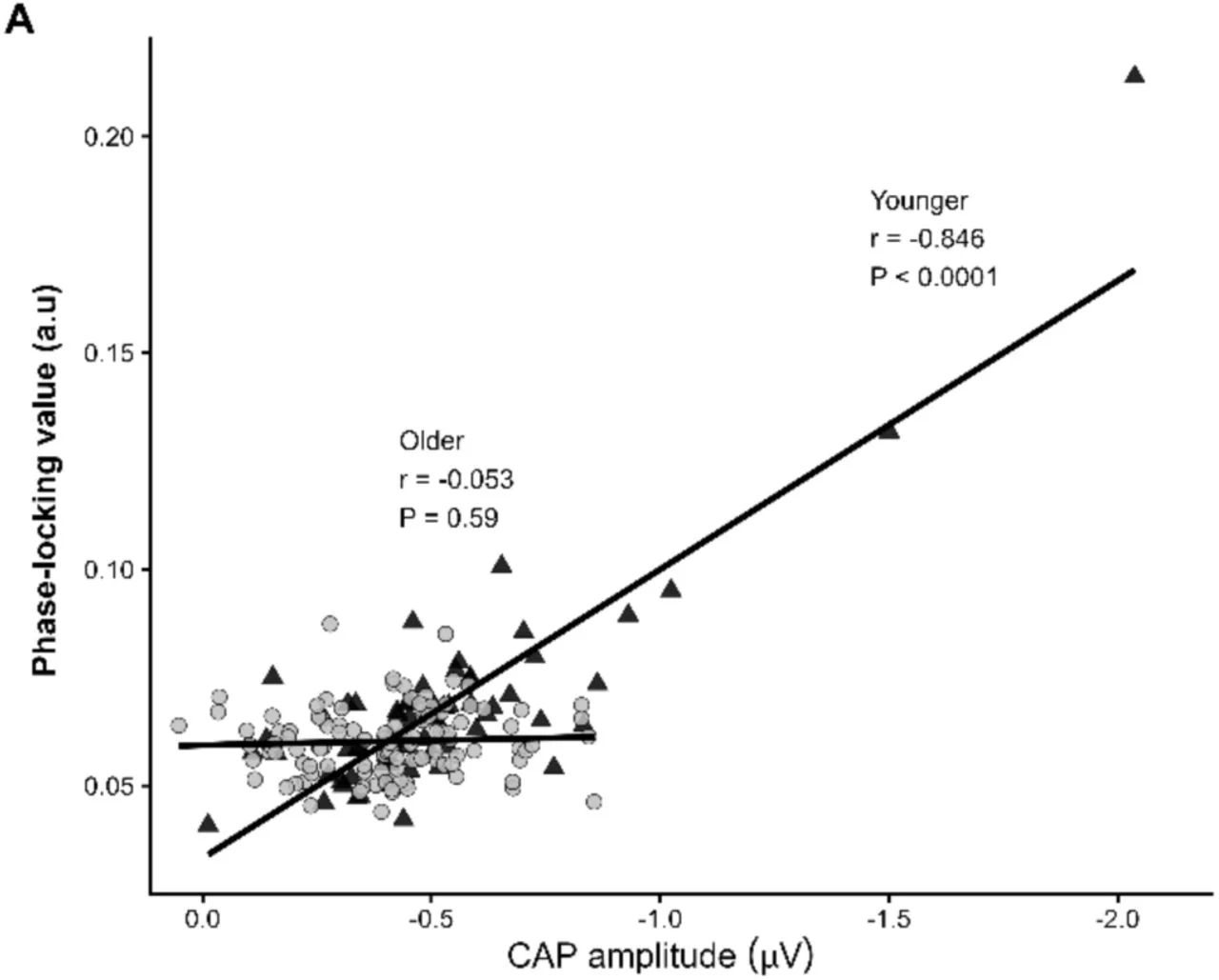
Researchers linked poor auditory nerve synchrony and myelin degradation to amplified communication difficulties in older humans, beyond standard…Researchers linked poor auditory nerve synchrony and myelin degradation to amplified communication difficulties in older humans, beyond standard hearing thresholds. In a human study detailed in a preprint, researchers investigated how auditory nerve changes affect hearing in older adults.

Aging modifies the association between auditory nerve response amplitude and neural synchrony.