From patient cells to patient therapy: Twenty years of iPSC-based translation in neurodegenerative disease
Abstract
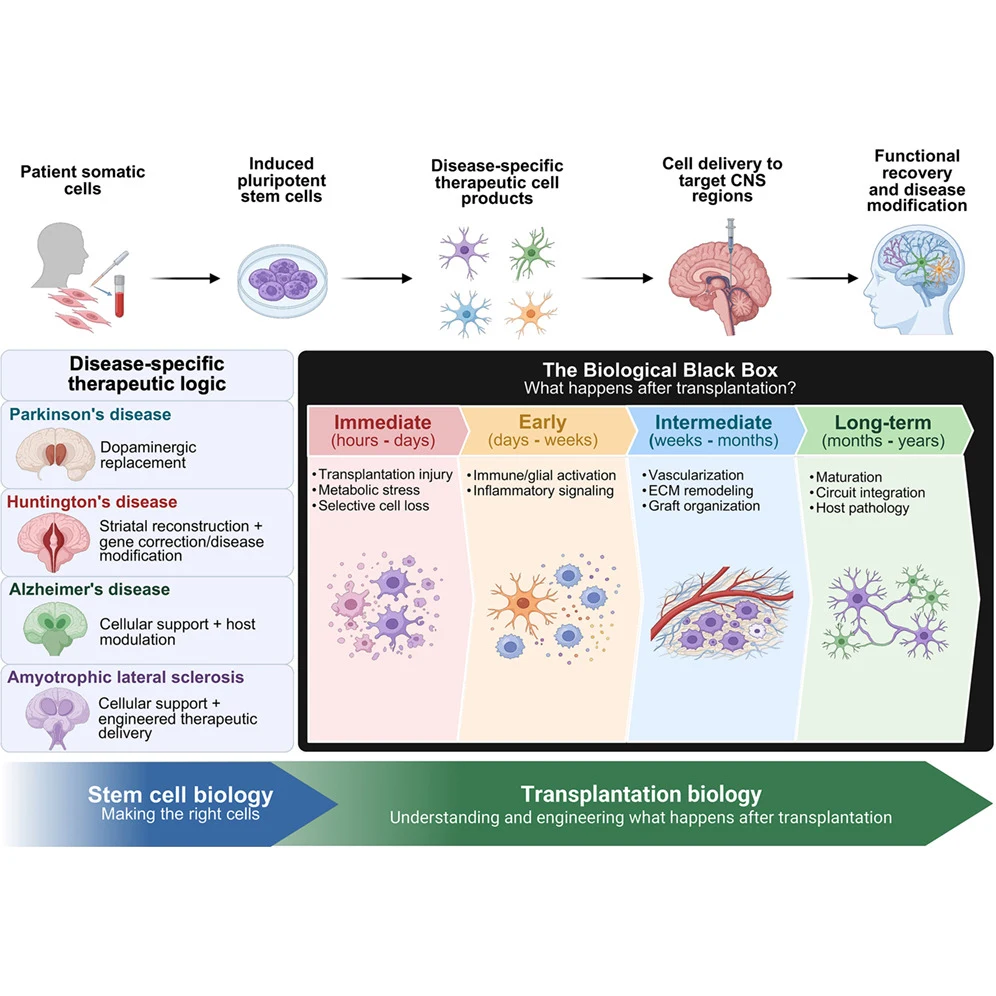
Twenty years after the discovery of induced pluripotent stem cells, the field has progressed from patient-specific disease modeling toward cell-based therapies for neurodegenerative disorders. Parkinson's disease has emerged as the leading model for neuronal replacement, whereas Huntington's disease, Alzheimer's disease, and amyotrophic lateral sclerosis require distinct combinations of circuit reconstruction, cellular support, immune modulation, and engineered therapeutic delivery. We discuss key determinants of clinical translation, including cell source, product identity, graft composition, graft-host interactions, manufacturing reproducibility, genomic integrity, and clinical evaluation. We propose that the interval between cell transplantation and long-term engraftment constitutes a biological "black box" in which graft fate and therapeutic outcome are determined. As regenerative medicine enters its third decade, future progress will depend not only on generating therapeutic cells but also on elucidating and engineering the biological processes that determine their fate after transplantation, marking a conceptual transition from stem cell biology toward transplantation biology.