Plasma CXCL10 links to higher stroke risk in older adults
Each 1-standard deviation higher CXCL10 was linked to 20% greater stroke risk over a median follow-up of 14 years.
Translational Stroke Research
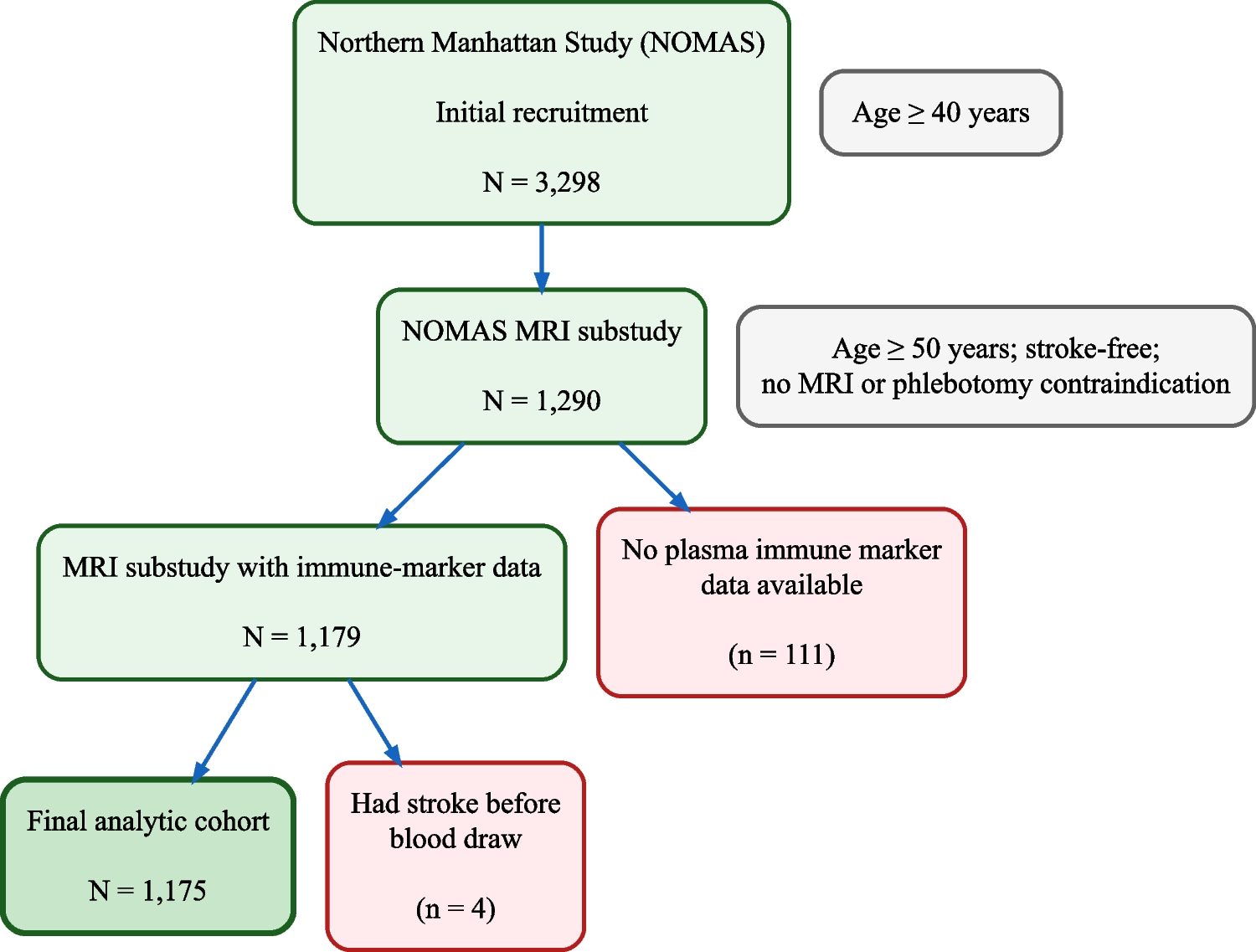
In an observational study of 1,175 stroke-free older adults from the Northern Manhattan Study, researchers analyzed 60 plasma immune-related proteins to identify markers associated with incident stroke. Participants had a mean age of 70 years, were 60% women, and 67% identified as Hispanic. Over a median of 14 years, 130 participants had a stroke, 101 of which were ischemic.
Statistical modeling selected two candidate chemokines, CXCL9 and CXCL10. After adjusting for vascular risk, cardiac conditions, white matter hyperintensity volume, and classical inflammatory cytokines, each 1-standard deviation increase in baseline CXCL10 was associated with 20% higher all-cause stroke risk (HR 1.20; 95% CI 1.04–1.38). CXCL9 was not independently associated with stroke.
Why it matters
The findings suggest that interferon-gamma-responsive immune signaling may play a distinct role in late-life cerebrovascular vulnerability. Pinpointing specific inflammatory proteins like CXCL10 could refine how researchers assess stroke risk driven by chronic inflammation in aging populations.
Caveats
Because this study is observational, the association does not prove that CXCL10 directly causes stroke. The authors note that whether CXCL10 represents a modifiable target for stroke prevention warrants further study.
The paper
Chemokine CXCL10 and Incident Stroke Risk in the Northern Manhattan Study
Show 11 more authors
Emir Veledar, José A. Santiago, Marco R. Di Tullio, David Della‐Morte, Botagoz Aimagambetova, Jose Gutierrez, Mady Hornig, Mitchell S.V. Elkind, Hyun Song, Clinton B. Wright, Sarah E. Tom,University of Miami
Translational Stroke Research · 2 Oct 2026