Brainstem volume links to better memory in midlife
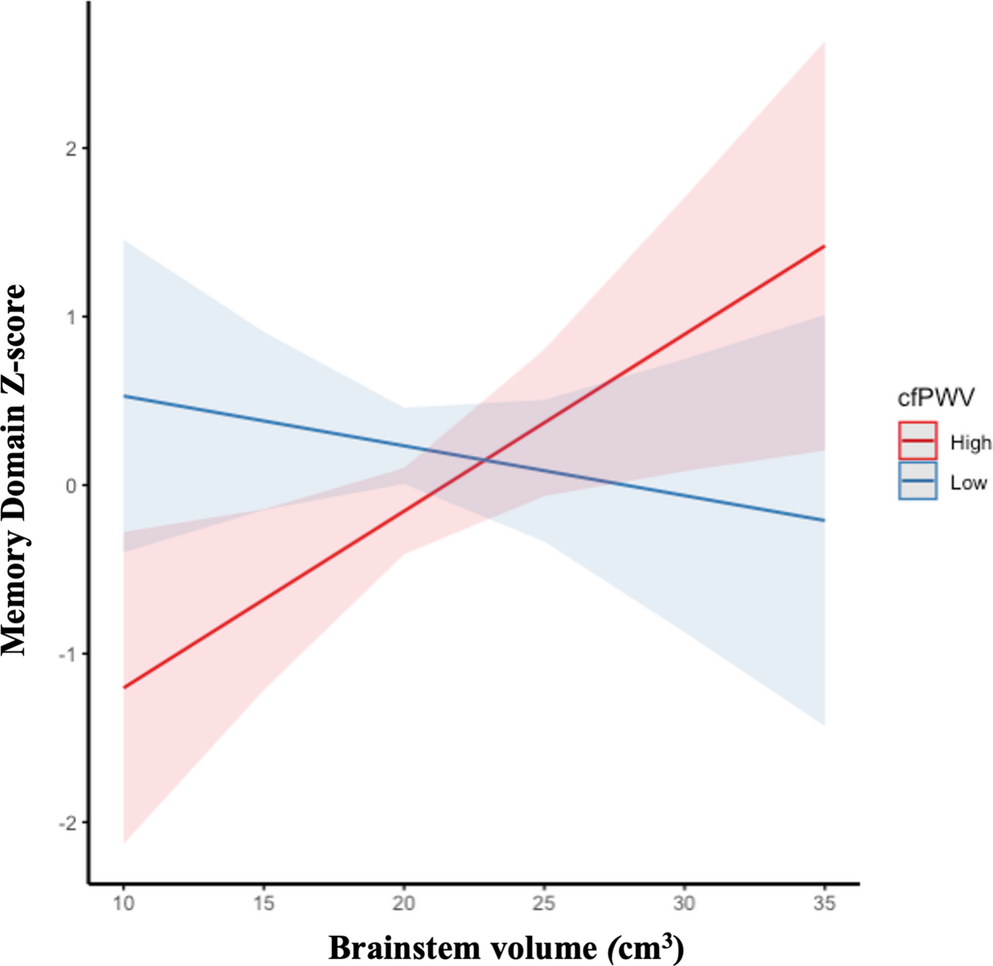
In 198 adults aged 40 to 65, larger brainstem volume tied to better memory, with the strongest link seen in participants with elevated arterial stiffness.
Brain Imaging and Behavior
In a study of 198 healthy adults aged 40 to 65 years, researchers tested whether brainstem volume relates to cognitive function and interacts with vascular stiffness. Participants completed neuropsychological testing, structural MRI scans, and fasting cardiometabolic evaluations. The team measured central arterial stiffness using carotid-femoral pulse wave velocity.
Greater brainstem volume significantly associated with better memory performance, but showed no link to attention or executive function. Larger brainstem volume also correlated with lower systolic and pulse pressure. Central arterial stiffness moderated the connection between brainstem volume and memory. The positive relationship was strongest among individuals with higher arterial stiffness, indicating that the brainstem may act as a structural hub linking vascular health and midlife cognition.
Why it matters
Cardiovascular risks emerge during midlife and directly influence brain aging. Identifying how deep brain structures interact with vascular stiffness can help explain why some individuals maintain memory function despite increased vascular burden.
Caveats
The study relied on a cross-sectional observational design, which cannot establish causality or track changes across time. The analysis was also limited to a relatively small sample of 198 generally healthy midlife adults.
The paper
Brainstem volume and arterial stiffness interact to support memory in midlife
The University of Texas at Austin
Brain Imaging and Behavior · 2 Oct 2026