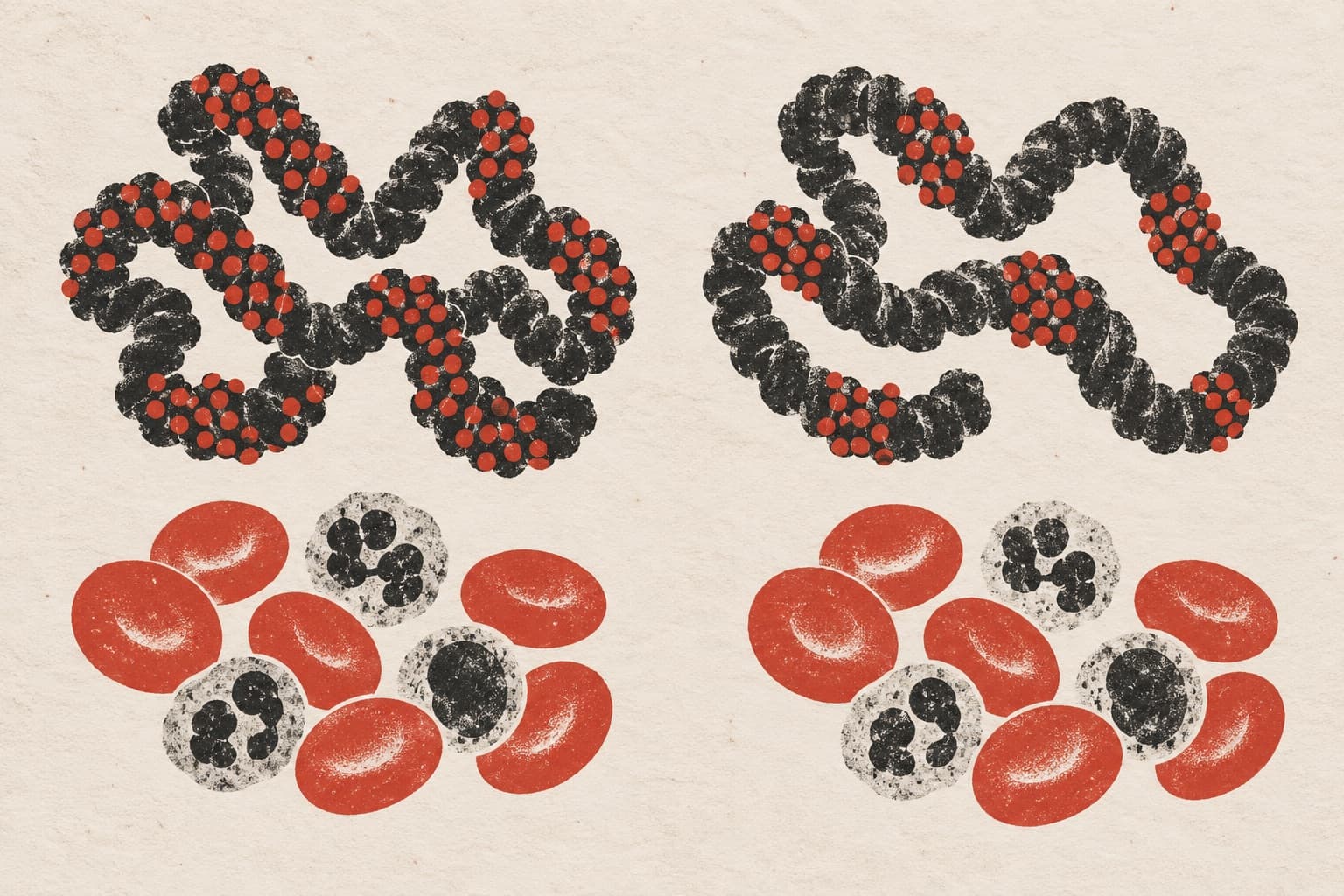
PTSD associates with accelerated DNA methylation aging
In a preprint examining over 22,000 U.S. veterans across multiple ancestries, PTSD diagnosis was significantly associated with accelerated DNA methylation aging.
medRxiv
In a preprint analyzing data from up to 22,141 human participants in the Million Veteran Program, researchers investigated DNA methylation patterns linked to posttraumatic stress disorder. The multi-ancestry cohort included individuals of European, African, and admixed American descent. Evaluating both symptom severity scores and 9,413 lifetime PTSD cases against 27,257 controls, the team identified 241 epigenome-wide-significant CpG sites across all analyzed PTSD traits. Regression analyses revealed that PTSD case status was significantly associated with accelerated DNA methylation aging. Methylation patterns overlapped with ten genes previously identified in postmortem brain studies of PTSD, showing enrichment for genes downregulated in somatostatin interneurons and brain endothelial cells. Analyses stratified by smoking status suggested that previously reported associations between PTSD and the AHRR gene may be confounded by smoking.
Why it matters
The study provides large-scale multi-ancestry evidence linking psychological trauma to biological aging clocks. Identifying shared epigenetic changes in peripheral blood and brain tissue helps map the molecular pathways through which severe stress may influence systemic aging.
Caveats
This observational study is a preprint that has not yet been peer-reviewed. The authors also note that behavioral factors such as smoking can confound observed epigenetic associations.
The paper
Posttraumatic Stress Disorder Epigenome-Wide Association Studies in the Million Veteran Program
Show 12 more authors
Cassie Overstreet, Jiarui Chen, Priya Gupta, Cecilia Dao, Bluma J. Lesch, Janitza L. Montalvo‐Ortiz, the VA Million Veteran Program, J. Michael Gaziano, John Harrison Krystal, Renato A Polimanti, Matthew J. Girgenti, Murray B. Stein,Yale University
medRxiv · 8 Sep 2026 · Preprint, not peer-reviewed