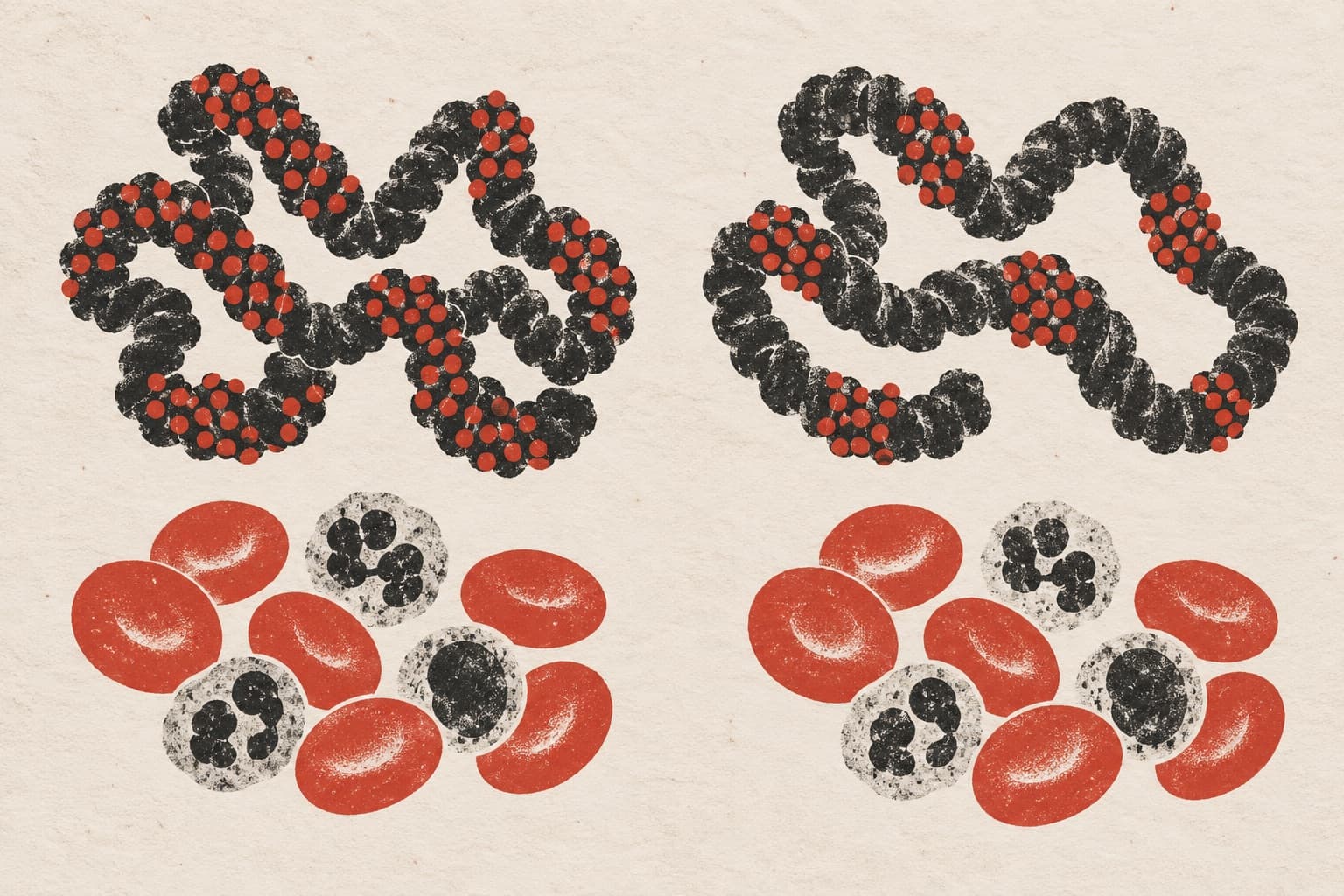
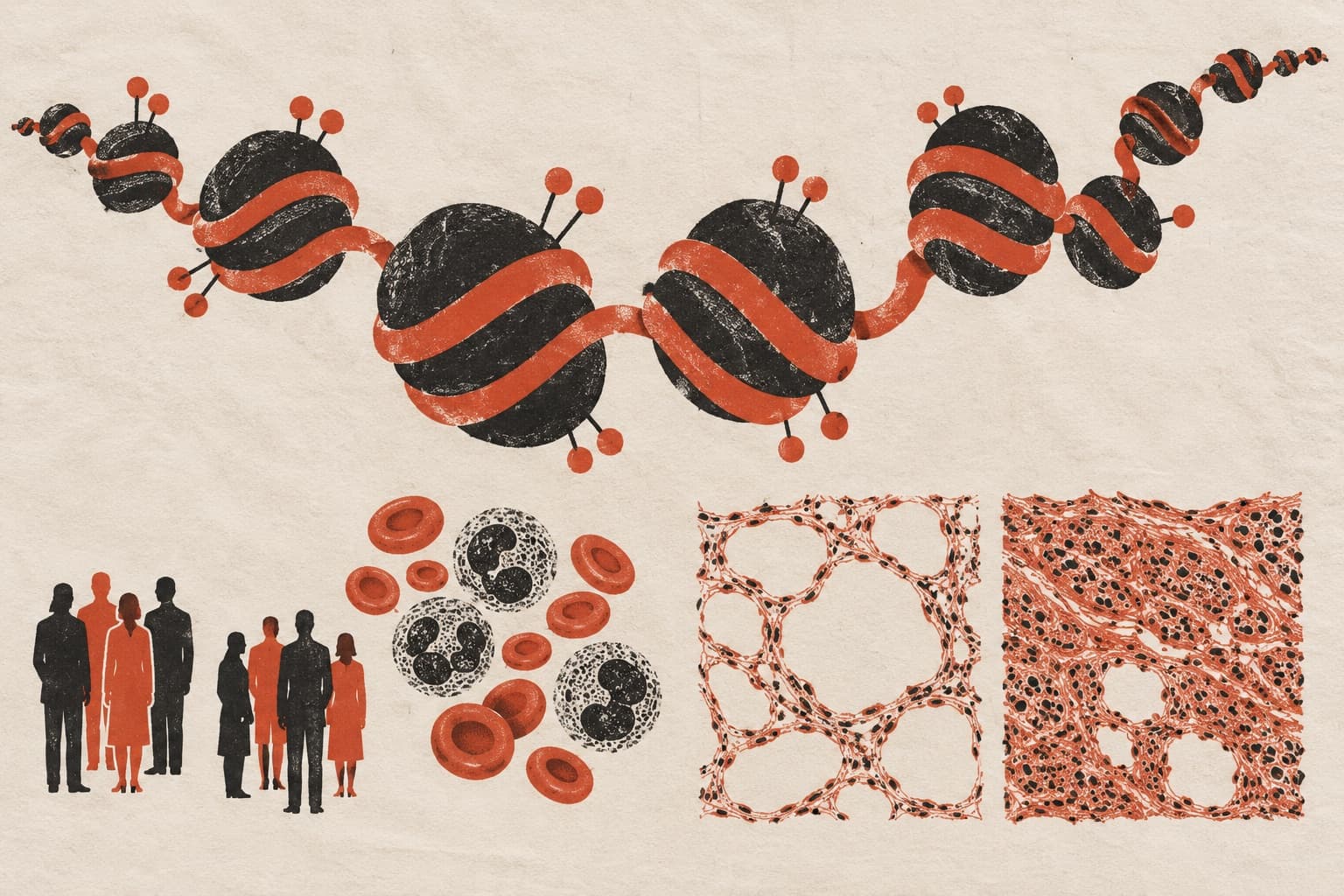
Long-read platforms support large DNA methylation predictors
Across human blood samples, 19 of 21 predictors with over 1,000 CpGs reached correlations above 0.8 between Oxford Nanopore and PacBio duplicate pairs.
Research Square
Using human blood samples from two population cohorts, researchers evaluated how long-read sequencing platforms capture DNA methylation compared with standard Illumina EPIC arrays. The team analyzed samples from the PEGS study and 1,815 long-read datasets from 1,787 All of Us participants using Oxford Nanopore and PacBio HiFi technologies. Both platforms measured roughly 28 million CpGs at 10× depth or higher. Between paired Nanopore and PacBio assays, overall Pearson correlations reached 0.85 to 0.87, but mean-centered correlations dropped, indicating limited agreement at single CpGs. In simulations, read depths of 50× to 60× were needed to match array-level technical reproducibility. When evaluating 173 methylation-based predictors, model size dictated cross-platform portability: 19 of 21 predictors with more than 1,000 CpGs achieved correlations above 0.8 between platforms, compared with only four of 137 smaller predictors.
Why it matters
Many epigenetic aging clocks were developed on methylation arrays, making it critical to establish whether these biomarkers function reliably on newer, long-read sequencing technologies.
Caveats
This work is a preprint and has not yet been peer-reviewed. In addition, low mean-centered correlations show that platform agreement remains limited at individual CpG sites without high sequencing coverage.
The paper
Show 7 more authors
David C. Fargo, Charles Schmitt, Lawrence Steven Kirschner, Trevor K. Archer, Joshua C. Denny, Geoffrey S. Ginsburg, Richard P. Woychik,National Institute of Environmental Health Sciences
Research Square · 30 Sep 2026 · Preprint, not peer-reviewed