Osteocalcin links brain volume to cognition in osteoporosis
In people with osteoporosis, higher undercarboxylated osteocalcin correlated with greater medial prefrontal cortex volume, which predicted one-year cognitive decline with an AUC of 0.84.
Frontiers in Neurology
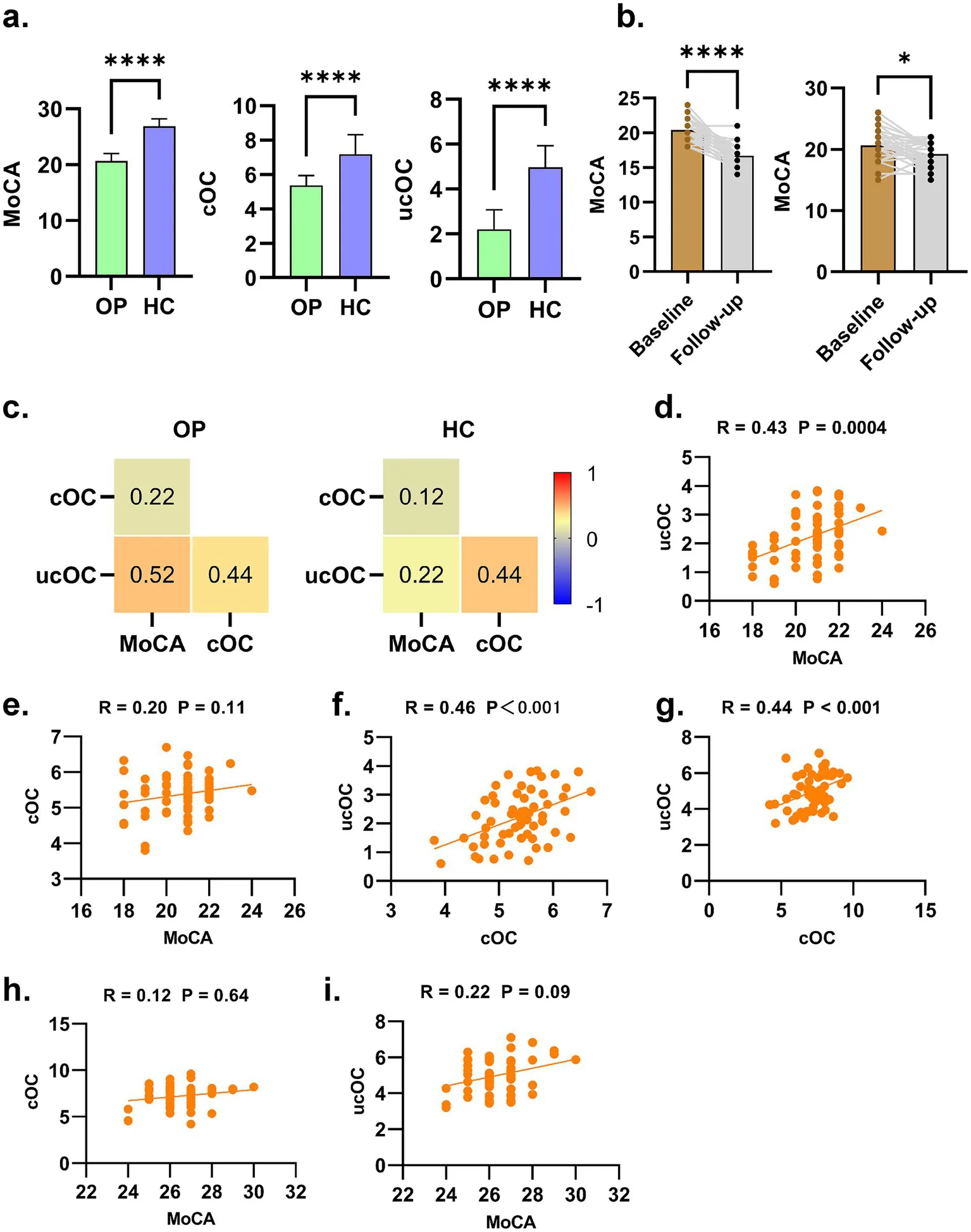
In a study of human patients, researchers evaluated how undercarboxylated osteocalcin, a bone-derived hormone, relates to brain structure and cognitive decline in osteoporosis. The team analyzed brain scans and cognitive scores across two cohorts, comparing 63 osteoporosis patients with 60 healthy controls in an initial dataset and 32 patients with 31 controls in a second cohort. Patients with osteoporosis showed lower Montreal Cognitive Assessment scores and reduced medial prefrontal cortex grey matter volume relative to controls. In patients, serum undercarboxylated osteocalcin positively correlated with cognitive scores and prefrontal volume, whereas carboxylated osteocalcin did not. Mediation analysis indicated that prefrontal volume statistically mediated the relationship between hormone levels and cognition. An XGBoost model based on this brain region predicted one-year cognitive decline in the second cohort with an AUC of 0.84.
Why it matters
The findings highlight a bone-to-brain signaling axis that helps explain why skeletal aging often coincides with neurocognitive decline. Tracking active osteocalcin and related brain changes could aid in identifying age-related cognitive deterioration earlier.
Caveats
The study was observational and cannot establish direct physiological causality. Additionally, both cohorts were recruited from a single medical center with modest sample sizes, and serum osteocalcin was measured only in the initial cohort.
The paper
China-Japan Friendship Hospital
Frontiers in Neurology · 16 Sep 2026