App knock-in mice display age-dependent Alzheimer's pathology
In a study of App SAA knock-in mice from 4 to 19 months, animals developed progressive amyloid pathology, neuroinflammation, biomarker shifts, and synaptic loss.
bioRxiv
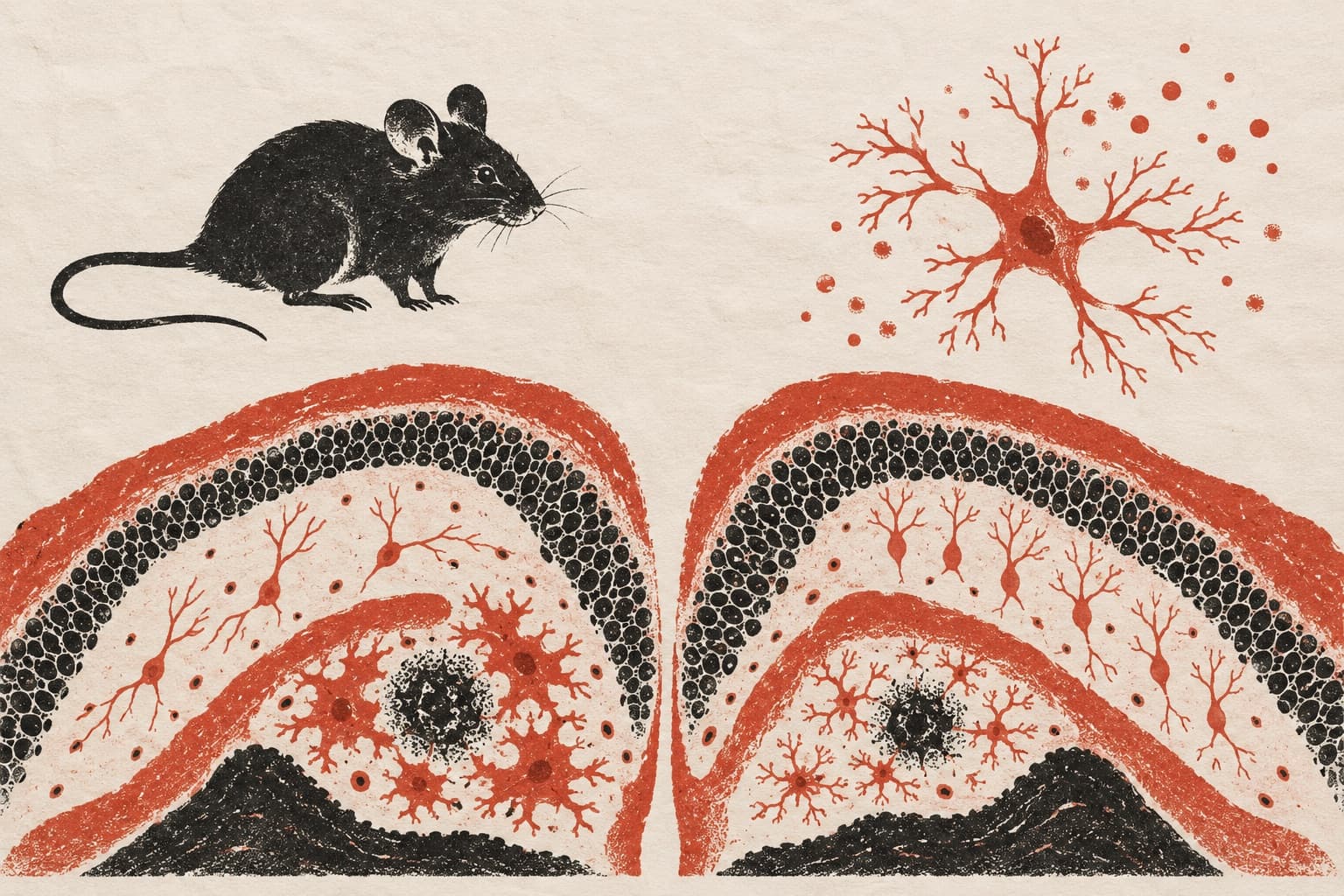
In homozygous App SAA knock-in mice evaluated from 4 to 19 months of age, researchers observed progressive, age-dependent Alzheimer's disease features without artificial overexpression. Over time, the animals accumulated amyloid plaques, cerebral amyloid angiopathy, plaque-associated neuroinflammation, and dystrophic neurites. By 12 months of age, mouse brain transcriptomes aligned with human AMP-AD co-expression modules. Circulating levels of plasma pTau-217, GFAP, and SNAP25 also rose with age. Synaptic and behavioral analyses at 12 months revealed that while the mice retained associative memory, they exhibited memory interference alongside CA1 dendritic-spine loss that worsened closer to amyloid plaques.
Why it matters
Aging is the primary risk factor for Alzheimer's disease, and models capturing progressive, age-related pathology without artificial protein overexpression are critical for defining accurate preclinical treatment windows.
Caveats
The study was conducted in mice and remains a preprint that has not yet undergone peer review.
The paper
Show 7 more authors
Justice Pomeroy-Tuck, Ritesh Chidambaram, Tim Ragan, Ravi S. Pandey, Erik B. Bloss, Gregory W. Carter, Adrian L. Oblak,Jackson Laboratory
bioRxiv · 10 Sep 2026 · Preprint, not peer-reviewed