Male mice lacking a calcium-control protein show brain stress
Experiments in four-month-old mice found broad molecular disruption in males lacking the protein, while females showed more modest changes in gene activity.
Limit: Protein profiling covered only males, measuring molecular stress unevenly between sexes
Edited by Boris Djordjevic · AgingResearch.News
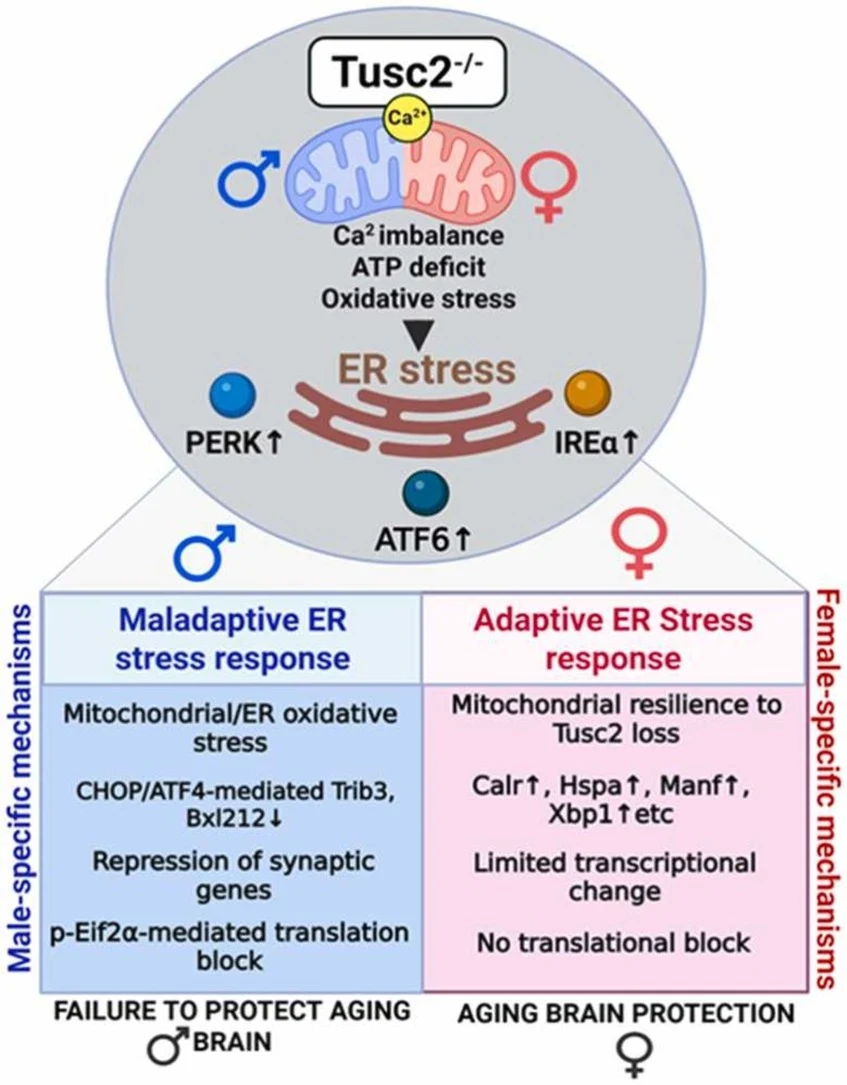
In an animal experiment, researchers studied four-month-old male and female mice lacking Tusc2, a protein that regulates calcium in mitochondria, the cell’s energy-producing structures. They measured gene activity in the hippocampus, a brain region important for memory, in both sexes, and proteins in males.
Males showed lower levels of proteins involved in energy production and molecular changes affecting protein production, disposal and nerve-cell communication. Protein clumps were larger, consistent with impaired protein maintenance. Females showed more modest changes in gene activity and activated pathways for responding to improperly folded proteins, consistent with a protective response. Comparisons with human hippocampus datasets revealed broad overlaps, suggesting that Tusc2 deficiency reproduced key molecular features of human brain aging.
Why it matters
Mitochondrial dysfunction accompanies aging and neurodegenerative conditions. The authors propose these mice as a model for investigating early, potentially reversible stages of mitochondrial decline and impaired protein maintenance in brain aging.
Caveats
The study measured molecular changes at one age, and protein profiling covered only males. The findings do not establish that Tusc2 loss has the same effects in people.
- TUSC2
- Cellular homeostasis
- ER unfolded protein response
- Protein aggregate size
- PSD-95 neuropil intensity
- Mice
The paper
Meharry Medical College
Mechanisms of Ageing and Development, Sep 19, 2026, Open access


Comments
Be the first to comment.