Oxidative stress may be linked to inflexibility in aged mice
Touchscreen experiments found differences in aged mice’s ability to adapt to changing rules; an antioxidant given for 20 weeks improved task switching.
Limit: The behavioral comparison included only 5 control mice and 7 MitoQ-treated mice
Edited by Boris Djordjevic · AgingResearch.News
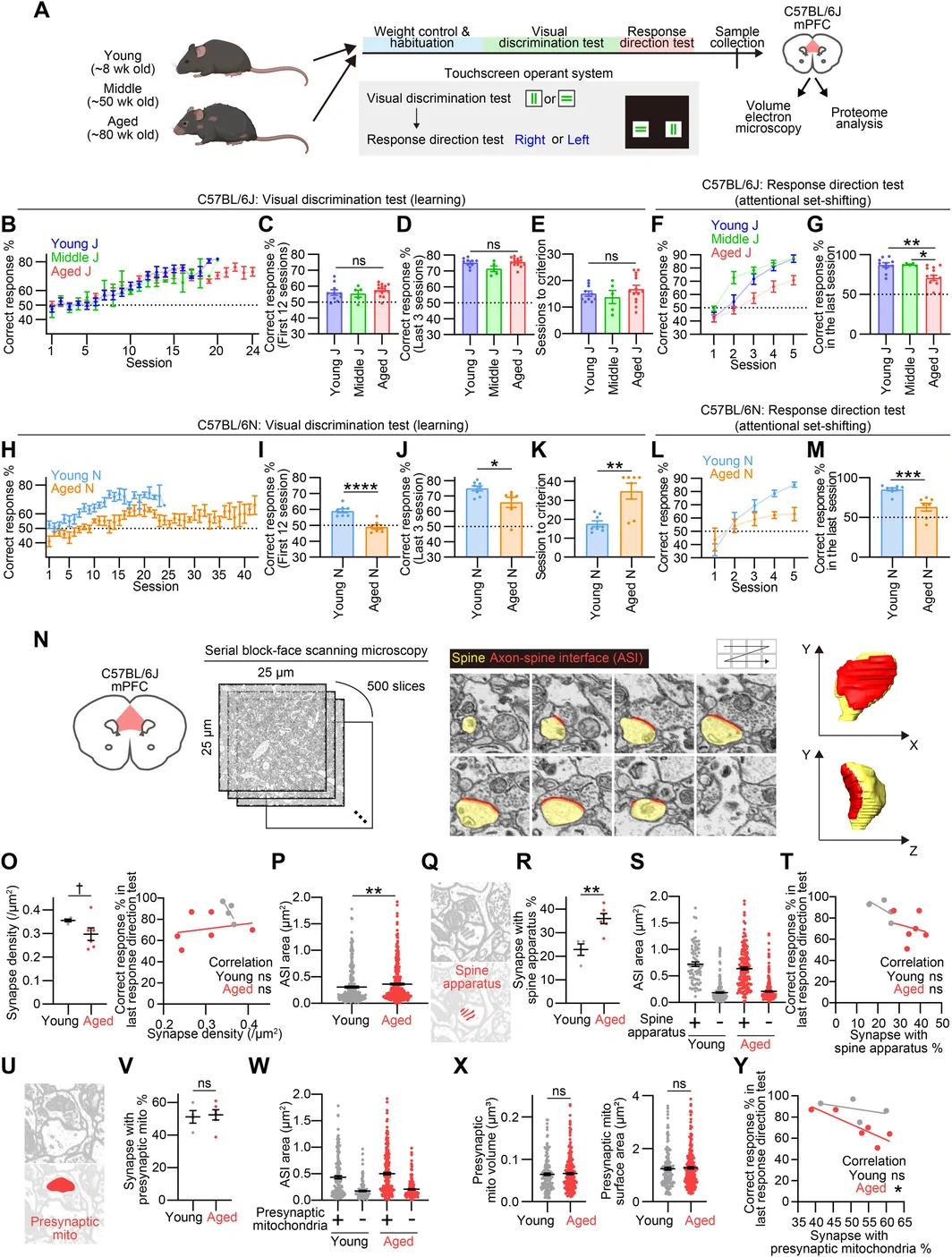
Researchers tested cognitive flexibility—the ability to adapt when rules change—in experiments with C57BL/6J mice. Among aged mice, 75–85 weeks old, some struggled to switch touchscreen rules while others performed comparably to young mice.
Poorer flexibility in aged mice was linked to a larger share of brain cell connections containing mitochondria, cells’ energy-producing structures. Higher levels of mitochondrial proteins near these connections were also linked to poorer performance. These protein links largely differed from changes associated with age itself. MitoQ, an antioxidant targeting mitochondria, improved task switching after 20 weeks without affecting initial learning; an inactive comparison compound did not. The authors suggested that oxidative stress—cellular stress from reactive molecules—in mitochondria at brain cell connections contributed to individual vulnerability to inflexibility.
Why it matters
Cognitive flexibility is one of the skills that can weaken with age. The authors proposed targeting mitochondrial oxidative stress as a possible way to preserve it.
Caveats
The correlations between individual proteins and performance were exploratory and did not remain statistically significant after correction for multiple tests. The findings came from mice performing a laboratory task, not from people.
The paper
Kobe University; Institute of Science Tokyo
Aging Cell, Sep 2026, Open access

