Noncircadian BMAL1-YAP activity amplifies persistent inflammation in aged epidermis
Declared no competing interests
Abstract
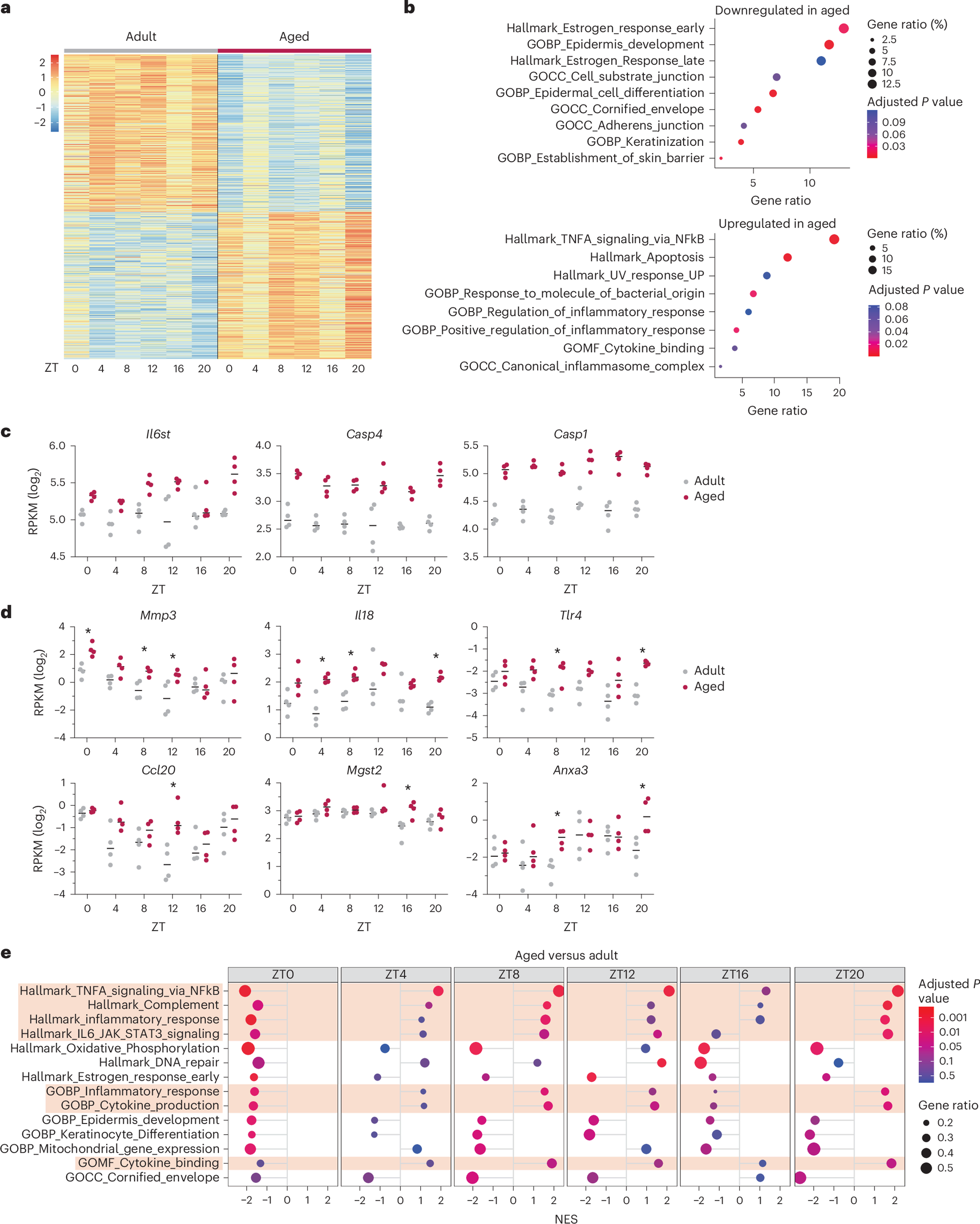
Aging is characterized by persistent low-grade inflammation linked to impaired tissue homeostasis, yet the underlying molecular mechanisms remain poorly understood. The mammalian skin is a clinically relevant site of aging-driven inflammation associated with compromised barrier function, inefficient wound healing, elevated oxidative stress and DNA damage accumulation. Here we show that, in the murine epidermis, aging engages a previously uncharacterized BMAL1-YAP functional cooperation with enhanced binding at inflammation-related enhancers, amplifying target gene transcription. Independent of its circadian clock role, BMAL1 partners with the mechanosensitive cofactor YAP at enhancer regions to regulate epidermal identity genes. However, in aged skin, this cooperative binding undergoes a functional shift, enhancing the expression of inflammation-related genes, partially coregulated by NF-κB. In addition, aged pro-inflammatory IL-17 signaling activates YAP in a Hippo-independent manner. These findings unveil a transcriptional mechanism underlying epidermal aging, linking chromatin dynamics to inflammatory programs through rewiring of BMAL1-YAP-occupied enhancers, highlighting potential strategies to counteract chronic inflammation and restore tissue homeostasis during aging.
The paper
Institute for Research in Biomedicine; Josep Carreras Leukaemia Research Institute
Nature Aging, 19 Aug 2026