Inhibiting CHK2 improves oocyte quality and reduces ovarian inflammation in aged mice
A multi-omic analysis shows that defective luteal resolution and CHK2-driven inflammation drive ovarian aging, but drug inhibition restores oocyte maturation.
bioRxiv
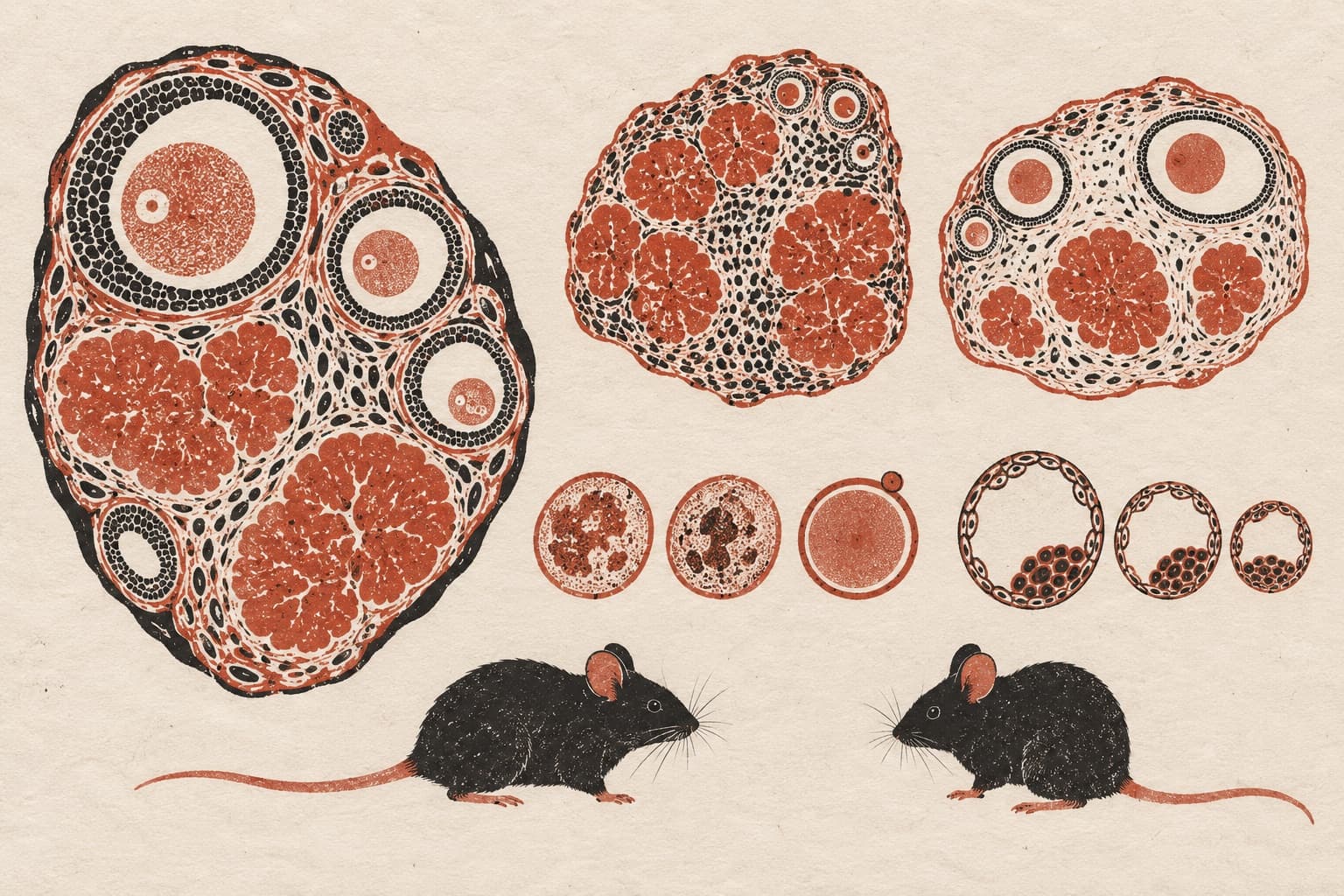
In a new preprint, researchers analyzed ovaries from young and reproductively aged mice after synchronized ovulation. They found that aged mouse ovaries accumulated luteal cells with increased steroidogenic, antigen presentation, and inflammatory gene expression. Overall DNA methylation remained globally preserved, though focal changes occurred at regulatory regions. Protein profiling showed higher levels of checkpoint kinase 2 (CHK2), a DNA damage response protein linked to natural menopause timing. CHK2 and DNA damage markers were elevated in both aged mice and aged human ovarian somatic cells. Transient pharmacological inhibition of CHK2 in aged mice increased the proportion of mature oocytes and blastocyst formation, while reversing inflammatory signatures in granulosa cells.
Why it matters
The findings show that ovarian aging involves defective luteal clearance and a reversible inflammatory state. This indicates that age-related reproductive decline can be pharmacologically modified by targeting DNA damage response proteins.
Caveats
Most findings and all interventional outcomes come from mice, so efficacy in people remains unproven. In addition, this work is a preprint and has not yet been peer-reviewed.
The paper
Show 9 more authors
Carolina Leynes, Isabel Lorenzo, Ashley Pawelka, Meaghan Donahue, Mancy Tong, Hugh Stott Taylor, Yongqing Zhang, Brendan Lee, Tao P Wu,Yale University · Baylor College of Medicine
bioRxiv · 1 Oct 2026 · Preprint, not peer-reviewed