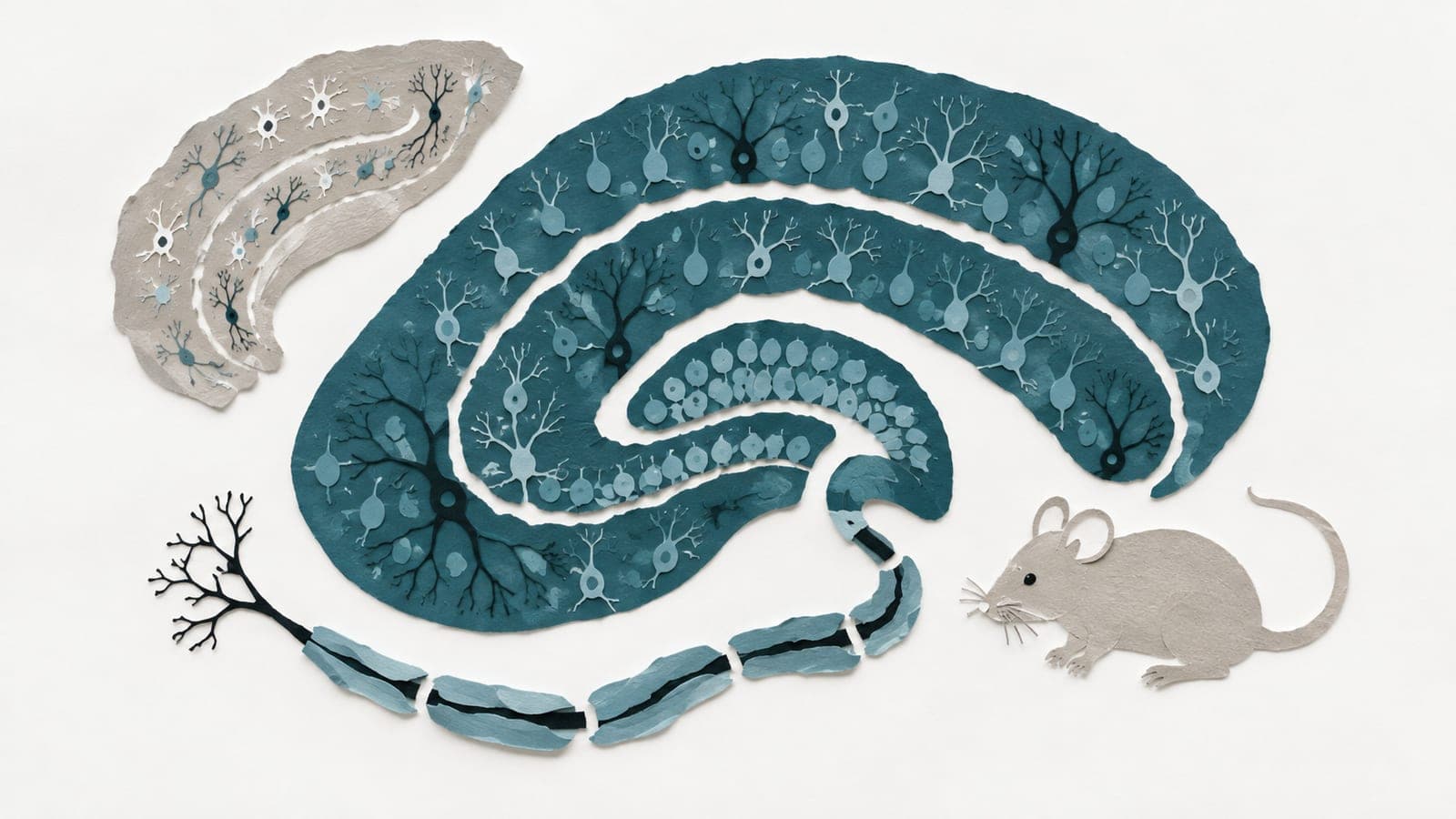
Moderate Exercise Mitigates Diabetes-Induced Hippocampal Dysfunction in Aged Rats
Abstract
This study investigated the effects of moderate chronic exercise on hippocampal integrity, motor learning, and neuroplasticity markers in diabetic aged (16-month-old) female Wistar rats. Forty Wistar rats were divided into four groups: Control (n = 10), Exercise Control (n = 10), Diabetes (n = 10), and Diabetes + Exercise (n = 10). Diabetes was induced via streptozotocin (40 mg/kg, i.p.), while exercise groups performed 45 min daily treadmill sessions for four weeks. Motor coordination was assessed using the rotarod test. Hippocampal Nogo-A, KLOTHO, and NZF-2b gene expressions were analyzed by RT-PCR, and oxidative stress markers (MDA, GSH) were measured by ELISA. In the diabetes group (G3), Nogo-A and MDA levels significantly increased (p < 0.05), while KLOTHO, NZF-2b, and GSH levels decreased (p < 0.05). Chronic exercise reversed these pathological changes by decreasing Nogo-A and MDA (p < 0.05) and increasing KLOTHO, NZF-2b, and GSH (p < 0.05). Behaviorally, the diabetes group (G3) showed the lowest rotarod performance (p < 0.05), which significantly improved with exercise (p < 0.05). Findings suggest that diabetes and aging impair neuroplasticity-related gene expression and increase oxidative stress in the hippocampus. Chronic exercise (G2 and 4) exerts neuroprotective effects by mitigating these damages. Specifically, the upregulation of NZF-2b indicates that exercise may support neuroplasticity through transcriptional regulation, offering a preventive strategy against diabetic hippocampal degeneration.
- Exercise
- Oxidative stress and ROS signalling
- Synaptic transmission
- Type 1 diabetes
- Neurodegenerative disease
- Rats
The paper
Istanbul Medipol University; Selçuk University
International Journal of Molecular Sciences, 20 Jul 2026, Open access