Tetanus vaccine ingredient improved learning and memory in aging mice
An experiment in twelve-month-old mice found better learning and memory alongside more immature nerve cells and greater insulation around nerve fibres.
European Journal of Pharmacology
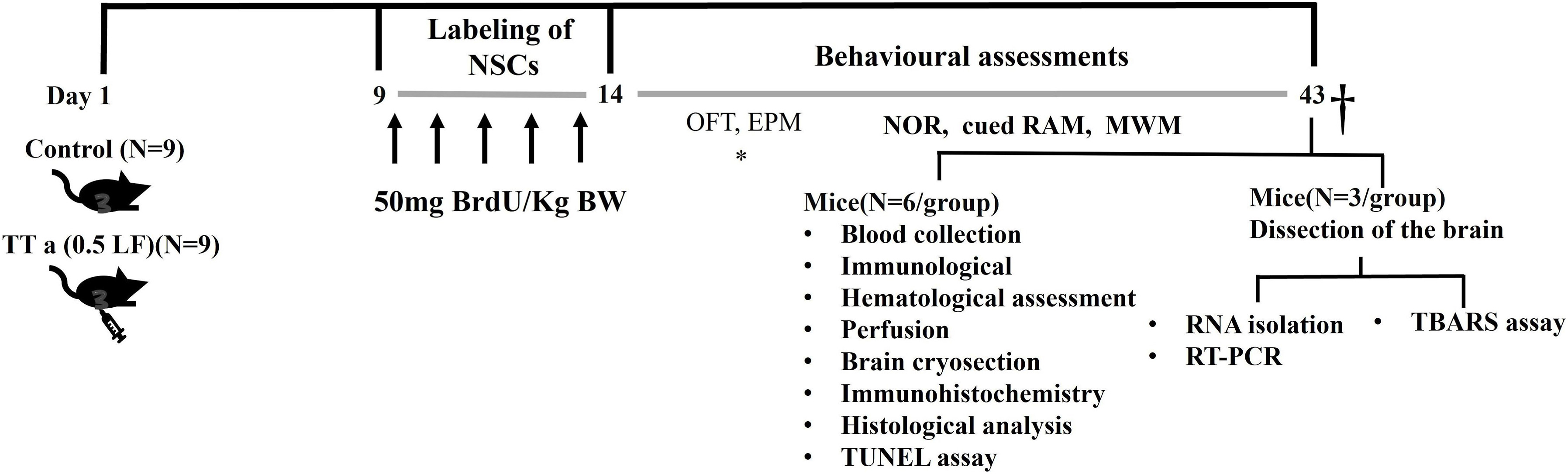
Twelve-month-old mice received tetanus toxoid, an inactivated toxin used in tetanus vaccines, in an animal experiment on learning and memory. The researchers assessed these abilities with tests of object recognition and navigation through mazes.
Mice given tetanus toxoid performed better on these tests. The improvements were associated with more immature nerve cells and a higher proportion of newly formed nerve cells in the hippocampus, a brain region involved in memory. The researchers also found greater insulation around nerve fibres in three brain regions. They found fewer cells carrying a marker of cell death in the brains of treated mice.
Why it matters
The study bears on whether encouraging new nerve-cell formation and maintaining nerve insulation could help preserve cognitive function during aging.
Caveats
The findings came from an animal experiment, not a study in people. The abstract did not give the sample size, dose or duration.
- Tetanus toxoid
- Apoptosis
- Inflammation
- BrdU/NeuN double-positive neuron proportion
- Cued radial arm maze
- Mice
The paper
Bharathidasan University
European Journal of Pharmacology · 6 Oct 2026