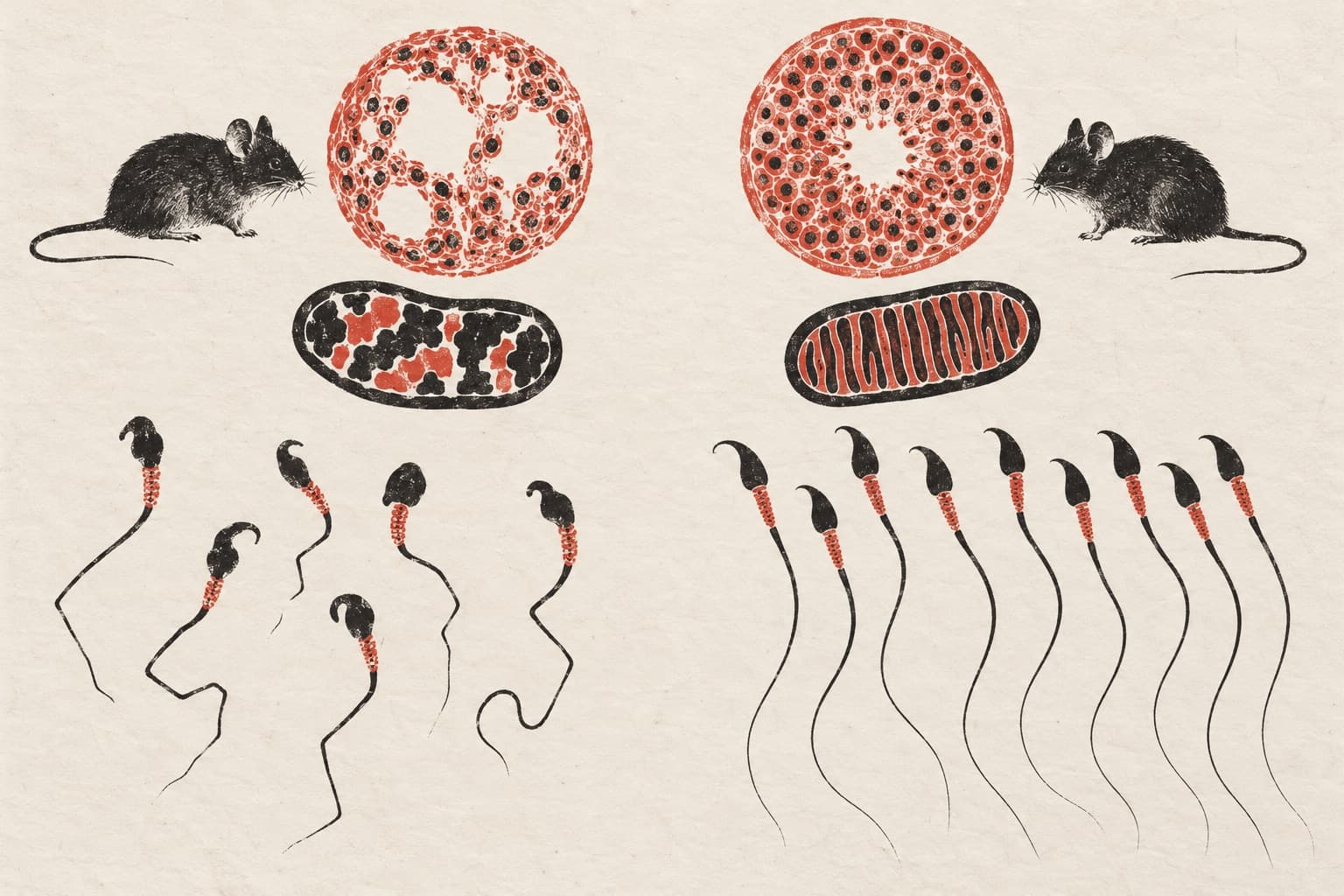
17α-Estradiol promotes ovarian aging in growth hormone receptor knockout mice, but not wild-type littermates
Abstract
Growth hormone receptor knockout mice (GHRKO) have reduced body size and increased insulin sensitivity. These mice are known for having extended lifespan, healthspan and female reproductive longevity. Seventeen α-estradiol (17α-E2) is reported to increase insulin sensitivity and extend lifespan in male mice, with less robust effects in female mice. The aim of this study was to evaluate the ovarian reserve in wild type and GHRKO mice treated with 17α-E2. The mice were divided into four groups, GHRKO mice receiving a standard chow diet, GHRKO mice treated 17α-E2, wild type mice receiving a standard chow diet and WT mice treated with 17α-E2. 17α-E2 was provided in the diet for four months. IGF1 plasma concentrations and changes in body weight were assessed. Histological slides were prepared from the ovaries and the number of follicles was counted. GHRKO mice receiving the control diet had a greater number of primordial follicles and lower numbers of primary follicles compared to the other groups (p < 0.05). 17α-E2 treatment decreased the number of primordial follicles in GHRKO mice (p < 0.05), however had no effect in wild type mice. Treatment with 17α-E2 had no significant effect on the change in body weight during the experiment (p = 0.75). Plasma IGF1 concentrations were significantly lower in GHRKO mice as compared to wild type. In conclusion, we found that GHRKO mice displayed lesser primordial follicle activation as compared to wild type mice, but this phenotype was reversed by 17α-E2 administration, suggesting that ovarian aging is increased by 17α-E2 in long-living mice with extended reproductive longevity.
From the paper
- Events by group
Control WT and GHRKO females gained 5.91% and 5.50% of the initial weight during the experiment, while treated WT and GHRKO females lost 5.90 and 0.13% of their initial weight during the experiment.
Quoted word for word from the full text on PubMed Central.
The paper
Universidade Federal de Pelotas
Experimental Gerontology, 4 Nov 2019, Open access, accepted manuscript