Insulin resistance rose faster around menopause
For a modelled reference woman, an insulin resistance measure rose 4.3% yearly during the transition, compared with 1.2% before and 0.9% after.
JCI Insight
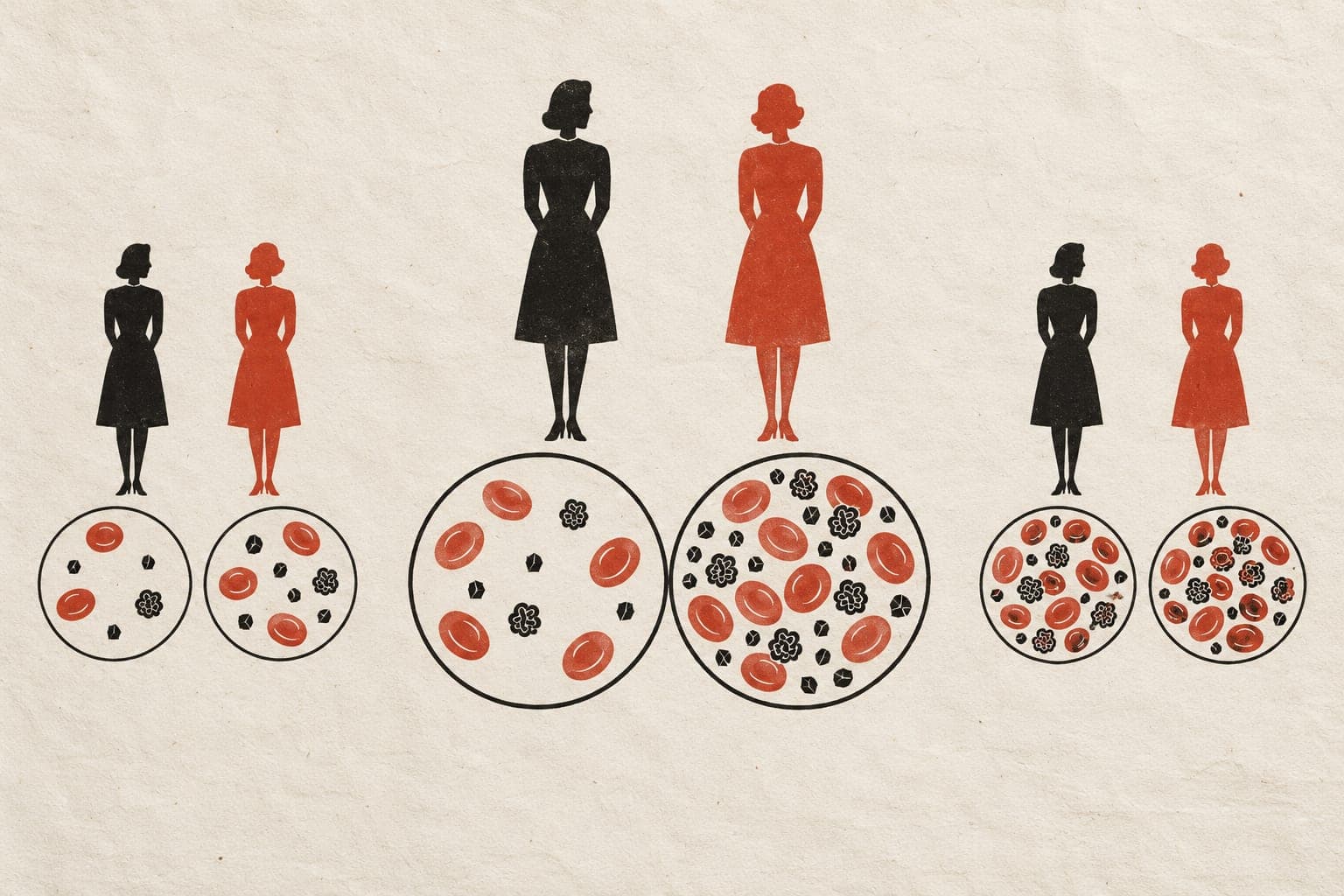
An observational study followed 1,315 women aged 42–52 who were before or in the early stages of the menopause transition in 1995–1996. They had up to 16 follow-up visits through 2018. Researchers estimated insulin resistance up to 12 times. This is when the body responds less well to insulin, a hormone that controls blood sugar. They also recorded each woman’s final menstrual period.
The estimate rose faster from 1.5 years before the final period to 2.5 years after it than in the years outside that interval. Models accounted for factors including changes in body mass index, a measure of weight relative to height. For an example woman defined in the model, the adjusted annual increases were 1.2% before the interval, 4.3% during it and 0.9% afterwards.
Why it matters
Understanding midlife insulin resistance requires separating changes linked to menopause from those linked to aging. The researchers called for studies of the underlying mechanisms and whether lifestyle could dampen menopause-associated increases.
Caveats
This observational study cannot show that menopause caused the faster rise. Insulin resistance was assessed using a calculated estimate, and the quoted rates describe a modelled reference woman rather than every participant.
- Insulin/IGF-1 signalling
- Sex hormone signalling (oestrogen, androgen)
- Insulin resistance
- BMI
- HOMA-IR
- Humans
The paper
Development of insulin resistance in women over the menopause transition
Show 4 more authors
Albert Shieh, Duncan Thomas, Barbara Sternfeld, Monique M Hedderson,David Geffen School of Medicine at UCLA
JCI Insight · 6 Oct 2026