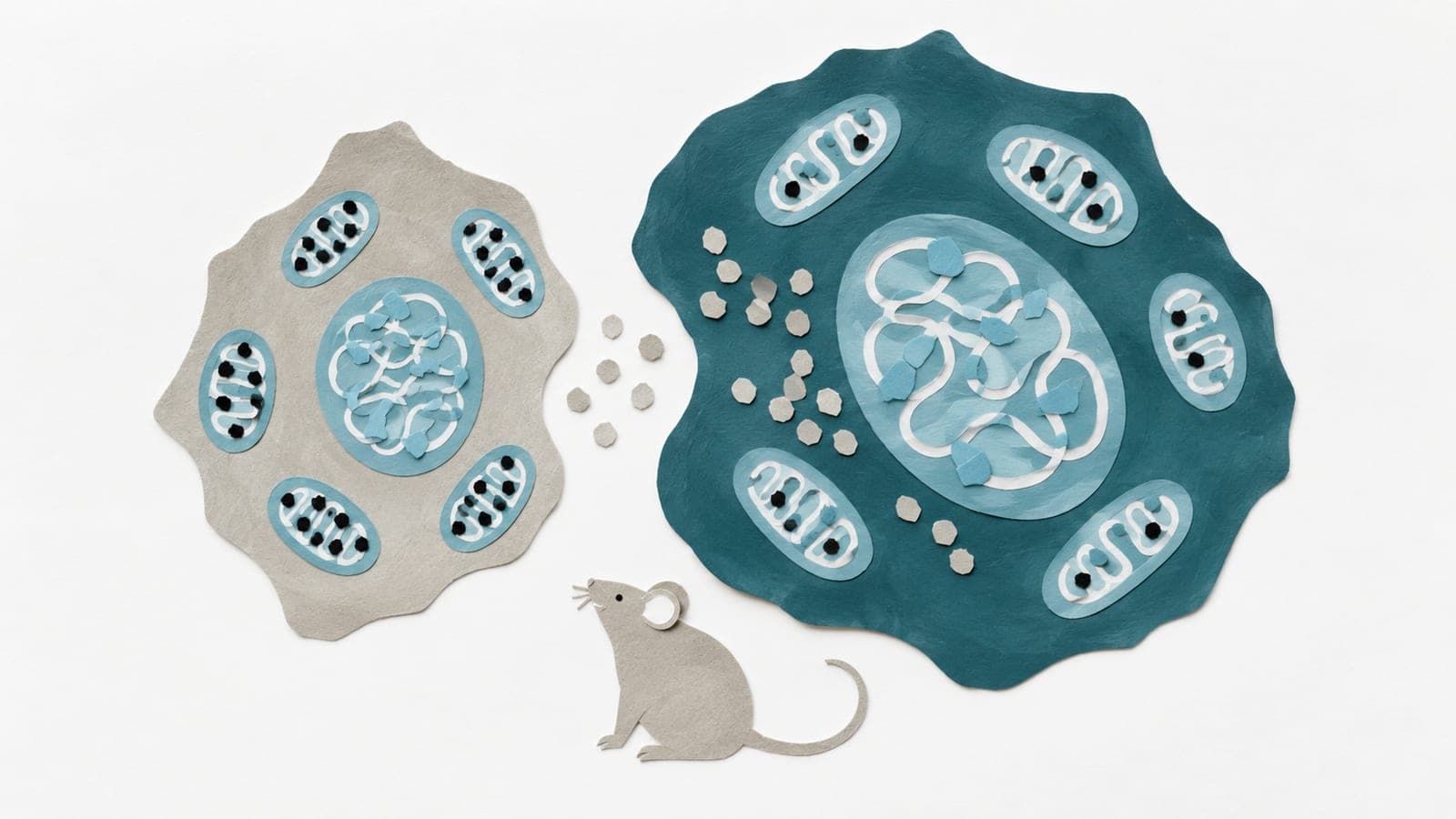
CPT2 as a Convergent Node Linking Age-Associated Neuronal H3K27me3 Remodeling to NMN-Induced Expression Rescue in Metabolic Tissues
Abstract
Age-related decline in mitochondrial function and disruption of epigenetic regulation are two closely connected features of biological aging. In neurons, age-associated remodeling of repressive H3K27me3 chromatin may constrain genes needed for metabolic, synaptic, and stress-adaptive maintenance. In parallel, nicotinamide mononucleotide (NMN), an NAD+ precursor, has been reported to mitigate age-associated physiological and transcriptional changes in peripheral metabolic tissues. However, direct links between neuronal epigenetic aging programs and NMN-responsive transcriptional rescue remain unclear.Here, we performed a secondary integrative analysis of two public datasets: GSE190102, focused on age-associated neuronal H3K27me3 targets mapped through an activity-by-contact-style region–gene framework, and GSE85718, a long-term NMN transcriptomic dataset from skeletal muscle, liver, and white adipose tissue in mice. The analysis identified 23 genes shared between 21,155 aging H3K27me3-associated targets and 35 robust NMN-rescue genes. Because the aging target set was extremely broad, gene-level overlap was not statistically persuasive, and pathway-level convergence was absent. Under repressive-mark direction logic, 14 of the 23 shared genes were concordant, meaning that the NMN expression effect opposed the expected consequence of age-associated H3K27me3 remodeling.CPT2 emerged as the leading candidate. It showed age-associated H3K27me3 gain, a large K27me3 log-fold change of +3.504, NMN-induced expression increase in old animals, a positive NMN interaction coefficient of +0.201, and membership in the mitochondrial fatty-acid oxidation pathway. Within the downstream shared-gene mitochondrial analysis, CPT2 was the only mitochondrial-core gene, with nominal enrichment only. These findings do not support broad reversal of neuronal epigenetic aging by NMN. Instead, they identify CPT2 as a biologically coherent and experimentally tractable candidate linking age-related repressive chromatin remodeling to NMN-responsive mitochondrial metabolism.
- Nicotinamide mononucleotide
- Chromatin and 3D genome organisation
- Epigenetic regulation of gene expression
- CPT2
- H3K27me3
- Mice
The paper
Figshare, 1 Jul 2026, Open access, CC BY, Preprint, not peer-reviewed