The Macula as Sentinel of the Sovereign Brain: A Unified Cascade of Interference, Mitochondrial Exhaustion, and Neurological Disease
Abstract
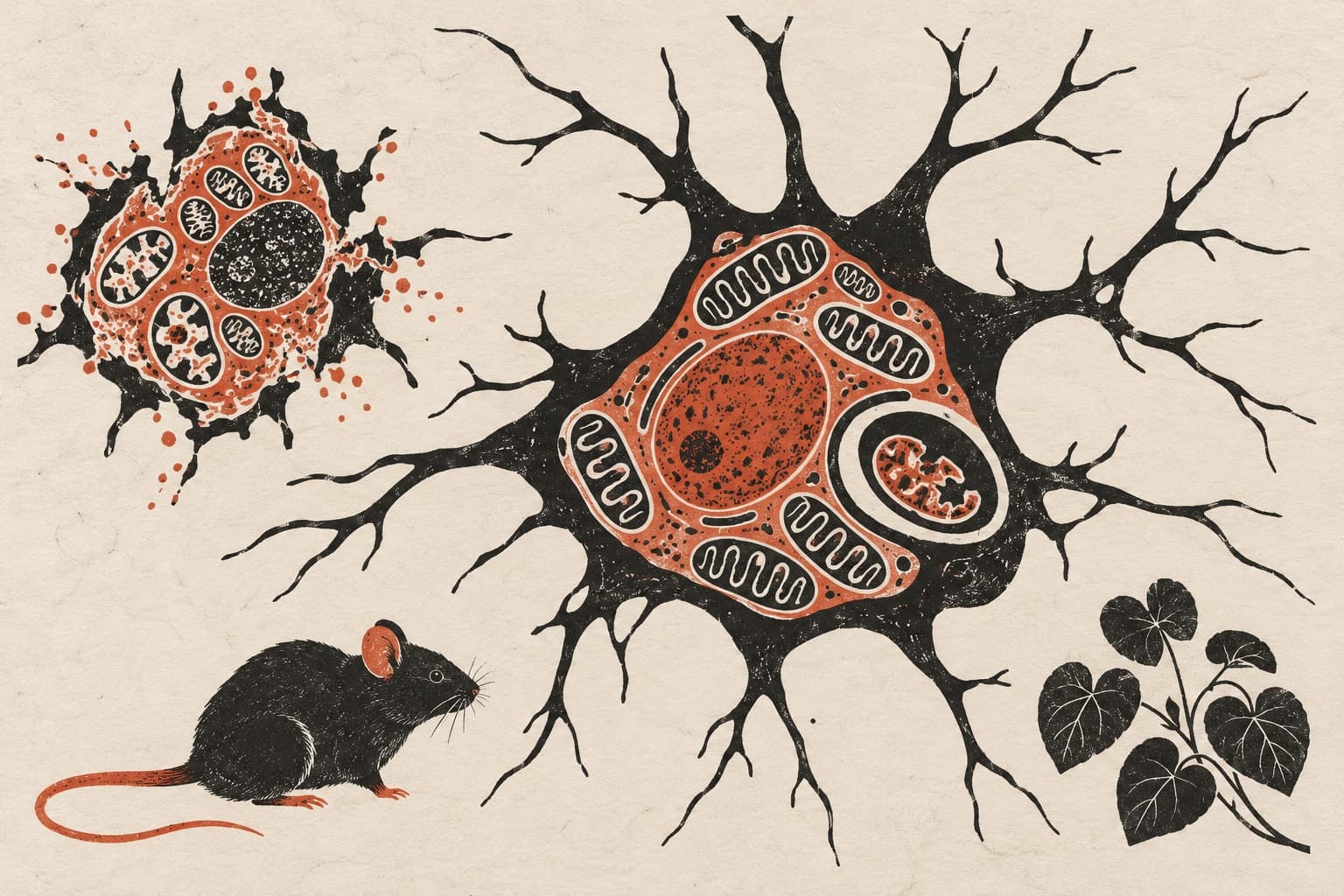
Age-related macular degeneration (AMD) is conventionally framed as a localised disease of the retinal pigment epithelium and photoreceptors. Here, a novel systems-level hypothesis is advanced: AMD is not an isolated pathology but the first visible domino in a continuous cascade of neurological and systemic decline, driven by a single root cause—chronic interference with the brain’s ancient homeostatic sovereignty. The brain, evolved as a self-built, self-contained organ that treats the body as its kingdom, interprets all unpredicted molecular, sensory, and informational inputs as existential threats. The perpetual “excited and tiring” threat‑detection state exhausts mitochondrial quality control (mitophagy), leading to the accumulation of spent mitochondria. The macula, the most energy‑demanding sensory outpost, is sacrificed first, producing AMD. Crucially, the macula is also the entry point for direct photic hammering—the constant assault of artificial blue light that accelerates its degeneration beyond the rate of other age-related tissues. This photic assault is compounded by a compromised circadian entrainment system: the intrinsically photosensitive retinal ganglion cells (ipRGCs), whose function declines with age and which may carry ancient genetic variants that reduce circadian resilience, cannot properly signal the master circadian clock. The resulting circadian chaos further suppresses mitochondrial cleaning programmes that are gated by the sleep-wake cycle. The optic nerve, rich in amyloid precursor protein (APP), forms the anatomical bridge by which retinal mitochondrial failure can initiate β‑amyloid pathology that propagates to the brain, unifying AMD and Alzheimer’s along a single pathway. The same cascade, propagated through the central nervous system, yields the exponential rise of depression, anxiety, Parkinson’s, and other neurological conditions—all merely named eddies of one integrated river. Societal trauma, alcohol, and CNS‑active pharmaceuticals are revealed as powerful amplifiers of interference; far from curing, they chemically gag the brain’s distress signals and remodel the neural architecture, creating dependence and accelerating the cascade. The cascade produces two collapse modes: a hypervigilant, anxious pole that craves sedatives, and a depleted, hypodopaminergic pole that cannot initiate action and drives the surging demand for unprescribed stimulants such as Adderall. Both are witnessed directly in clinical and community settings. The thesis finds its control group in isolated, undrugged centenarians who, by living in a sensory‑quiet, photonically‑honest, non‑interfered environment, bypass the cascade entirely. The model calls for a profound reorientation of medicine: from silencing the brain’s signals to restoring the quiet kingdom in which the sovereign brain can execute its innate repair programmes. Keywords: age-related macular degeneration, mitochondria, brain sovereignty, threat detection, evolutionary mismatch, psychopharmacology, cascade hypothesis, CNS interference, mitophagy, circadian rhythm, ipRGC, melanopsin, blue light, amphetamine, stimulant misuse, homeostasis, amyloid precursor protein, optic nerve, Alzheimer's disease
The paper
Zenodo, 5 Jun 2026, Open access, CC BY, Preprint, not peer-reviewed